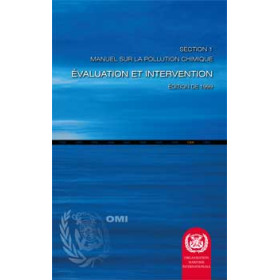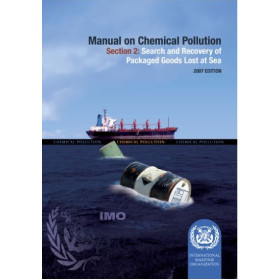




Essential guide for assessing and responding to chemical pollution at sea, covering risk evaluation, response strategies, and safe operational practices for hazardous spills.
Data sheet
Specific References
In the high-stakes world of maritime operations, chemical spills pose some of the most complex and dangerous challenges. The IMO Manual on Chemical Pollution – Section 1: Problem Assessment and Response Arrangements is the definitive guide for governments, response organizations, and maritime professionals tasked with managing hazardous and noxious substance (HNS) incidents at sea. Developed by the International Maritime Organization’s Marine Environment Protection Committee, this official publication delivers expert guidance on assessing risks, structuring response frameworks, and implementing safe operational practices to mitigate the impact of chemical pollution.
This manual addresses the full spectrum of chemical hazards encountered in maritime environments, including noxious liquids (MARPOL Annex II), dangerous goods (IMDG Code), gases (IGC Code), and solid bulk cargoes (BC Code). It provides a structured approach to evaluating threats, from initial risk assessment to the deployment of response strategies, ensuring that stakeholders can act swiftly and effectively in emergencies. Whether dealing with a minor leak or a large-scale spill, the manual equips users with the knowledge to make informed decisions under pressure.
Tailored for professionals in the merchant marine sector, this publication is an indispensable tool for port authorities, environmental agencies, shipping companies, and emergency response teams. It bridges the gap between theoretical knowledge and practical application, offering clear methodologies for establishing response organizations, coordinating multi-agency efforts, and adhering to international regulations. By standardizing best practices, the manual enhances preparedness and reduces the potential for human and environmental harm during chemical incidents.
As an official IMO publication, this manual reflects the latest industry standards and regulatory requirements. Its authoritative content is backed by decades of research and real-world experience, making it a trusted resource for compliance and operational excellence. Professionals rely on its guidance to navigate the complexities of chemical pollution response, ensuring that their actions align with global maritime safety protocols.
Presented in a clear, concise paperback format, the manual is designed for ease of use in both office and field settings. Its logical structure and straightforward language make it accessible to a wide range of users, from seasoned experts to those new to chemical pollution response. With 118 pages of actionable insights, it serves as a go-to reference for training, planning, and real-time decision-making.
Master the Challenges of Chemical Pollution at Sea
Chemical spills in maritime environments demand rapid, informed action to protect lives, ecosystems, and economic assets. The IMO Manual on Chemical Pollution – Section 1: Problem Assessment and Response Arrangements is the cornerstone resource for professionals tasked with managing these high-risk scenarios. Developed by the International Maritime Organization (IMO), this manual provides a systematic framework for assessing hazards, organizing response efforts, and implementing safe, effective measures to contain and mitigate the impact of hazardous and noxious substances (HNS) in marine settings.
Expert Guidance for High-Stakes Decision-Making
This publication is the result of extensive collaboration by the IMO’s Marine Environment Protection Committee, ensuring its content reflects the latest scientific, technical, and regulatory advancements. It covers a broad range of chemical hazards, including noxious liquids regulated under MARPOL Annex II, dangerous goods classified by the IMDG Code, gases governed by the IGC Code, and solid bulk cargoes addressed in the BC Code. With 118 pages of in-depth analysis, the manual equips users with the tools to evaluate risks, establish response protocols, and execute operations with precision—even under the most demanding conditions.
Built for Real-World Application
Unlike generic safety guides, this manual is specifically designed for the unique challenges of maritime chemical pollution. It outlines step-by-step procedures for setting up response organizations, coordinating with international and local agencies, and adhering to best practices for incident management. Whether you’re a port authority, environmental specialist, or emergency responder, this resource ensures you have the knowledge to act decisively, minimizing environmental damage and operational disruptions.
Trusted by the Global Maritime Community
As an official IMO publication, this manual carries the weight of international authority, making it a critical reference for compliance and operational excellence. Its content is grounded in real-world incidents and decades of research, providing users with confidence in their response strategies. The paperback edition, measuring 250 mm in height and 210 mm in width, is durable and portable, ideal for both office use and field operations. Weighing just 1.8 kg, it’s a practical addition to any maritime professional’s toolkit.
Published in January 1999, this first edition of the IMO Manual on Chemical Pollution – Section 1 spans 118 pages and is presented in a convenient paperback format. The manual measures 11.70 x 8.25 x 0.50 inches (depth x height x width) and weighs 1.8 kg, making it a durable and portable resource for professionals. Written entirely in English, it is an official publication of the International Maritime Organization, designed to meet the needs of maritime safety and environmental protection stakeholders worldwide.
The International Maritime Organization (IMO) is the United Nations’ specialized agency responsible for regulating shipping and ensuring maritime safety, security, and environmental protection. As the global standard-setter for the maritime industry, the IMO develops conventions, codes, and guidelines that shape international shipping practices. Its publications, including this manual, are recognized as authoritative resources for governments, industry professionals, and response organizations worldwide.
The manual covers hazardous and noxious substances (HNS) such as harmful liquids (MARPOL Annex II), dangerous goods (IMDG Code), gases (IGC Code), and solid bulk cargoes (BC Code).
Yes, it provides guidance on establishing response organizations and safe operational practices for managing marine chemical pollution incidents.
The manual contains 118 pages.
The digital version is readable using the free OMI e-reader and is provided in a locked format.
The physical copy measures 250 mm in height, 210 mm in width, and has a depth of 0.50 inches.
It was prepared by the Marine Environment Protection Committee.
Yes, it describes methods for assessing risks associated with hazardous substance spills in marine environments.
You might also like