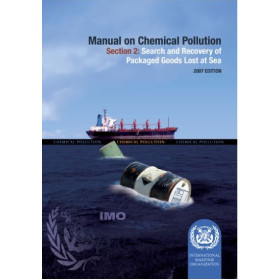
IMO 633F – Chemical Pollution Manual – Section 2: Search and Recovery of Packaged Goods Lost at Sea
Publication in French Paperback edition Essential Guidance for Maritime Safety and Environmental Protection
In the high-stakes world of maritime operations, the loss of packaged goods at sea—whether hazardous chemicals, dangerous substances, or other regulated materials—poses significant risks to safety, navigation, and marine ecosystems. This specialized manual provides maritime professionals with a structured, science-backed framework for responding to such incidents. Designed for governments, shipping companies, and emergency response teams, it ensures compliance with international maritime regulations while minimizing environmental and operational hazards. Developed by the International Maritime Organization (IMO)
As the leading authority on maritime safety and environmental protection, the IMO sets the global standards that govern shipping operations. This manual was prepared under the guidance of the Marine Environment Protection Committee (MEPC), reflecting decades of expertise in pollution prevention and emergency response. It aligns with the requirements of the SOLAS 1974 Convention (Chapter VII) and MARPOL 73/78 (Annex III), ensuring that all recovery efforts meet the highest international benchmarks. By following these guidelines, maritime stakeholders can act swiftly and effectively, reducing the long-term impact of lost cargo on marine environments. Comprehensive Strategies for Search and Recovery Operations
When packaged goods are lost at sea, time is of the essence. This manual outlines a systematic approach to locating and retrieving lost cargo, from initial risk assessment to final recovery. It examines the behavior of different types of packages in marine conditions—whether they sink, float, or disperse—and provides decision-making tools to determine the most appropriate response. The manual also addresses critical factors such as weather conditions, water depth, and the nature of the lost materials, ensuring that recovery efforts are both safe and efficient. For radioactive materials (Class 7 of the IMDG Code), it directs users to consult the International Atomic Energy Agency (IAEA) for specialized guidance, reinforcing a multi-agency approach to complex incidents. A Practical Resource for Maritime Professionals
Beyond theoretical guidance, this manual serves as a hands-on tool for real-world scenarios. It includes best practices for preventing cargo loss in the first place, emphasizing proactive measures such as proper stowage, securing, and monitoring of packaged goods. For situations where loss cannot be avoided, it provides step-by-step procedures for search and recovery, including the use of specialized equipment and coordination with maritime authorities. The manual also highlights the importance of documentation and reporting, ensuring that incidents are thoroughly analyzed to prevent future occurrences. Whether used by port authorities, shipping crews, or environmental agencies, this publication is an indispensable resource for safeguarding both human life and marine ecosystems. Optimized for Compliance and Operational Efficiency
Navigating the complexities of maritime regulations can be challenging, but this manual simplifies the process by consolidating essential guidelines into a single, accessible resource. It bridges the gap between international legal requirements and practical execution, helping organizations avoid costly penalties while maintaining operational efficiency. By integrating these protocols into their standard procedures, maritime professionals can enhance their preparedness, reduce response times, and demonstrate their commitment to environmental stewardship. In an industry where safety and compliance are non-negotiable, this manual is a vital asset for any organization involved in the transport of packaged goods by sea. Critical Resource for Maritime Emergency Response Teams
When packaged goods containing hazardous or regulated materials are lost at sea, the consequences can be severe—ranging from environmental contamination to navigational hazards. This manual delivers expert guidance on search and recovery operations, ensuring that maritime professionals can respond swiftly and effectively. Developed by the International Maritime Organization (IMO) and endorsed by the Marine Environment Protection Committee (MEPC), it provides a structured approach to locating and retrieving lost cargo while complying with SOLAS 1974 and MARPOL 73/78 regulations.
Science-Backed Decision-Making for Recovery Operations
Not all lost cargo behaves the same way in marine environments. Some packages sink, others float, and some may disperse, depending on their contents and packaging. This manual analyzes these variables, offering data-driven insights to determine the best course of action. It includes guidelines on assessing risks, prioritizing recovery efforts, and coordinating with maritime authorities. For specialized cases, such as radioactive materials (Class 7 IMDG Code), it directs users to additional resources, ensuring a comprehensive response strategy.
Proactive Measures to Prevent Cargo Loss
Prevention is always the first line of defense. This manual emphasizes best practices for securing packaged goods during transport, reducing the likelihood of loss in the first place. It covers proper stowage techniques, monitoring protocols, and emergency preparedness, helping shipping companies and port authorities minimize risks before they escalate. When loss does occur, the manual provides clear, actionable steps for recovery, ensuring that operations remain safe, efficient, and compliant with international standards.
This paperback manual is published in French and spans 53 pages, offering a concise yet comprehensive guide to search and recovery procedures for packaged goods lost at sea. Released in January 2007, it measures 210 mm in height and 150 mm in width, with a lightweight design (1.8 kg) for easy portability. The manual is also available in a digital format compatible with the IMO Bookshelf software, supporting Windows-based platforms for enhanced accessibility.
With a legacy of setting global standards for maritime safety and environmental protection, this organization is the leading authority in the shipping industry. Its publications are trusted by governments, shipping companies, and emergency response teams worldwide, providing the technical and regulatory frameworks needed to ensure safe, compliant, and sustainable maritime operations.
- This manual equips maritime professionals with the knowledge and tools to respond effectively to lost cargo incidents, ensuring compliance with international regulations while minimizing environmental and operational risks. Its structured approach to search and recovery, combined with proactive prevention strategies, makes it an indispensable resource for shipping companies, port authorities, and emergency response teams. By integrating these guidelines into standard procedures, organizations can enhance their preparedness, reduce response times, and demonstrate their commitment to safety and environmental stewardship.