Chart load lines
A load line chart is a specialized maritime document used to understand ship loading limits and the regulatory conditions applicable to vessels according to navigation areas and seasons. It is particularly relevant to commercial shipping professionals, officers, shipowners, maritime schools and navigators planning international voyages. Load line information may cover the Atlantic Ocean, English Channel, North Sea, Mediterranean Sea, Caribbean Sea, Indian Ocean or Pacific Ocean, with routes connecting ports such as Le Havre, Rotterdam, Hamburg, Lisbon, Marseille, Gibraltar, New York, Panama or Singapore. These documents complement maritime regulations and nautical publications required for commercial voyage planning. Depending on the documentation required, charts and publications may be published by Admiralty, SHOM or other hydrographic offices and specialized organizations. A load line chart is therefore a practical reference for identifying regulatory zones and planning a voyage in accordance with the applicable rules.


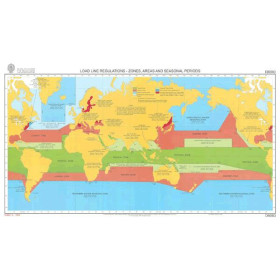
Load Line Chart
Introduction
A Load Line Chart is a specialist maritime chart designed primarily for commercial shipping, international maritime transport and voyage planning for vessels subject to international freeboard regulations. It shows the load line zones, seasonal areas and periods during which different loading limits apply according to the vessel's geographical position and the time of year.
International load line regulations are based principally on the International Convention on Load Lines, 1966, adopted under the auspices of the International Maritime Organization (IMO). The purpose of these regulations is to limit the draught to which a vessel may be loaded and to ensure sufficient freeboard to maintain reserve buoyancy, stability and watertight integrity under different operating conditions.
A Load Line Chart is therefore very different from a nautical chart intended for navigation. It is not primarily used to identify soundings, wrecks, buoys or channels. Instead, it is a regulatory and geographical planning tool for determining applicable load line requirements during a voyage.
What is a Load Line Chart?
A Load Line Chart represents the geographical boundaries of the different zones and seasonal areas defined by international load line regulations.
It is used to identify, in particular:
-
tropical zones;
-
summer zones;
-
tropical seasonal areas;
-
winter seasonal areas;
-
North Atlantic winter seasonal zones;
-
specific seasonal areas;
-
the periods of the year corresponding to each zone.
The chart therefore enables the navigator or ship operator to determine which freeboard regulations apply when a vessel moves from one geographical zone to another.
The principle is directly related to the weather and sea conditions to which ships may be exposed. The International Convention on Load Lines distinguishes zones according to the potential hazards and seasonal conditions associated with different geographical regions.
What is a load line?
A load line is a regulatory limit indicating the maximum draught to which a vessel may be loaded under specified conditions.
It is marked on the vessel's hull by the load line mark, traditionally associated with the Plimsoll mark.
The International Convention on Load Lines requires assigned load lines to be marked amidships on each side of the vessel, together with the deck line.
These marks provide a visual indication of the maximum permitted loading level.
The applicable loading limit depends on several factors, including:
-
the type of vessel;
-
its construction and characteristics;
-
its assigned freeboard;
-
the geographical zone;
-
the season;
-
the regulatory conditions applicable to the voyage.
The Load Line Chart therefore forms part of a broader set of regulatory documents and certificates associated with the vessel.
Why do load lines depend on geographical zones?
Weather and sea conditions are not the same throughout the world.
A vessel operating in a tropical region is not exposed to exactly the same conditions as a vessel crossing the North Atlantic during winter.
The regulations therefore take account of the characteristics of different maritime regions and seasons. The International Convention on Load Lines specifically recognises the potential hazards present in different zones and at different times of the year.
The Load Line Chart allows the navigator to visualise the boundaries between these regulatory zones.
This is particularly important during long voyages where a vessel may cross several load line boundaries.
Summer, tropical and winter zones
The Load Line Chart distinguishes several major categories.
Tropical zones
Tropical zones correspond to areas where the regulatory conditions governing freeboard and loading take account of the prevailing conditions in tropical waters.
The Red Sea, Gulf of Aden, parts of the Persian Gulf and various equatorial regions are associated with tropical load line provisions, subject to the precise geographical limits defined by the Convention.
These provisions are particularly relevant to vessels operating on international routes between the Mediterranean, Middle East, Indian Ocean and Asia.
Summer zones
Summer zones cover many temperate regions that are not subject to more restrictive seasonal classifications.
The Mediterranean Sea, for example, is generally associated with the summer zone, although the Convention also defines specific seasonal areas and provisions for certain regions and vessels.
The exact regulatory classification must always be determined from the applicable regulations and the vessel's certification.
Winter seasonal zones
Some geographical areas are subject to specific winter periods during which different load line requirements apply.
This includes parts of the North Atlantic, Baltic Sea, North Sea and other northern regions.
The Load Line Chart therefore makes it possible to relate the vessel's geographical position to the applicable seasonal period.
North Atlantic and winter load line zones
The North Atlantic is one of the most important regions in the load line system.
The regulations define specific North Atlantic Winter Seasonal Zones, with geographical boundaries and seasonal periods applying to the relevant voyages. The load line provisions take account of the more severe conditions that may be encountered in northern waters during winter.
For a vessel sailing from Le Havre, Rotterdam, Antwerp or Hamburg towards North America, determining the applicable load line zone is an important part of voyage and loading preparation.
Routes linking Europe with New York, Halifax, Montréal or Québec may cross different regulatory zones depending on the route and time of year.
A Load Line Chart provides a geographical overview of these boundaries before departure.
North Sea and Baltic Sea
The North Sea and Baltic Sea are also subject to specific load line provisions.
The Convention contains specific seasonal provisions for the Baltic Sea, including winter seasonal requirements for certain vessels. The applicable rules depend on the vessel's characteristics and the geographical area concerned.
Major ports connected by the commercial shipping routes of these regions include Rotterdam, Antwerp, Hamburg, Bremerhaven, Kiel, Copenhagen, Gothenburg, Stockholm and Helsinki.
A Load Line Chart enables the person responsible for voyage planning to identify the regulatory zones crossed by the vessel and take the relevant seasonal periods into account.
Mediterranean Sea, Black Sea and straits
The Mediterranean Sea is generally associated with the summer zone, although specific seasonal areas exist within the regulatory system.
The Convention also contains particular provisions for the Black Sea. Certain areas north of 44° N may be subject to winter seasonal provisions for vessels of 100 metres or less.
Commercial routes linking Marseille, Genoa, Naples, Valletta, Piraeus, Istanbul, Constanța or other Black Sea ports may therefore be affected by different provisions depending on the voyage and time of year.
These regulatory details must be considered together with the vessel's applicable certification and operating requirements.
Red Sea, Gulf of Aden and Persian Gulf
The tropical zones also include several strategically important maritime areas.
The Convention includes the Suez Canal, Red Sea and Gulf of Aden within the tropical zone, subject to the geographical boundaries specified in the regulations. The Persian Gulf is also treated as a tropical zone within defined geographical limits.
These provisions are relevant to commercial routes linking ports such as Port Said, Suez, Jeddah, Aden, Salalah, Dubai, Abu Dhabi and Karachi.
For vessels operating between Europe, the Middle East and Asia, this information can form part of voyage and loading preparation.
Indian Ocean, Bay of Bengal and Asian waters
The load line regulations also cover regions with significant seasonal variations.
The Bay of Bengal, Arabian Sea, South China Sea and parts of the North and South Pacific include tropical or seasonal areas defined by the Convention.
The applicable periods vary between regions. The Bay of Bengal, for example, has specific tropical provisions, while certain parts of the China Sea are subject to seasonal classifications.
Commercial routes serving Mumbai, Chennai, Colombo, Singapore, Hong Kong, Shanghai or Manila may therefore cross several load line zones during a single voyage.
How is a Load Line Chart used in practice?
A Load Line Chart is primarily used during voyage planning and vessel loading preparation.
It can be used to:
-
identify the load line zones crossed by the voyage;
-
determine the applicable seasonal periods;
-
prepare the vessel's loading arrangements;
-
anticipate changes in load line requirements during a passage;
-
assess the regulatory consequences of crossing a zone boundary;
-
prepare voyage documentation;
-
support the ship operator's procedures;
-
train deck officers and maritime personnel.
It is therefore a planning and regulatory chart, rather than a chart used for navigating the vessel.
ADMIRALTY Load Line Regulation Charts
The ADMIRALTY Load Line Regulation Charts, published by the UK Hydrographic Office, are specialist reference charts designed to show the geographical distribution of load line zones and seasonal periods.
ADMIRALTY describes its Load Line Regulation Charts as reference charts showing the designated zones and seasonal periods associated with load line regulations. They are designed to be used alongside official navigation charts as part of passage planning.
The ADMIRALTY D6083 is the principal reference associated with the worldwide representation of load line regulation zones, areas and seasonal periods.
It provides a geographical overview of the regulatory boundaries that are important when planning international commercial voyages.
Load Line Charts and vessel safety
Load line regulations are directly connected with maritime safety.
Excessive loading reduces freeboard and can reduce the reserve buoyancy available to the vessel. It can also increase the risk of water entering the vessel and reduce the safety margins allowed for the vessel's operating conditions.
The IMO states that limitations on the draught to which a ship may be loaded make a significant contribution to safety. The Load Lines Convention also addresses watertight and weathertight integrity and other structural and safety requirements.
The Load Line Chart is therefore part of a wider regulatory framework that includes the vessel's assigned freeboard, load line marks, applicable certificates and loading procedures.
A regulatory chart, not a navigational chart
It is important to clearly distinguish a Load Line Chart from a conventional nautical chart.
A nautical chart published by SHOM, ADMIRALTY, Imray or another competent hydrographic authority is intended for navigation and provides information on position, depths, hazards, aids to navigation, channels, ports and approaches.
A Load Line Chart is primarily used to determine regulatory freeboard zones, seasonal areas and applicable periods.
It should therefore not be used for vessel positioning or navigation in a channel.
Load Line Charts and ADMIRALTY Routeing Charts
Load Line Charts should also not be confused with ADMIRALTY Routeing Charts.
Routeing Charts provide information useful for passage planning, including shipping routes, distances, seasonal weather conditions, ocean currents and the limits of load line zones.
A Load Line Chart, by contrast, is specifically focused on the geographical and seasonal framework of the load line regulations.
The two types of planning documents can therefore be complementary during the preparation of an international voyage.
Conclusion
A Load Line Chart is a specialist maritime reference document used to determine the geographical zones and seasonal periods applicable to international load line and freeboard regulations.
It provides a clear overview of tropical zones, summer zones, winter zones and seasonal areas, making it a useful planning tool for international commercial voyages and vessel loading preparation.
The International Convention on Load Lines, 1966, adopted under the IMO, takes account of the potential hazards associated with different geographical zones and seasons and establishes an international framework for assigning freeboard and load lines.
From the North Atlantic to the Mediterranean Sea, from the Red Sea to the Persian Gulf, and from the Bay of Bengal to the South China Sea, a Load Line Chart allows navigators and shipping professionals to understand the geographical boundaries that determine the applicable load line requirements.
For shipowners, masters, merchant navy officers, shipping companies, maritime training centres and professionals involved in voyage planning, the Load Line Chart is therefore an important reference for incorporating freeboard and loading requirements into international voyage preparation.
FAQ
What is a Load Line Chart?
A Load Line Chart is a thematic maritime chart showing the geographical zones, areas and seasonal periods defined by international load line regulations.
What is a Load Line Chart used for?
It is used to determine the regulatory zone and seasonal period applicable to a vessel during a voyage, particularly when preparing loading arrangements and assessing freeboard requirements.
What is a maritime load line?
A load line is a regulatory limit marked on a vessel's hull. It indicates the maximum permitted draught under the conditions applicable to the vessel and the voyage.
What is the Plimsoll mark?
The Plimsoll mark is the load line mark painted on the hull of a vessel. It provides a visual indication of the different maximum loading levels applicable under different regulatory conditions.
What are the main load line zones?
The international load line system includes tropical zones, summer zones, winter seasonal zones and specific seasonal areas, including the North Atlantic winter seasonal zones.
Why are there seasonal load line zones?
Weather and sea conditions vary according to latitude, geographical region and season. The load line regulations take these differences into account in order to adapt the applicable loading limits to the conditions in which the vessel may operate.
Is the Mediterranean Sea a summer zone?
The Mediterranean Sea is generally associated with the summer zone, although specific seasonal provisions and areas exist within the international regulatory framework. The exact requirements depend on the geographical area, vessel and applicable regulations.
Is the Red Sea a tropical zone?
Yes. The International Convention on Load Lines includes the Suez Canal, Red Sea and Gulf of Aden within the tropical zone, subject to the geographical limits defined by the Convention.
Does the Baltic Sea have a winter seasonal zone?
Yes. The Convention contains specific seasonal provisions for the Baltic Sea, including winter requirements applicable to certain vessels and geographical areas.
Does a Load Line Chart replace a nautical chart?
No. It is a regulatory and voyage-planning chart. It does not replace the nautical charts required for navigation, whether published by SHOM, ADMIRALTY, Imray or another competent hydrographic authority.
Which ADMIRALTY chart is dedicated to load lines?
ADMIRALTY D6083 – Load Line Regulations – Zones, Areas and Seasonal Periods is the specialist reference chart for the worldwide geographical representation of load line regulatory zones, areas and seasonal periods.
Who uses Load Line Charts?
They are primarily used by shipowners, masters, merchant navy officers, shipping companies, ship managers, maritime training centres and professionals involved in vessel loading and international voyage planning.
Is a Load Line Chart useful for a yacht?
Its primary application is to vessels subject to international load line regulations. For a recreational yacht, the applicable requirements depend on the vessel's type, certification, flag and the national or international regulations governing its operation. ADMIRALTY D6083 is primarily intended for the professional and regulatory context of commercial shipping.