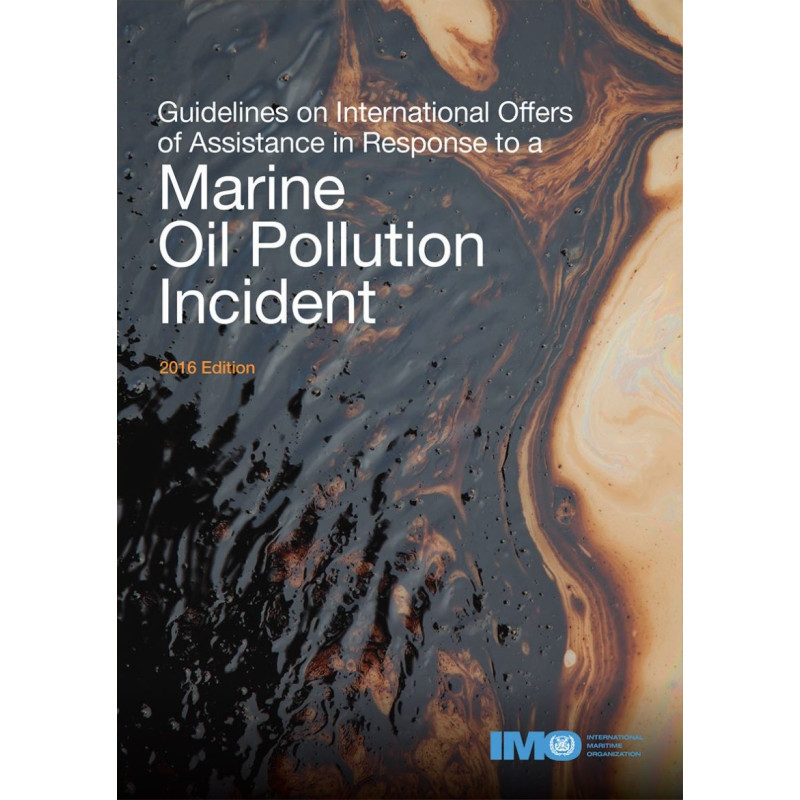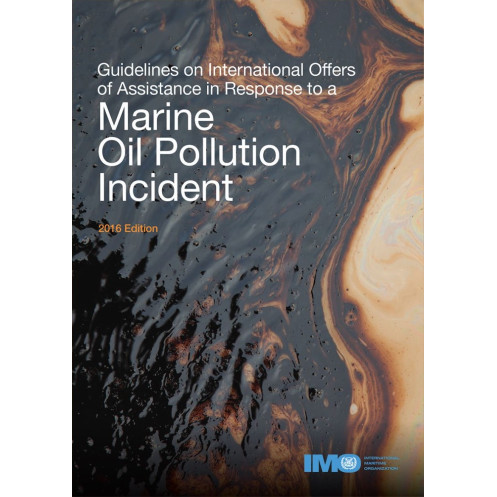



This 2016 guide provides clear directives for managing marine oil spills. Includes templates, a glossary, and tools to streamline international coordination during major incidents.
Data sheet
Specific References
This comprehensive publication delivers critical guidance on international offers of assistance (IOA) during marine oil pollution incidents. Designed for maritime professionals, government agencies, and environmental responders, it ensures structured and efficient coordination when large-scale, complex, or high-impact oil spills occur. Aligned with the International Convention on Oil Pollution Preparedness, Response and Co-operation (OPRC 1990), this resource helps countries manage requests for spill response resources and offers of support from international partners, organizations, and stakeholders.
Offering a non-binding yet highly practical framework, this manual supports decision-making in high-pressure scenarios. It applies to oil spills in inland, coastal, and marine environments, providing adaptable strategies for diverse operational contexts. The 2016 edition builds on lessons learned from major incidents, including the Deepwater Horizon disaster, emphasizing the need for seamless international collaboration to mitigate environmental and economic damage.
Beyond procedural guidance, this publication includes valuable reference materials to streamline response efforts. Annexes feature standardized forms for resource requests and assistance offers, ensuring clarity and consistency in communication. A detailed glossary defines key terms related to equipment, personnel, and response protocols, while a list of acronyms aids in navigating industry-specific terminology. These tools make it an indispensable resource for maritime authorities, environmental agencies, and emergency response teams.
Tailored for professionals in the maritime and environmental sectors, this manual addresses the complexities of oil spill response at an international level. It complements other IMO publications on oil pollution, serving as a go-to reference for planning, training, and real-time crisis management. Whether preparing for potential incidents or responding to an active spill, this guide equips users with the knowledge and tools needed to act swiftly and effectively.
Strengthen Your Oil Spill Response Strategy with the IMO’s 2016 Guidelines
When a marine oil pollution incident escalates beyond national response capabilities, coordinated international assistance becomes critical. The *Response to a Marine Oil Pollution Incident 2016* provides a structured approach to managing offers of assistance (IOA) from foreign governments, organizations, and stakeholders. This publication is a cornerstone for countries party to the OPRC 1990 Convention, offering a clear framework to navigate the complexities of large-scale or high-impact spills. Whether dealing with coastal, inland, or open-water incidents, these guidelines ensure that requests for resources—such as specialized equipment, expert personnel, or logistical support—are handled efficiently and transparently.
Built on Real-World Lessons and Global Best Practices
Developed in the aftermath of major incidents like the Deepwater Horizon spill, this manual reflects the hard-earned lessons of past crises. It emphasizes the importance of pre-incident planning, real-time coordination, and post-incident evaluation to minimize environmental and economic fallout. The 2016 edition is designed to be adaptable, providing non-binding yet actionable recommendations that can be tailored to the unique challenges of each spill scenario. By fostering collaboration between nations, it helps bridge gaps in response capabilities and ensures that assistance is deployed where it’s needed most.
More Than Just Guidelines: A Complete Toolkit for Responders
Beyond its core guidance, this publication includes practical tools to streamline response efforts. Annexes feature standardized forms for requesting or offering assistance, reducing ambiguity in high-stakes communications. A comprehensive glossary clarifies terminology related to response equipment, personnel roles, and operational protocols, while a list of acronyms ensures clarity in cross-border communications. These resources make the manual an invaluable asset for maritime authorities, environmental agencies, and emergency response teams, whether they’re preparing for potential incidents or actively managing an ongoing crisis.
Optimized for Professional Use in High-Pressure Environments
Printed in a durable, easy-to-reference format, this 78-page manual is designed for use in the field or the office. Its dimensions (300 mm x 210 mm) and sturdy construction ensure it can withstand the demands of active response operations. Weighing just 1.8 kg, it’s portable enough for on-site deployment while remaining comprehensive enough to serve as a desk reference. Published by the International Maritime Organization, a global leader in maritime safety and environmental protection, this edition is a trusted resource for professionals committed to safeguarding marine ecosystems and coastal communities.
This 2016 edition of the *Response to a Marine Oil Pollution Incident* is a 78-page printed manual in English, published by the International Maritime Organization. Measuring 300 mm in height and 210 mm in width, it weighs 1.8 kg, making it a practical yet comprehensive resource for field and office use. Released in January 2016 with a publication date of August 2016, it is designed to support professionals in managing international oil spill response efforts.
With a legacy of shaping global maritime standards, the publisher behind this publication is a specialized United Nations agency dedicated to the safety, security, and environmental performance of international shipping. Renowned for developing conventions, codes, and guidelines that set the benchmark for maritime operations, it provides authoritative resources to governments, industry stakeholders, and professionals worldwide. Its publications are trusted by maritime authorities, environmental agencies, and emergency response teams for their technical rigor and practical applicability.
It provides guidelines for responding to marine oil pollution incidents, including spills in inland, marine, or coastal areas during large-scale, complex, or significant events.
No, it serves as a practical tool and is not legally binding, though it supports the OPRC 1990 Convention.
It includes sample forms, an extended glossary of equipment and personnel terminology, and a list of acronyms related to oil spill response.
Yes, the digital version is compatible with the free IMO reader, making it suitable for training and reference.
The guide contains 78 pages of detailed guidelines and supplementary materials.
Yes, it focuses on managing requests for resources and offers of assistance from other countries and organizations during major incidents.
You might also like