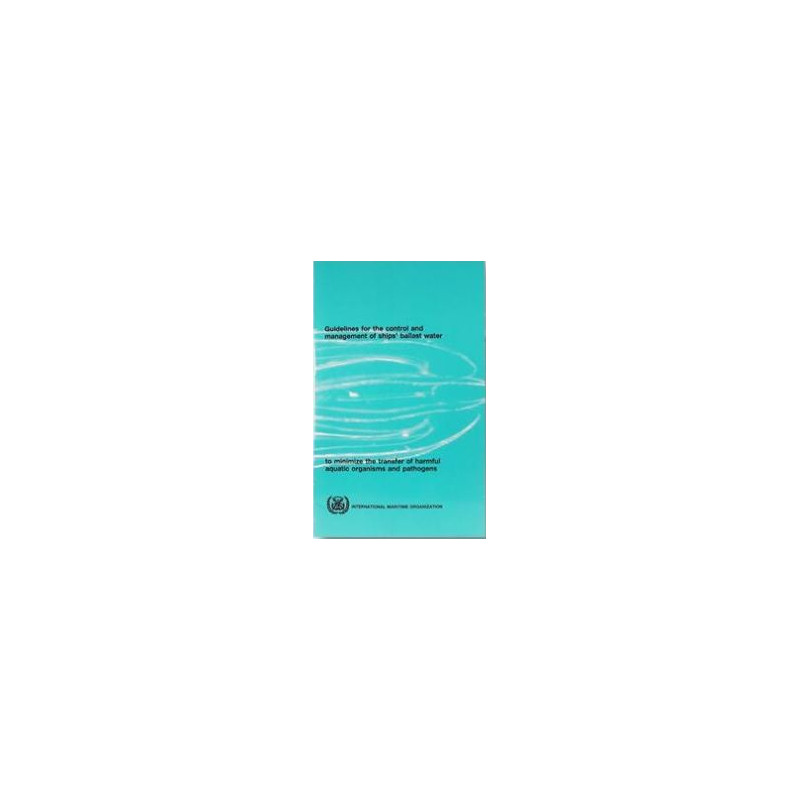




Official 1998 guidelines for managing ship ballast water to prevent the spread of harmful aquatic organisms. Ideal for maritime professionals focused on environmental and safety compliance.
Data sheet
Specific References
This authoritative publication delivers the foundational framework for ballast water management, a critical component of global maritime environmental protection. Developed by the International Maritime Organization (IMO), these guidelines address one of the most pressing challenges in modern shipping: the unintended transfer of invasive aquatic species through ballast water discharge. By providing structured protocols and best practices, this document empowers ship operators, port authorities, and regulatory bodies to implement effective control measures while maintaining operational safety.
The guidelines outline a systematic approach to minimizing ecological risks associated with ballast water operations. Covering everything from risk assessment methodologies to practical management strategies, the publication establishes clear procedures for ballast water exchange, treatment, and monitoring. These protocols are designed to be adaptable across different vessel types and operational scenarios, ensuring applicability in diverse maritime environments. The document also emphasizes the importance of record-keeping and reporting, creating a robust system for compliance verification and environmental accountability.
Adopted through IMO Resolution A.868(20) in November 1997, these guidelines represent an international consensus on ballast water management. While subsequently updated by newer regulations, this foundational document remains a valuable reference for understanding the evolution of ballast water standards. It provides historical context for current requirements and demonstrates the maritime industry's ongoing commitment to environmental stewardship. The publication serves as both a practical manual and an educational resource for maritime professionals seeking to understand the technical and regulatory aspects of ballast water management.
Designed specifically for maritime professionals, this publication translates complex environmental concerns into actionable procedures. Ship captains, marine engineers, and environmental officers will find detailed guidance on implementing ballast water management plans that align with international standards. The document addresses operational considerations such as ballast water exchange locations, treatment system selection, and emergency procedures, ensuring that environmental protection measures integrate seamlessly with vessel operations. This practical focus makes the guidelines an indispensable tool for maintaining compliance while optimizing operational efficiency.
As the precursor to current ballast water management conventions, this publication offers valuable insights into the regulatory development process. Maritime professionals, policymakers, and environmental specialists can use this document to understand the technical rationale behind modern requirements. The guidelines demonstrate how scientific research and operational experience combine to create effective environmental regulations, making it a valuable resource for anyone involved in maritime environmental compliance or policy development.
Protect Marine Ecosystems with IMO’s Ballast Water Management Guidelines
This essential publication presents the International Maritime Organization’s Resolution A.868(20), the landmark 1997 guidelines that established global standards for controlling ship ballast water. Designed to prevent the spread of harmful aquatic organisms and pathogens, this 1.8 kg paperback edition provides the original framework that shaped modern maritime environmental regulations. While superseded by newer conventions, these foundational guidelines remain a critical reference for understanding the evolution of ballast water management practices and their implementation across the shipping industry.
Comprehensive Protocols for Environmental Compliance
The publication delivers a complete system for ballast water management, covering risk assessment methodologies, operational procedures, and monitoring requirements. Ship operators will find detailed guidance on implementing effective ballast water exchange practices, selecting appropriate treatment methods, and maintaining proper documentation. The guidelines emphasize practical solutions that balance environmental protection with operational safety, making them particularly valuable for vessels operating in sensitive ecological zones or under strict regulatory oversight.
Historical Context for Modern Maritime Regulations
As the precursor to current ballast water conventions, this document offers unique insights into the development of international maritime environmental standards. Maritime professionals, port authorities, and environmental specialists can use these guidelines to understand the technical and scientific basis for modern regulations. The publication demonstrates how early research and operational experience informed subsequent regulatory developments, providing valuable context for interpreting current requirements and anticipating future regulatory trends in marine environmental protection.
This 1998 edition paperback publication contains the complete text of IMO Resolution A.868(20), adopted in November 1997 to address ballast water management challenges. The 1.8 kg volume presents the original guidelines in English, offering 120 pages of technical content including management protocols, risk assessment methodologies, and operational procedures. While officially replaced by IM621 in January 2019, this foundational document remains an important reference for understanding the development of ballast water regulations and their practical implementation in maritime operations.
With over seven decades of experience in maritime regulation, the publishing organization sets global standards for shipping safety, security, and environmental protection. Their publications serve as the definitive reference for maritime professionals worldwide, offering authoritative guidance on technical, operational, and regulatory aspects of the shipping industry. Each publication undergoes rigorous development by international experts to ensure accuracy and relevance for the global maritime community.
The guidelines aim to help minimize risks of introducing harmful aquatic organisms and pathogens through ship's ballast water and associated sediments, while ensuring ship safety.
No, they were replaced by a newer publication (IM621) on January 22, 2019.
The publication provides clear protocols for the control and management of ballast water to protect marine environments and ensure maritime safety.
The digital version is locked and requires the publisher's free e-reader for access.
The printed version weighs 1.8 kg.
These guidelines were adopted under resolution A.868(20) in November 1997.
You might also like