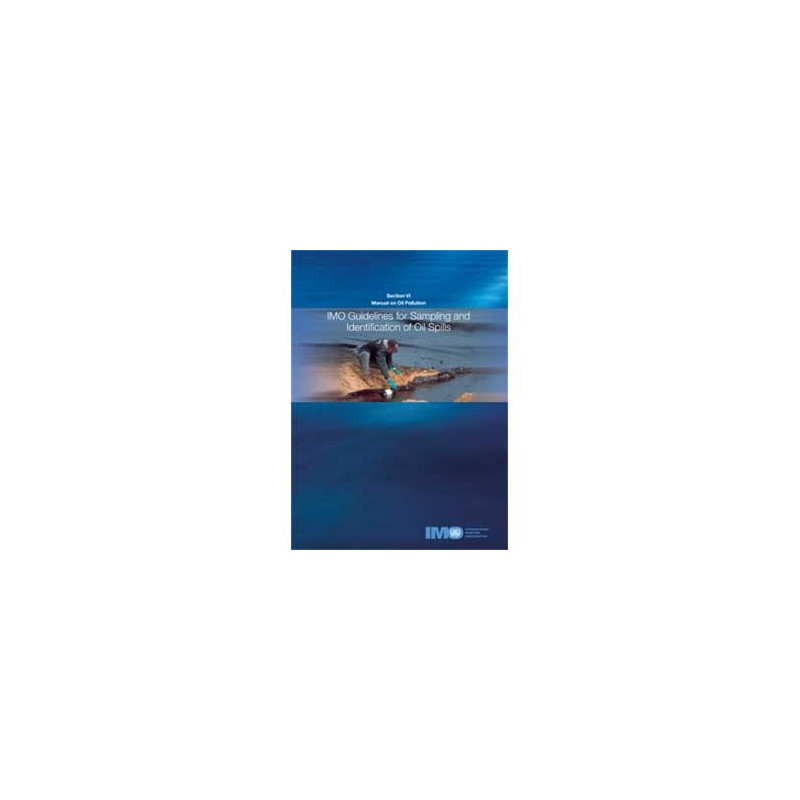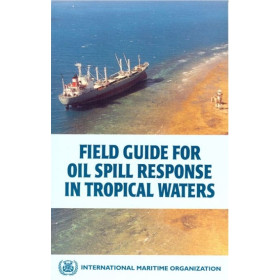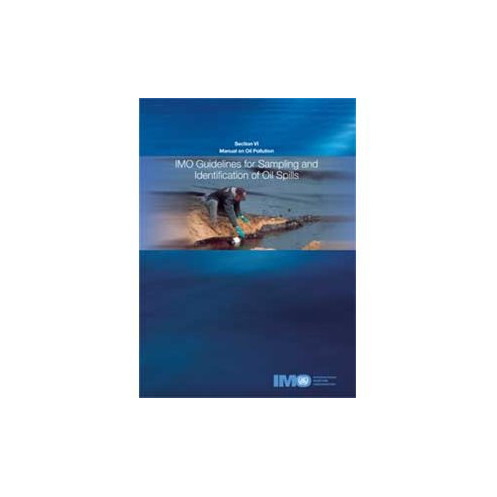




A must-have resource for oil spill response teams. This guide details field sampling methods, tools, and best practices to accurately identify and trace spill origins in real-world scenarios.
Data sheet
Specific References
When an oil spill occurs, rapid and accurate identification is critical to holding responsible parties accountable and mitigating environmental damage. This authoritative manual provides marine industry professionals with the field-tested protocols needed to collect, preserve, and analyze oil samples effectively. Designed for practical use, it bridges the gap between laboratory science and real-world spill response, ensuring that even developing nations can implement reliable sampling strategies.
Unlike generic environmental guides, this manual zeroes in on the hands-on aspects of oil spill investigation. It details the exact equipment required—from sampling kits to storage containers—and outlines step-by-step procedures for collecting samples in diverse marine environments, whether from slicks, shorelines, or submerged sources. The emphasis on fieldwork ensures responders can act decisively, even in remote or resource-limited settings.
Developed by the International Maritime Organization (IMO), this publication aligns with international maritime regulations, making it a trusted resource for governments, port authorities, and environmental agencies worldwide. Its methodologies are designed to produce legally defensible evidence, supporting enforcement actions and environmental protection efforts across borders.
The manual includes checklists, decision trees, and troubleshooting tips to address common obstacles in spill response, such as weather conditions or contaminated samples. While it references laboratory techniques for context, its primary value lies in empowering responders to gather high-quality samples under pressure—minimizing errors that could compromise investigations.
Tailored for professionals in maritime safety, environmental compliance, and emergency response, this manual is an indispensable tool for those tasked with oil spill management. Its clear, actionable guidance ensures that even teams with limited prior experience can execute sampling operations with confidence, reducing the risk of costly oversights.
Master Oil Spill Investigations with the IMO’s Definitive Field Manual
In the high-stakes world of marine pollution response, precision and speed determine the outcome of environmental and legal consequences. The *IMO Manual on Oil Pollution – Section 6: Sampling and Identification of Oil Spills* is the only publication engineered specifically for professionals who must collect and analyze oil samples in real-world conditions. This 1998 printed edition, weighing 1.8 kg, delivers battle-tested protocols that transform raw field data into actionable evidence—whether you’re responding to a coastal spill or a deep-sea incident.
Field-Ready Protocols for Every Scenario
Forget theoretical guides that leave you guessing in the field. This manual cuts straight to the practicalities: what equipment to pack, how to secure samples from slicks or shorelines, and how to avoid cross-contamination in chaotic environments. It’s built for responders who need to act fast—detailing everything from the right containers to use (and why) to the exact steps for documenting a sample’s origin. While it references lab techniques for context, its core focus is on the critical first 24 hours of a spill, where every decision impacts the investigation’s success.
Global Compliance, Local Application
As an IMO publication, this manual carries the weight of international maritime law, making it the go-to reference for governments, port authorities, and environmental agencies worldwide. Its methodologies are designed to produce legally defensible results, whether you’re in a developed nation with advanced labs or a region with limited resources. The included checklists and decision trees ensure consistency, even when teams are under pressure or working in remote locations.
Built for the Realities of Marine Pollution
Oil spills don’t wait for perfect conditions—and neither should your response. This manual addresses the gritty details: how to sample in rough weather, how to handle degraded or mixed oils, and how to preserve evidence for legal proceedings. It’s a toolkit for turning chaos into clarity, with troubleshooting tips that help responders adapt to unexpected challenges. For professionals who can’t afford mistakes, it’s the difference between a successful investigation and a costly failure.
This 1998 printed edition of the *IMO Manual on Oil Pollution – Section 6* is a 1.8 kg reference in English, designed for field use with durable binding and clear, actionable instructions. While a digital version exists for the IMO Bookshelf reader (compatible with Windows only), this physical copy ensures immediate access without reliance on software or platforms.
With a legacy spanning decades, the publisher behind this manual is a cornerstone of maritime safety and environmental protection. Its publications are developed in collaboration with global experts and regulatory bodies, ensuring that every guide—from oil spill response to vessel operations—meets the highest standards of accuracy and practicality. Trusted by governments, shipping companies, and environmental agencies, its resources are the backbone of compliance and crisis management in the marine industry.
The manual provides guidelines on fieldwork techniques, equipment, and strategies for collecting oil samples to identify unknown sources of oil spills, with an emphasis on practical field procedures rather than laboratory methods.
Yes, it is specifically designed to assist governments, including those in developing countries, with oil spill sampling and identification procedures.
The digital version is compatible with Windows devices but does not support Macs, iPhones, iOS, or Android phones.
While it references laboratory methods, the primary focus is on fieldwork and sample collection procedures.
The printed manual weighs 1.8 kilograms.
No, the digital version requires the IMO Bookshelf reader, which is free, but the manual itself is not free.
You might also like