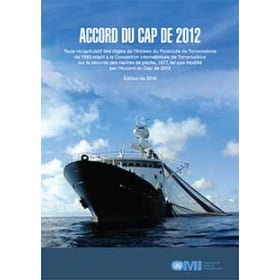




The Cape Town Agreement of 2012 sets global safety standards for fishing vessels 24m+. This 2018 edition covers construction, equipment, and inspection rules for compliance and maritime safety.
Data sheet
Specific References
Strengthen Fishing Vessel Safety with the Definitive International Standard
The Cape Town Agreement of 2012 is the cornerstone of modern fishing vessel safety, providing a robust framework to address the unique risks faced by the global fishing fleet. This publication consolidates decades of maritime safety advancements into a single, actionable document, ensuring vessels 24 meters and longer meet rigorous international standards. With over 45,000 fishing vessels worldwide subject to its regulations, this agreement is a game-changer for an industry historically plagued by high accident rates and preventable fatalities.
Comprehensive Safety Regulations for a High-Risk Industry
This agreement establishes mandatory requirements for vessel design, construction, and equipment, covering critical areas such as stability, fire protection, lifesaving appliances, and communication systems. It integrates the Torremolinos Protocol of 1993 and the 1977 International Convention for the Safety of Fishing Vessels (SFV), creating a unified set of rules that enhance operational safety and reduce vulnerabilities. By setting minimum standards for mechanical and electrical installations, as well as structural integrity, the agreement ensures vessels are built to withstand the demanding conditions of the open sea.
Global Adoption and Future Enforcement
The Cape Town Agreement will enter into force in February 2027, 12 months after ratification by 22 States representing 3,600 qualifying vessels. As of February 2026, 28 States have already committed, covering 3,754 vessels, signaling strong global momentum toward safer fishing practices. This milestone reflects a collective effort to reduce the staggering human and economic costs of fishing-related accidents, which have long been a concern for maritime authorities and industry stakeholders.
Designed for Maritime Professionals
This 2018 edition, presented in a durable 1.8 kg paperback format, is an essential tool for shipowners, maritime inspectors, classification societies, and flag State administrations. Its clear, concise language ensures accessibility for a global audience, while its focus on practical compliance makes it indispensable for daily operations. For those preferring digital access, a secure electronic version is available through the free IMO reader, offering flexibility without compromising accuracy. Stay ahead of regulatory changes with easy access to updates and errata via the IMO website.
The Cape Town Agreement of 2012 is a paperback publication in English, weighing 1.8 kg. It outlines international safety regulations for fishing vessels 24 meters in length and above, covering design, construction, mechanical and electrical systems, fire protection, lifesaving appliances, and communication equipment. The agreement will enter into force in February 2027, following ratification by 22 States representing 3,600 qualifying vessels. As of February 2026, 28 States have committed, covering 3,754 vessels.
For over seven decades, this organization has been at the forefront of maritime safety, security, and environmental protection. As the leading authority on international shipping regulations, it sets global standards that ensure the safe, efficient, and sustainable operation of the maritime industry. Its conventions and agreements are the foundation of modern maritime law, shaping policies that protect lives, vessels, and the marine environment worldwide.
The printed version weighs 1.8 kg.
It applies to fishing vessels that are 24 meters in length and longer, or equivalent in gross tonnage.
The agreement sets minimum requirements for stability and seaworthiness, machinery and electrical installations, life-saving appliances, communications equipment, fire protection, and vessel construction.
It will enter into force in February 2027, 12 months after reaching the required threshold of 22 states representing 3,600 qualified fishing vessels.
As of February 2026, 28 states representing 3,754 fishing vessels of 24 meters or more have committed to the agreement.
Yes, a locked digital version is available with the free IMO reader.
You might also like