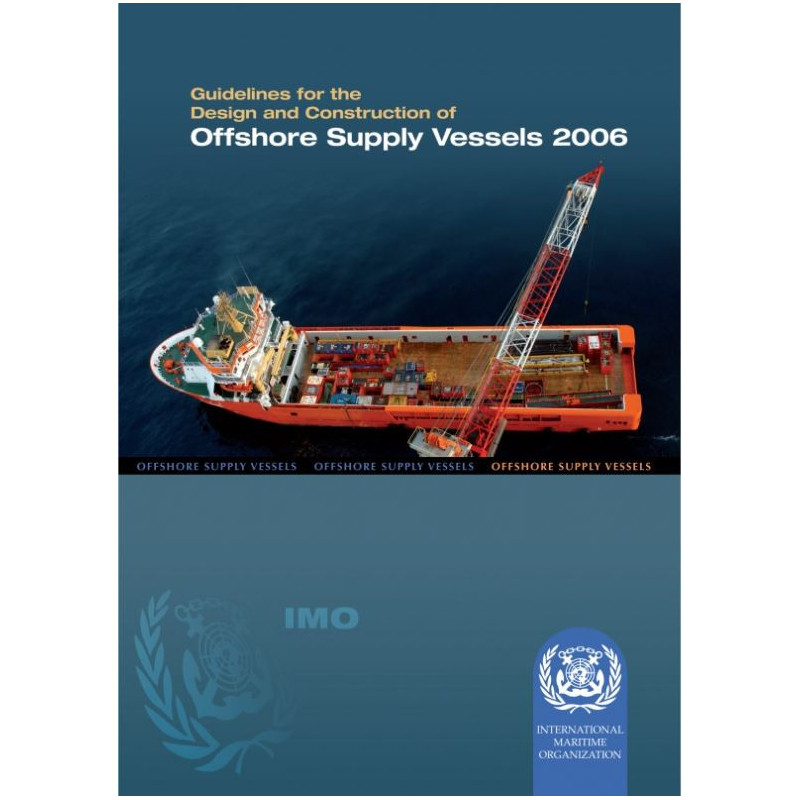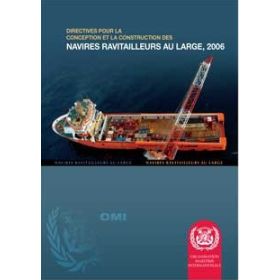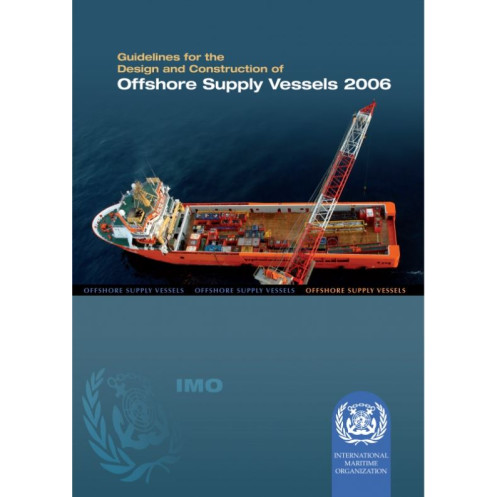




2006 guidelines for designing and constructing offshore supply vessels (OSVs) to ensure safety and SOLAS compliance. Covers stability, subdivision, and damage control.
English edition.
Data sheet
Specific References
The Guidelines for the Design and Construction of Offshore Supply Vessels (OSV) 2006 represent a cornerstone in maritime safety, specifically tailored for the unique operational demands of offshore supply vessels. Developed by leading maritime authorities, these guidelines establish a robust framework to ensure the structural integrity, operational safety, and regulatory compliance of OSVs. By aligning with the International Convention for the Safety of Life at Sea (SOLAS) 1974 and the Intact Stability Code (IS Code), this publication provides a standardized approach to vessel design, construction, and certification, addressing the evolving challenges of the offshore industry.
This publication delivers a meticulously structured set of guidelines that cover every critical aspect of OSV design and construction. From stability criteria to subdivision requirements, the guidelines ensure that vessels are built to withstand the harsh conditions of offshore environments while maintaining optimal safety for crew and cargo. The 2006 edition incorporates the latest amendments to SOLAS and the IS Code, reflecting advancements in maritime technology and regulatory expectations. It eliminates redundancies found in earlier versions, streamlining compliance while reinforcing safety protocols for vessels engaged in specialized operations such as diving support or oceanographic surveys.
Safety is at the heart of these guidelines, with a strong emphasis on stability after damage and subdivision requirements. The publication introduces updated criteria to mitigate risks associated with flooding, structural failure, and operational hazards, ensuring that OSVs maintain their seaworthiness even in adverse conditions. For vessels carrying specialized personnel—such as industrial workers or technical experts—the guidelines provide tailored provisions to address their unique safety needs, distinguishing them from standard crew members. This approach ensures that all personnel on board are protected under a unified safety framework.
The 2006 guidelines introduce a standardized Certificate of Compliance, simplifying the certification process for shipbuilders, owners, and regulatory bodies. This certificate serves as a clear indicator of a vessel’s adherence to international safety standards, facilitating smoother inspections and approvals. By harmonizing with SOLAS and the IS Code, the guidelines ensure that OSVs meet the highest levels of maritime safety, reducing the risk of non-compliance and enhancing operational reliability in global offshore markets.
Designed for naval architects, shipbuilders, maritime engineers, and regulatory authorities, this publication is an indispensable tool for anyone involved in the design, construction, or operation of offshore supply vessels. Its clear, structured approach makes it accessible to professionals at all levels, from industry veterans to those new to offshore vessel standards. Whether used as a reference for new builds or as a benchmark for existing vessels, these guidelines provide the technical foundation needed to ensure safety, efficiency, and compliance in the offshore sector.
Elevate Offshore Vessel Safety with the Definitive 2006 Guidelines for OSV Design and Construction
The Guidelines for the Design and Construction of Offshore Supply Vessels (OSV) 2006 are the industry’s gold standard for ensuring the safety, stability, and regulatory compliance of offshore supply vessels. Developed to address the unique challenges of OSV operations, this publication provides a comprehensive framework that aligns with the International Convention for the Safety of Life at Sea (SOLAS) 1974 and the Intact Stability Code (IS Code). By integrating the latest amendments to these critical maritime regulations, the 2006 edition sets a new benchmark for vessel design, construction, and certification, making it an essential resource for shipbuilders, naval architects, and maritime professionals worldwide.
Engineered for Safety and Operational Excellence
These guidelines are meticulously crafted to enhance the safety of offshore supply vessels and their personnel, with a focus on stability, subdivision, and damage control. The 2006 edition introduces updated criteria for intact and damaged stability, ensuring that vessels can withstand the rigors of offshore environments while maintaining optimal performance. It also eliminates redundancies from earlier versions, streamlining compliance and reducing the complexity of regulatory adherence. For vessels engaged in specialized operations—such as diving support or oceanographic surveys—the guidelines provide tailored provisions to address the unique safety needs of industrial personnel and technical experts on board.
Simplified Certification and Global Compliance
One of the standout features of the 2006 guidelines is the introduction of a standardized Certificate of Compliance, which simplifies the certification process for shipbuilders and vessel owners. This certificate serves as a clear and concise indicator of a vessel’s adherence to international safety standards, facilitating smoother inspections and approvals. By harmonizing with SOLAS and the IS Code, the guidelines ensure that OSVs meet the highest levels of maritime safety, reducing the risk of non-compliance and enhancing operational reliability in global offshore markets. Whether you’re designing a new vessel or upgrading an existing one, these guidelines provide the technical foundation needed to achieve compliance and operational excellence.
This authoritative publication spans 18 pages and is presented in a printed format, offering a tangible resource for maritime professionals. Published in January 2007, the 2006 edition reflects the latest advancements in offshore vessel safety and regulatory standards. Weighing 1.8 kg, it is designed for durability and ease of use, making it a practical addition to any maritime library or professional workspace.
With a legacy of excellence in maritime publications, this provider delivers authoritative resources that set the standard for safety, compliance, and technical precision in the shipping and offshore industries. Their publications are trusted by professionals worldwide for their accuracy, relevance, and alignment with international regulations, making them an indispensable partner for maritime operations.
These guidelines apply to the design and construction of new offshore supply vessels, excluding those carrying more than 12 industrial personnel.
Yes, they provide a safety level equivalent to the relevant requirements of the 1974 SOLAS Convention, including stability criteria from the IS Code.
The guidelines address subdivision and damage stability requirements, ensuring enhanced safety in case of hull damage.
Yes, for special purposes like diving support or oceanographic surveys, but onboard personnel are considered special personnel in such cases.
The digital version is locked and specifically formatted for OMI e-readers.
The publication contains 18 pages.
They were adopted in 2006 by the IMO Assembly resolution and published in January 2007.
You might also like