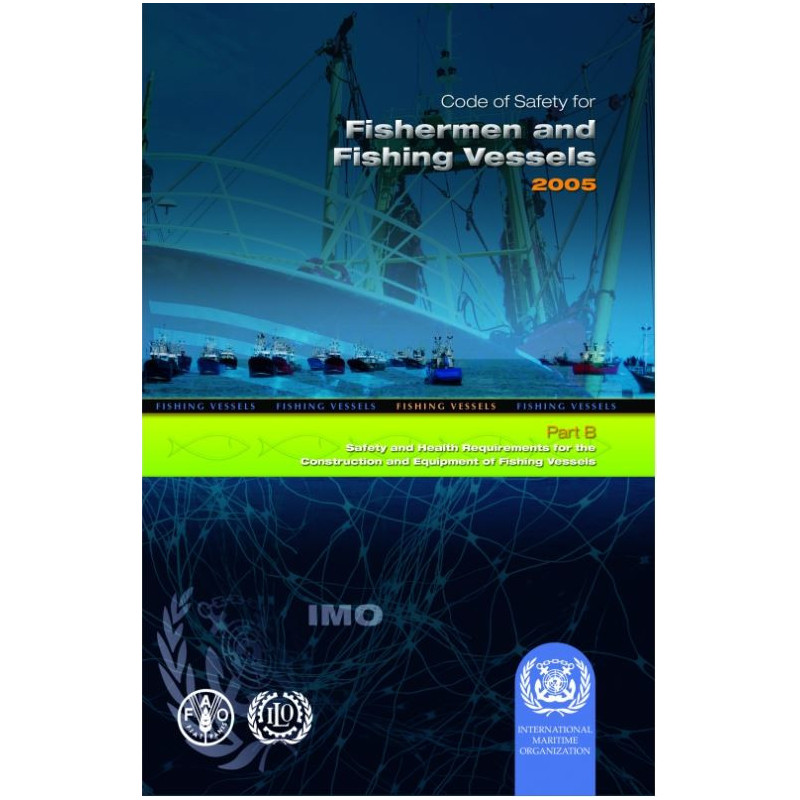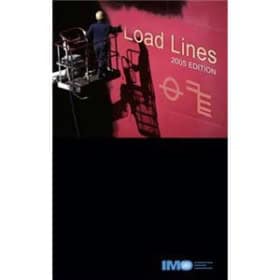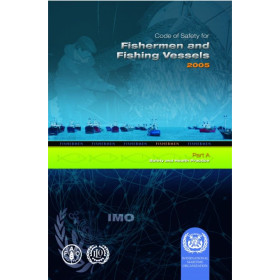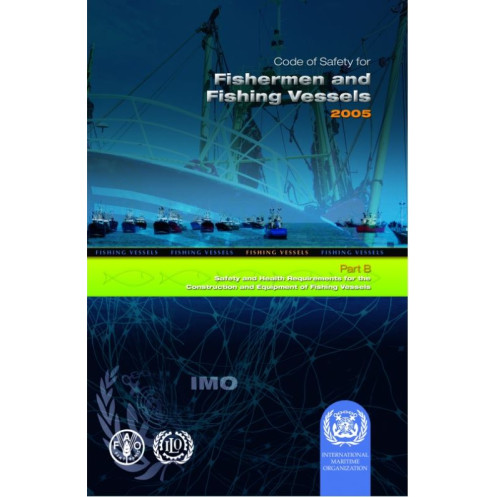




This authoritative publication outlines safety and health requirements for constructing and equipping fishing vessels (24m+). A must-have for shipbuilders and owners to meet global maritime standards.
Data sheet
Specific References
The *Code of Safety for Fishermen and Fishing Vessels, Part B* is a cornerstone publication for professionals in the maritime fishing industry. Developed by the International Maritime Organization (IMO), this code establishes rigorous safety and health requirements for the construction and equipment of fishing vessels. Designed to enhance operational safety at sea, it serves as a critical tool for shipbuilders, vessel owners, and maritime regulators seeking to align with international standards.
Fishing remains one of the most hazardous occupations globally, with vessels often operating in extreme conditions far from immediate assistance. This code addresses these risks by providing structured guidelines that cover structural integrity, lifesaving appliances, fire protection, and occupational health measures. By adhering to these standards, stakeholders can significantly reduce accidents, improve crew welfare, and ensure compliance with global maritime regulations. The 2005 edition, approved by the IMO’s Maritime Safety Committee (MSC), the Food and Agriculture Organization (FAO), and the International Labour Organization (ILO), reflects a consensus among leading maritime authorities.
Part B of the code zeroes in on the technical and operational aspects of vessel construction and equipment. It outlines requirements for stability, watertight integrity, machinery, electrical systems, and navigation equipment, ensuring vessels are built to withstand the demands of high-seas fishing. Additionally, it emphasizes crew safety through guidelines on personal protective equipment, medical facilities, and emergency procedures. These provisions are particularly critical for vessels measuring 24 meters or longer, which face heightened risks due to their size and operational scope.
This code is tailored for a broad range of maritime professionals, including naval architects, shipyard engineers, fishing vessel owners, and maritime inspectors. It is also a valuable resource for flag state authorities and classification societies responsible for verifying compliance with international safety standards. By integrating these guidelines into design, construction, and operational practices, industry stakeholders can foster a safer, more sustainable fishing sector.
The code’s adoption is a testament to its importance in the maritime community. As of January 2022, 17 states—representing approximately 2,000 qualified fishing vessels—have committed to its implementation. The threshold for entry into force requires 22 states with an aggregate of 3,600 vessels, underscoring the code’s widespread relevance. Countries like Norway, Spain, France, and Germany are among those leading the charge, demonstrating the code’s role in harmonizing safety practices across diverse fishing fleets.
Presented in a clear, accessible format, this printed edition is designed for practical use in shipyards, onboard vessels, and regulatory offices. Its physical dimensions (9.5 x 6 x 0.5 inches) and manageable weight (1.8 kg) make it easy to store and reference, whether in an office or at sea. While a digital version is available, the printed format ensures reliability in environments where electronic access may be limited, providing a dependable resource for professionals who prioritize safety and compliance.
Elevate Safety Standards with the IMO’s Definitive Guide for Fishing Vessels
The *Code of Safety for Fishermen and Fishing Vessels, Part B* is the authoritative reference for ensuring compliance with international safety and health requirements in the fishing industry. Published in 2005 and endorsed by the IMO, FAO, and ILO, this code provides a comprehensive framework for the construction and equipment of fishing vessels, addressing critical aspects such as structural integrity, lifesaving measures, and crew welfare. It is an essential resource for professionals who design, build, or operate vessels measuring 24 meters or longer, where safety risks are most pronounced.
Designed for High-Seas Fishing Operations
Fishing vessels face unique challenges, from harsh weather conditions to extended periods at sea. This code tackles these challenges head-on by establishing clear guidelines for stability, watertight integrity, machinery safety, and emergency preparedness. It also includes provisions for occupational health, ensuring that crew members have access to medical facilities and protective equipment. By adhering to these standards, vessel owners and operators can minimize risks, enhance operational efficiency, and meet the stringent requirements set by flag states and classification societies.
Global Recognition and Adoption
The code’s significance is reflected in its adoption by 17 states, representing around 2,000 qualified fishing vessels as of 2022. With a threshold for entry into force set at 22 states and 3,600 vessels, its influence continues to grow. Leading maritime nations, including Norway, Spain, and Germany, have already integrated these standards into their regulatory frameworks, demonstrating the code’s role in fostering a safer, more standardized global fishing industry.
A Reliable Resource for Maritime Professionals
Available in a convenient printed format, this publication is designed for practical use in shipyards, onboard vessels, and regulatory offices. Its compact dimensions (9.5 x 6 x 0.5 inches) and lightweight design (1.8 kg) make it easy to store and reference, ensuring that critical safety information is always at hand. While a digital version exists, the printed edition offers unmatched reliability in environments where electronic access may be limited, making it the preferred choice for professionals who demand dependability.
This publication is the 2005 edition of the *Code of Safety for Fishermen and Fishing Vessels, Part B*, focusing on safety and health requirements for the construction and equipment of fishing vessels measuring 24 meters or longer. Available in English, the printed version weighs 1.8 kg and measures 9.5 x 6 x 0.5 inches. It was approved by the IMO’s Maritime Safety Committee in December 2004 and subsequently endorsed by the FAO and ILO. The code’s entry into force requires adoption by 22 states with an aggregate of 3,600 qualified vessels, with 17 states currently committed as of 2022.
With a legacy of shaping global maritime standards, the publisher behind this code is a leading authority in the development of safety regulations for the shipping and fishing industries. Recognized for its collaboration with international organizations such as the IMO, FAO, and ILO, it provides essential resources that drive compliance and operational excellence across the maritime sector.
This code applies to fishing vessels that are 24 meters in length and longer, operating on the high seas.
No, the paper version of this publication is only available in English.
The printed version measures 9.50 x 6.00 x 0.50 inches and weighs 1.8 kg.
The code requires 22 states with an aggregate of 3,600 qualified fishing vessels to express their consent for it to enter into force.
This edition was approved by the IMO’s Maritime Safety Committee in December 2004, welcomed by the FAO in March 2005, and approved by the ILO in June 2005.
Yes, a digital version is available and can be read using the free software provided by the issuing organization.
Part B focuses on safety and health requirements for the construction and equipment of fishing vessels.
You might also like