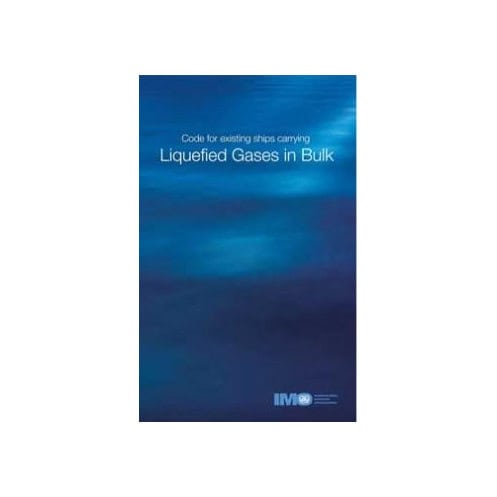




Ensure compliance and safety for existing ships carrying liquefied gases in bulk with this essential 1976 IMO code. Includes key amendments and implementation guidelines up to 1980.
Data sheet
Specific References
Ensure Compliance and Safety for Legacy Gas-Carrying Vessels
The Code for Existing Ships Carrying Liquefied Gases in Bulk (IMO – 788E) is the definitive international standard for ships built before December 31, 1976, that transport liquefied gases in bulk. This essential publication provides a tailored framework for vessels that do not fall under the broader requirements of Resolution A.328(IX), offering clear guidelines to enhance safety, operational efficiency, and regulatory compliance. With its focus on legacy ships, this code addresses the unique challenges faced by older vessels, ensuring they meet critical safety benchmarks without the need for costly retrofitting.
Comprehensive Guidelines for Safe Operations
This code is a vital resource for maritime professionals, including shipowners, operators, classification societies, and port authorities. It outlines minimum safety requirements for the transport of liquefied gases, covering everything from cargo handling and storage to emergency response protocols. By adhering to these guidelines, industry stakeholders can mitigate risks, prevent accidents, and ensure the safe and efficient transport of hazardous materials across global waters.
Updated with Critical Amendments and Supplements
The 1976 edition of this code is enhanced with the 1980 supplement, which includes a summary of minimum requirements and detailed directives for applying amendments from 1978, 1979, and 1980. These updates ensure that users have access to the latest regulatory developments, enabling them to stay ahead of industry changes and maintain compliance with evolving maritime laws. The inclusion of these supplements makes this publication a dynamic tool for long-term operational planning.
Practical and Accessible Format
Available in a printed book format, this code is designed for ease of use in both office and onboard settings. Weighing just 1.8 kg, it is portable and durable, making it a practical reference for daily operations. Whether you are conducting inspections, training crew members, or developing safety protocols, this publication provides the clarity and precision needed to make informed decisions in high-stakes maritime environments.
The Code for Existing Ships Carrying Liquefied Gases in Bulk (IMO – 788E) is a printed publication in English, published in 1976 by the International Maritime Organization (IMO). It applies to ships delivered before December 31, 1976, and includes essential supplements such as a summary of minimum requirements and the 1980 supplement, which provides guidelines for implementing amendments from 1978, 1979, and 1980. The book weighs 1.8 kg and is also available in digital formats for added convenience.
The International Maritime Organization (IMO) is the United Nations' specialized agency responsible for regulating shipping and ensuring maritime safety, security, and environmental protection. With a global mandate, the IMO develops international standards and conventions that govern the maritime industry, fostering collaboration among member states to address challenges such as pollution, crew safety, and operational efficiency. Its publications are widely recognized as authoritative references for maritime professionals worldwide.
This code applies to existing ships in service or those not covered by broader standards, specifically vessels delivered before December 31, 1976, carrying liquefied gases in bulk.
Yes, it includes a summary of minimum code requirements and the 1980 supplement, which provides guidelines for amendments, implementation dates, and updates from 1978, 1979, and 1980.
No, this edition is only available in English, both in paper and digital formats.
The physical version weighs approximately 1.8 kg.
The digital version is locked and requires a free dedicated reader provided by the publisher to access the content.
No, it specifically applies to ships delivered before December 31, 1976. Ships built after this date are generally subject to more extensive standards.
You might also like