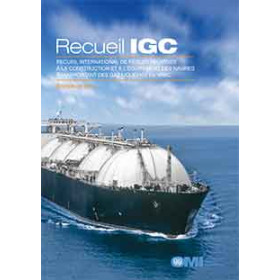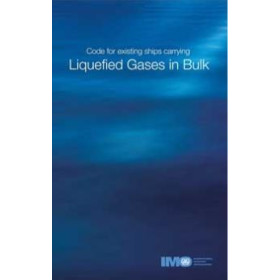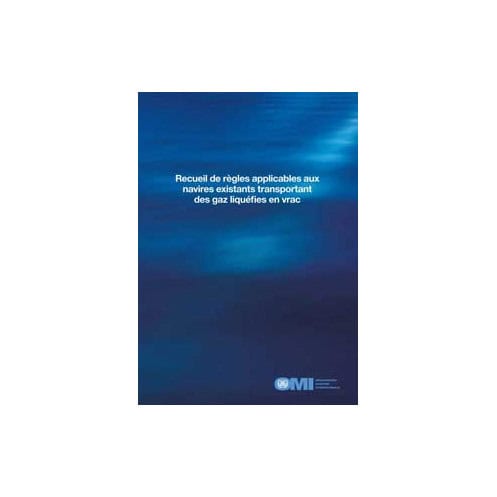



Essential regulatory guide for existing vessels transporting liquefied gases in bulk. This French-language paper edition ensures compliance and safety with official maritime standards.
Data sheet
Specific References
This official publication is the French-language edition of the International Maritime Organization’s (IMO) Code of Rules for existing ships carrying liquefied gases in bulk. Designed as a cornerstone reference for maritime professionals, it provides the regulatory framework necessary to ensure the safe and compliant transport of liquefied gases at sea. As a critical resource for shipowners, operators, and maritime authorities, this code establishes the technical and operational standards that govern the design, construction, equipment, and operation of gas carriers, ensuring both crew safety and environmental protection.
The IMO 789F code consolidates the essential rules and guidelines applicable to existing gas carriers, offering a structured approach to compliance. It covers a wide range of technical and operational aspects, including cargo containment systems, safety equipment, fire protection measures, and emergency procedures. By integrating these regulations into a single, accessible volume, the publication simplifies adherence to international maritime safety standards, reducing the risk of accidents and ensuring seamless operations for vessels transporting liquefied gases such as LNG (liquefied natural gas) and LPG (liquefied petroleum gas).
Engineered for professionals in the maritime sector, this publication is an indispensable tool for ship inspectors, naval architects, marine engineers, and safety officers. It serves as a reference for verifying compliance with international regulations, conducting risk assessments, and implementing best practices in gas carrier operations. The inclusion of supplements up to 1980 ensures that users have access to the most relevant updates and amendments, making it a reliable resource for both routine operations and regulatory audits.
Presented in a printed format, this publication is designed for durability and ease of use in demanding maritime environments. Its physical form allows for quick reference during inspections, training sessions, or onboard operations, eliminating the need for digital devices in situations where reliability is paramount. The French-language edition ensures accessibility for French-speaking maritime professionals, further enhancing its utility as a global compliance tool. Whether used for training, operational planning, or regulatory compliance, this code is a vital asset for maintaining the highest standards of safety in the transport of liquefied gases.
Ensure Compliance and Safety with the IMO 789F Code for Gas Carriers
Navigating the complexities of transporting liquefied gases in bulk demands a robust regulatory framework, and the IMO 789F – Code of Rules for Existing Ships Carrying Liquefied Gases in Bulk delivers just that. This official publication, published by the International Maritime Organization (IMO), is the French-language edition of the I788E code, tailored to meet the needs of maritime professionals operating existing gas carriers. It serves as the definitive guide for ensuring compliance with international safety standards, covering critical aspects such as cargo containment, fire protection, and emergency response protocols. With supplements included up to 1980, this code provides a comprehensive and up-to-date resource for maintaining the highest levels of safety and operational efficiency.
Designed for Maritime Professionals by Industry Experts
This publication is meticulously crafted to address the unique challenges faced by professionals in the maritime industry, including shipowners, operators, naval architects, and safety inspectors. It offers clear, actionable guidelines for the design, construction, and operation of gas carriers, ensuring that vessels meet the stringent requirements set forth by international maritime regulations. The printed format, weighing 1.8 kg, is built for durability and ease of use in the field, making it an ideal reference for onboard operations, training sessions, and regulatory audits. By integrating this code into their workflows, maritime professionals can mitigate risks, enhance operational safety, and ensure compliance with global standards.
A Reliable Resource for Global Maritime Operations
The IMO 789F code is more than just a regulatory document—it is a trusted companion for maritime professionals worldwide. Available in a printed edition, it provides immediate access to critical information without the need for digital devices, ensuring reliability in all operational environments. The French-language version broadens its accessibility, making it an invaluable tool for French-speaking crews and maritime authorities. Whether used for routine inspections, emergency preparedness, or crew training, this publication stands as a cornerstone of safety and compliance in the transport of liquefied gases.
This official IMO publication is presented in a durable printed format, weighing 1.8 kg, and is entirely in French. It includes the complete set of rules and guidelines for existing ships carrying liquefied gases in bulk, along with supplements up to 1980, ensuring compliance with the latest regulatory updates.
The International Maritime Organization (IMO) is the United Nations' specialized agency responsible for regulating shipping and ensuring maritime safety, security, and environmental protection. As the global standard-setting authority for the maritime industry, the IMO develops and maintains a comprehensive framework of conventions, codes, and guidelines that govern international shipping. Its publications are recognized as the benchmark for maritime compliance, providing essential resources for professionals across the industry.
This publication includes supplements up to the year 1980.
Yes, a locked digital version is available and can be read using the free IMO reader.
The printed version weighs 1.8 kg.
This specific version is only available in French, but an English edition exists under a different code.
It applies to existing vessels transporting liquefied gases in bulk.
You might also like