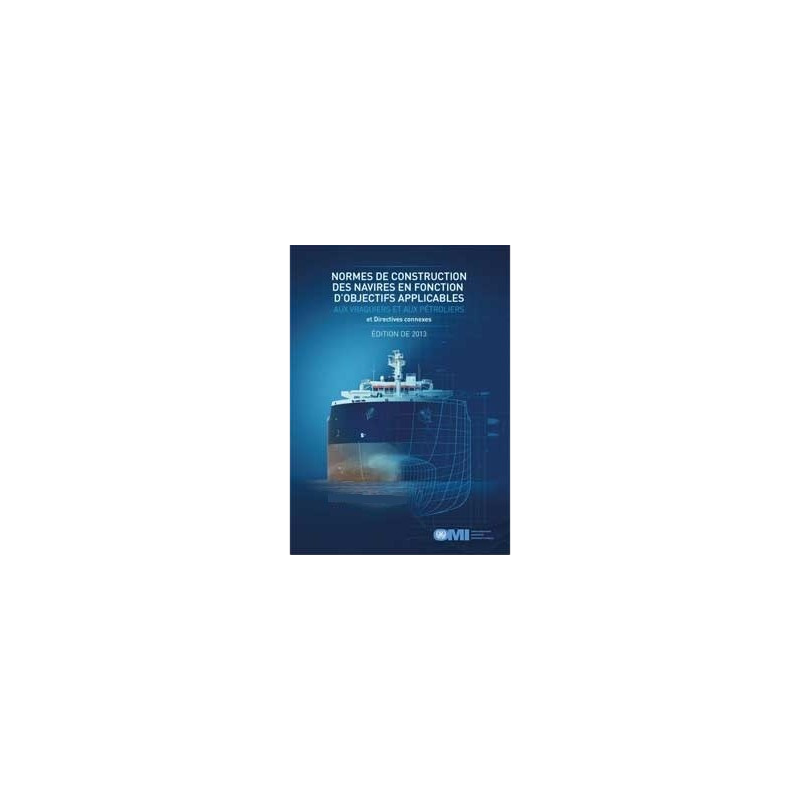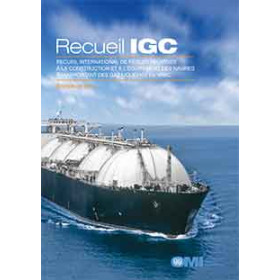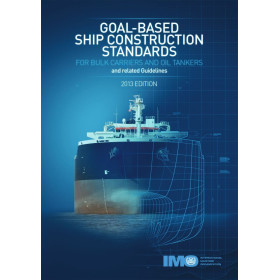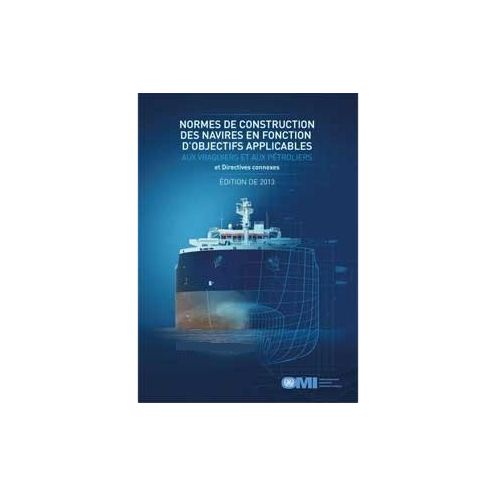




This French-language guide covers goal-based ship construction standards for bulk carriers and oil tankers, including SOLAS amendments, compliance verification, and documentation requirements.
Data sheet
Specific References
This essential publication provides shipbuilders, naval architects, maritime engineers, and classification societies with the latest international standards for constructing bulk carriers and oil tankers. Developed by the International Maritime Organization (IMO), these goal-based standards represent the most advanced framework for ensuring vessel safety, structural integrity, and operational efficiency in the maritime industry. The document consolidates critical resolutions and directives that shape modern ship construction practices, making it an indispensable resource for professionals involved in maritime design, construction, and compliance.
The publication incorporates the landmark Resolution MSC.287(87), which establishes goal-based ship construction standards specifically for bulk carriers and oil tankers. These standards shift the focus from prescriptive rules to performance-based objectives, allowing for greater innovation while maintaining rigorous safety benchmarks. The document also includes Resolution MSC.290(87), which amends the International Convention for the Safety of Life at Sea (SOLAS) to make these standards mandatory, ensuring global compliance across the maritime sector.
To support the implementation of these standards, the publication provides detailed directives for verifying compliance (MSC.296(87)), offering a structured approach for shipyards, designers, and regulators to assess adherence to the goal-based requirements. It also outlines the essential information to include in the Ship Construction File (MSC.1/Circ.1343), a critical document that accompanies a vessel throughout its lifecycle, ensuring transparency and traceability in the construction process.
Beyond the specific standards for bulk carriers and oil tankers, this publication includes generic guidelines for developing goal-based standards (MSC.1/Circ.1394). These guidelines serve as a blueprint for future IMO regulations, promoting a consistent and adaptable approach to maritime safety and environmental protection. By adopting these principles, the maritime industry can evolve in response to technological advancements and emerging challenges while maintaining the highest levels of safety and performance.
Tailored for professionals in the merchant marine sector, this publication is a must-have for those involved in ship design, construction, classification, and regulatory compliance. Whether you are a naval architect developing cutting-edge vessel designs, a shipyard manager overseeing construction projects, or a maritime authority ensuring regulatory adherence, this document provides the technical foundation and practical guidance needed to meet international standards. Its clear structure and comprehensive coverage make it an invaluable tool for navigating the complexities of modern ship construction.
Master the Future of Ship Construction with IMO’s Goal-Based Standards
This official publication delivers the International Maritime Organization’s (IMO) groundbreaking goal-based ship construction standards, tailored specifically for bulk carriers and oil tankers. As the maritime industry shifts toward performance-driven regulations, this document provides the essential framework for designing, building, and certifying vessels that meet the highest safety and structural integrity benchmarks. It consolidates critical IMO resolutions, including MSC.287(87) for goal-based standards, MSC.290(87) for SOLAS amendments, and MSC.296(87) for compliance verification, making it a cornerstone resource for maritime professionals.
Comprehensive Coverage of Mandatory and Guidance Documents
Beyond the core standards, this publication includes detailed directives for implementing and verifying compliance, such as the Ship Construction File guidelines (MSC.1/Circ.1343), which outline the critical documentation required for vessel certification. It also features the generic guidelines for developing goal-based standards (MSC.1/Circ.1394), offering a forward-looking perspective on how future maritime regulations will be structured. With a weight of 1.8 kg, this paperback edition is designed for durability and ease of use in shipyards, design offices, and regulatory bodies.
French-Language Resource for Global Maritime Compliance
Available exclusively in French, this publication ensures accessibility for French-speaking maritime professionals while maintaining the technical precision required for international compliance. Whether you are a naval architect, shipbuilder, or maritime regulator, this document provides the clarity and depth needed to navigate the evolving landscape of ship construction standards. It is an indispensable tool for ensuring that vessels not only meet current requirements but are also prepared for future regulatory developments.
This paperback publication presents the IMO’s goal-based ship construction standards in French, covering resolutions MSC.287(87), MSC.290(87), and MSC.296(87), along with compliance directives MSC.1/Circ.1343 and MSC.1/Circ.1394. Weighing 1.8 kg, it is designed for professional use in shipbuilding, design, and regulatory environments.
The International Maritime Organization (IMO) is the United Nations’ specialized agency responsible for regulating global shipping. Established in 1948, the IMO sets international standards for maritime safety, security, and environmental performance, ensuring that shipping remains the most efficient and sustainable mode of global transportation. Its conventions and guidelines are the foundation of modern maritime law, shaping the design, construction, and operation of vessels worldwide.
The publication covers construction standards based on objectives for bulk carriers and oil tankers.
Yes, the standards are made mandatory through amendments to the SOLAS convention (MSC.290(87)).
Yes, it includes directives for verifying compliance with the goal-based construction standards (MSC.296(87)).
The book provides directives on the specific information to include in the Ship Construction File (MSC.1/Circ.1343).
Yes, a locked digital version is available and can be read using the free IMO reader.
The printed version weighs 1.8 kg.
You might also like