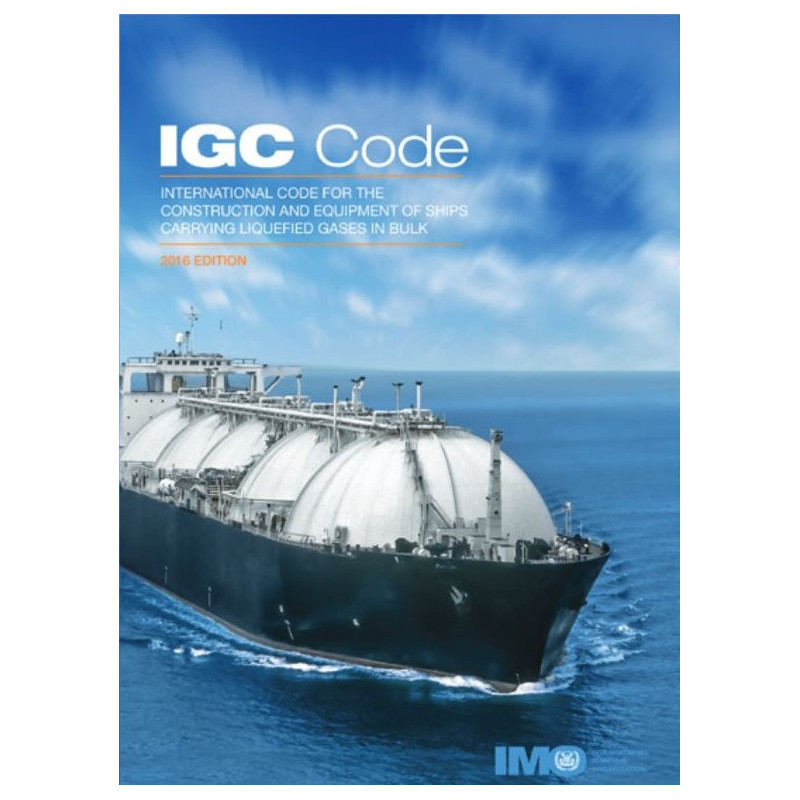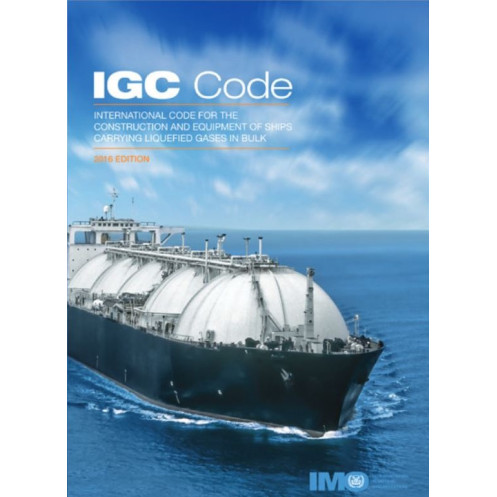




Meet international safety standards with the 2016 IGC Code, governing ship construction and equipment for liquefied gas transport. Available in print or secured digital format for seamless compliance.
Data sheet
Specific References
The International Code for the Construction and Equipment of Ships Carrying Liquefied Gases in Bulk (IGC Code) 2016 is the definitive regulatory framework for ensuring the safe transportation of liquefied gases and other hazardous substances by sea. Designed to address the unique challenges of bulk gas transport, this code establishes rigorous standards for ship design, construction, and onboard equipment. By minimizing risks to vessels, crews, and the marine environment, it plays a critical role in maintaining the integrity and safety of global maritime operations.
This publication is an indispensable tool for naval architects, shipbuilders, maritime engineers, and safety inspectors involved in the gas shipping industry. It provides detailed guidelines on structural integrity, cargo containment systems, and operational protocols to prevent accidents, leaks, and environmental contamination. Whether you are designing new vessels or ensuring compliance for existing fleets, the IGC Code 2016 delivers the technical precision required for safe and efficient gas transport.
Adopted by the International Maritime Organization (IMO), the IGC Code is a mandatory requirement for all gas carriers engaged in international trade. It covers a wide range of liquefied gases, including liquefied natural gas (LNG), liquefied petroleum gas (LPG), and other chemical gases listed in Chapter 19. Compliance with this code is not only a legal obligation but also a cornerstone of industry best practices, ensuring that vessels meet the highest safety and environmental standards.
Presented in a clear and structured printed format, this 2016 edition is designed for ease of use in both office and field environments. With 200 pages of authoritative content, it serves as a reliable reference for daily operations, inspections, and regulatory audits. The durable paperback binding ensures long-term usability, making it a practical addition to any maritime professional’s library.
While this edition is available in a convenient printed format, it is also offered as a secured digital version compatible with the free IMO e-reader. This flexibility allows professionals to access critical information whether onshore or at sea, ensuring compliance and safety are never compromised. The IGC Code 2016 remains the benchmark for gas shipping regulations, combining technical rigor with practical application.
Ensure Compliance and Safety with the IGC Code 2016
The International Code for the Construction and Equipment of Ships Carrying Liquefied Gases in Bulk (IGC Code) 2016 is the cornerstone of maritime safety for gas carriers worldwide. This essential publication provides a comprehensive framework for the design, construction, and operation of vessels transporting liquefied gases in bulk, ensuring the highest levels of protection for crews, ships, and the marine environment. With the growing demand for liquefied natural gas (LNG) and other chemical gases, adherence to this code is more critical than ever for maintaining operational integrity and regulatory compliance.
Rigorous Standards for High-Risk Cargo
Developed by the International Maritime Organization (IMO), the IGC Code 2016 sets forth stringent requirements for the structural design, cargo containment systems, and safety equipment of gas carriers. It addresses the unique hazards associated with transporting liquefied gases, such as extreme temperatures, pressure variations, and potential toxicity. By defining clear guidelines for shipbuilders, operators, and inspectors, the code minimizes risks of leaks, explosions, and environmental contamination, ensuring that vessels are equipped to handle these high-risk cargoes safely.
Global Mandate for Maritime Safety
As a mandatory international standard, the IGC Code applies to all gas carriers engaged in global trade, making it an indispensable resource for maritime professionals. Whether you are involved in ship design, construction, or day-to-day operations, this code provides the technical foundation needed to achieve compliance with international regulations. Its guidelines cover everything from cargo handling procedures to emergency response protocols, offering a holistic approach to maritime safety.
Practical and Reliable Reference
This 2016 edition is presented in a user-friendly printed format, featuring 200 pages of detailed technical content. The durable paperback binding ensures durability, making it ideal for use in both office and onboard environments. For added convenience, a secured digital version is also available, compatible with the free IMO e-reader, allowing professionals to access critical information anytime, anywhere. With its blend of technical precision and practical application, the IGC Code 2016 is the ultimate resource for ensuring safe and compliant gas shipping operations.
The International Code for the Construction and Equipment of Ships Carrying Liquefied Gases in Bulk (IGC Code) 2016 is a printed publication featuring 200 pages of authoritative content. Published in June 2016, this edition is available in English and presented in a durable paperback format, measuring 300 mm in height and 210 mm in width. Weighing 1.8 kg, it is designed for long-term use in professional maritime settings.
With a legacy of setting global maritime standards, the publisher of this code is a leading authority in the development of safety regulations for the shipping industry. Renowned for its technical expertise and commitment to maritime safety, it provides essential resources that support compliance, innovation, and operational excellence across the sector.
This edition was published in June 2016.
The printed version contains 200 pages.
Yes, a locked digital version is available and compatible with the free reader.
The printed book measures 300 mm in height and 210 mm in width.
The printed version weighs 1.8 kg.
Chapter 19 lists the substances covered by this code.
The printed version uses a paperback binding.
You might also like