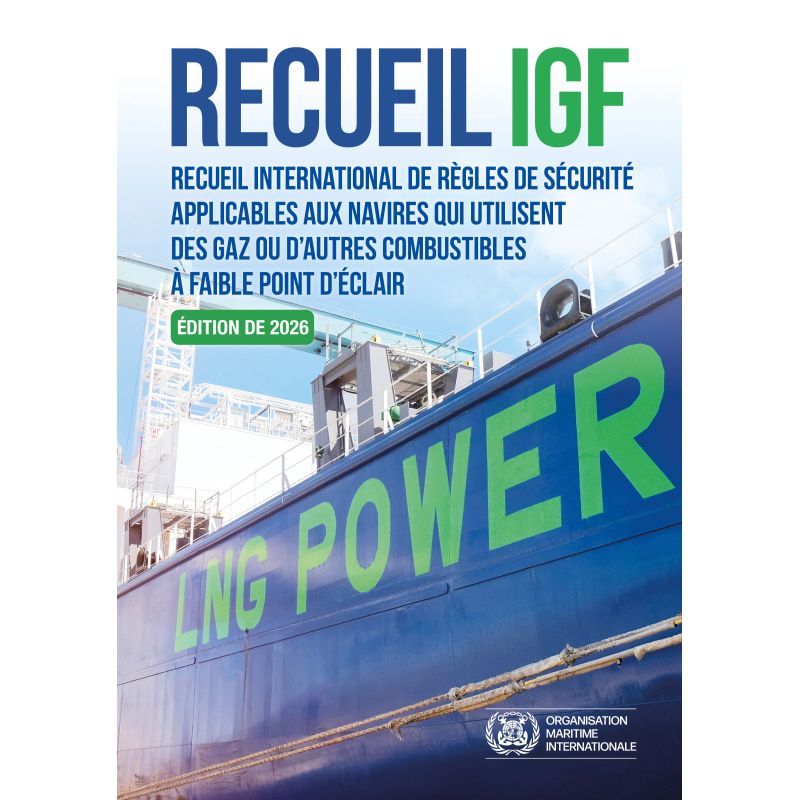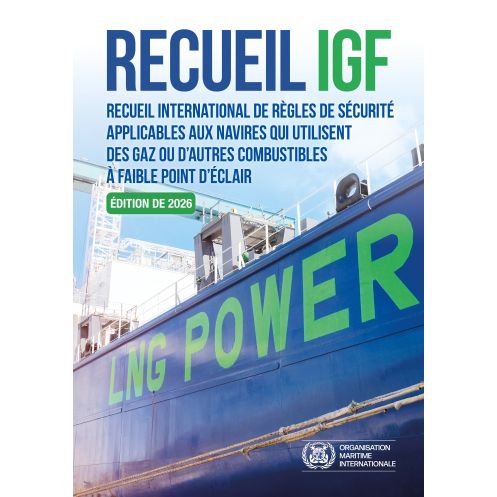



This French edition of the IGF Code provides mandatory safety rules for ships using gas or low-flashpoint fuels. Printed for compliance, it ensures secure design and operation while minimizing risks.
Data sheet
Specific References
The maritime industry is evolving, with an increasing number of vessels transitioning to alternative fuels such as liquefied natural gas (LNG) and other low-flashpoint fuels. To ensure safety and regulatory compliance, the International IGF Code establishes a mandatory international standard for ships operating on these fuels. This comprehensive publication provides the framework needed to minimize risks to vessels, crews, and the environment, making it an indispensable resource for maritime professionals.
Unlike traditional prescriptive regulations, the IGF Code adopts a goal-based approach, focusing on functional requirements rather than rigid specifications. This methodology allows for greater flexibility in design, construction, and operation while maintaining the highest safety standards. The code outlines mandatory criteria for the arrangement, installation, control, and monitoring of machinery, equipment, and systems, ensuring that vessels using low-flashpoint fuels adhere to internationally recognized safety protocols.
This publication is tailored for shipowners, operators, naval architects, engineers, and maritime regulators who require a thorough understanding of safety regulations for gas-fueled vessels. Whether involved in the design of new ships or the retrofitting of existing ones, professionals will find this code essential for ensuring compliance with international maritime safety standards. It serves as a critical reference for classification societies, flag state authorities, and port state control inspectors.
The IGF Code addresses all aspects of safety for ships using gases or other low-flashpoint fuels, including:
By integrating these regulations, maritime stakeholders can enhance operational safety, reduce environmental risks, and ensure compliance with global maritime conventions.
As the maritime industry shifts toward cleaner and more sustainable fuels, regulatory compliance becomes increasingly complex. The IGF Code provides a unified, internationally accepted standard that simplifies compliance while promoting innovation in vessel design and operation. This printed edition in French ensures accessibility for French-speaking maritime professionals, offering a reliable reference for daily use in shipyards, offices, and onboard vessels.
Published by the International Maritime Organization (IMO), this code reflects the latest advancements in maritime safety and environmental protection. The IMO is the global standard-setting authority for the safety, security, and environmental performance of international shipping, making this publication a trusted resource for industry professionals worldwide.
Ensure Compliance with the International IGF Code for Gas-Fueled Vessels
The maritime industry is rapidly adopting alternative fuels like LNG and other low-flashpoint fuels to meet environmental and operational demands. The International IGF Code is the definitive regulatory framework that sets mandatory safety standards for ships using these fuels. This printed publication in French provides maritime professionals with the essential guidelines needed to design, construct, and operate gas-fueled vessels while minimizing risks to the ship, crew, and environment.
Adopt a Goal-Based Approach to Maritime Safety
Unlike conventional prescriptive regulations, the IGF Code employs a goal-based approach, focusing on functional safety objectives rather than rigid specifications. This allows for innovative and flexible solutions in vessel design and operation while ensuring compliance with international safety standards. The code establishes mandatory requirements for the arrangement, installation, control, and monitoring of machinery and systems, providing a robust safety framework for modern maritime operations.
Comprehensive Safety Regulations for Gas-Fueled Ships
This publication covers all critical aspects of safety for vessels using gases or other low-flashpoint fuels, including: Fuel storage and handling – Secure containment and transfer protocols for volatile fuels. Machinery and propulsion systems – Guidelines for engines, boilers, and auxiliary systems. Ventilation and gas detection – Requirements for monitoring and mitigating gas leaks. Fire protection and emergency response – Measures to prevent and manage fire hazards. Operational procedures – Best practices for crew training and vessel operation.
Trusted Resource for Maritime Professionals
Published by the International Maritime Organization (IMO), this code is the authoritative reference for maritime safety regulations. It is an indispensable tool for shipowners, operators, naval architects, engineers, and maritime regulators who need to ensure compliance with international standards. The printed edition in French makes it easily accessible for French-speaking professionals, providing a reliable and practical resource for daily use.
This printed publication of the International IGF Code is available in French, offering a comprehensive guide to safety regulations for ships using gases or other low-flashpoint fuels. The book is presented in a standard paper format, weighing 1.8 kg, making it a durable and portable reference for maritime professionals.
As the leading global authority on maritime safety and environmental protection, the organization behind this publication sets the standards for international shipping. With a mission to enhance the safety, security, and efficiency of maritime operations, it provides essential regulatory frameworks that are adopted worldwide, ensuring uniformity and compliance across the industry.
The code covers safety regulations for ships using gases or other low-flashpoint fuels, excluding those already addressed by the IGC Code.
This specific version is available in French only, as indicated by the language specification.
The printed version weighs approximately 1.8 kg.
No, it specifically applies to ships not covered by the IGC Code that use gases or low-flashpoint fuels.
It refers to setting functional requirements for design, construction, and operation rather than prescribing specific technical solutions.
Yes, a locked digital version is available with a free reader provided by the issuing organization.
You might also like