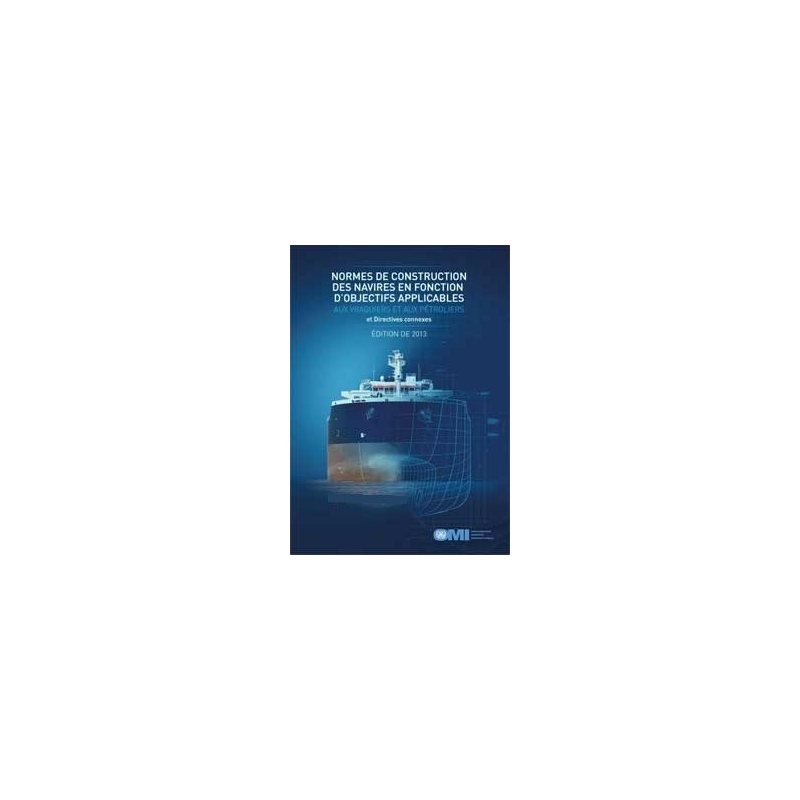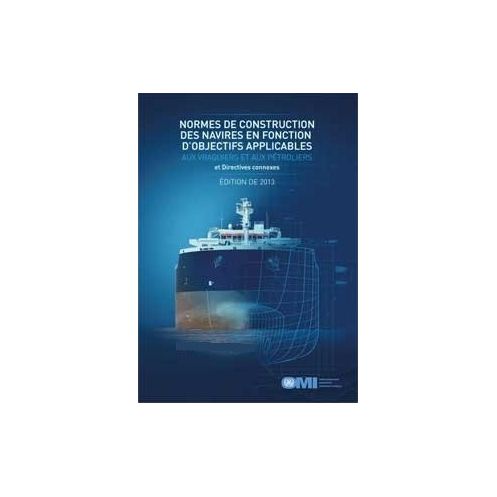



OMI - IMO800Fe - Normes de construction des navires en fonction d?objectifs applicables aux vraquiers, pétroliers et directives
search
  • googlemap
  • OMI - IMO800Fe - Normes de construction des navires en fonction d?objectifs applicables aux vraquiers, pétroliers et directives

OMI - 800Fe - Normes de construction des navires en fonction d'objectifs applicables aux vraquiers, pétroliers et directives

€30.60
Tax included
OMI
Chart or book in digital version In French language
Book programmed to order
Estimated preparation time: 0 to 3 days

This digital guide covers goal-based ship construction standards for bulk carriers and oil tankers, including SOLAS amendments and compliance verification guidelines.

IMO800Fe

Data sheet

On what digital medium is this nautical chart / book stored?
digital medium
download
Picto
Chart or book in digital version
In French language

Specific References

UPC
400000010304
EAN13
4000000024491
New
Book programmed to order
Description détaillée

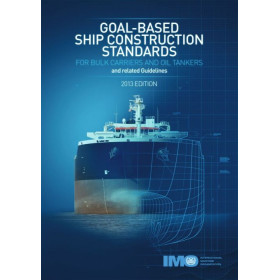
IMO 800Fe – Goal-Based Ship Construction Standards for Bulk Carriers and Oil Tankers and Guidelines

Publication in French
Digital version

Comprehensive Framework for Modern Shipbuilding Standards

This essential publication provides the international goal-based ship construction standards specifically designed for bulk carriers and oil tankers. Developed under the auspices of the International Maritime Organization (IMO), these standards establish a robust framework to ensure the structural integrity, safety, and operational efficiency of vessels in these critical maritime sectors. By adopting a goal-based approach, the standards offer flexibility while maintaining rigorous safety and performance requirements, making them indispensable for shipbuilders, naval architects, and maritime regulators.

Mandatory Compliance Under SOLAS Convention

The publication includes the International Goal-Based Ship Construction Standards for Bulk Carriers and Oil Tankers, adopted through IMO Resolution MSC.287(87). These standards are reinforced by amendments to the International Convention for the Safety of Life at Sea (SOLAS), as outlined in Resolution MSC.290(87), which make compliance mandatory. This ensures that all new bulk carriers and oil tankers adhere to the highest safety benchmarks, reducing risks associated with structural failures, environmental hazards, and operational incidents.

Guidelines for Verification and Documentation

To support the implementation of these standards, the publication provides detailed guidelines for verifying compliance, as established in Resolution MSC.296(87). These guidelines outline the processes for assessing whether ship designs and construction methods meet the prescribed goals, ensuring transparency and consistency across the industry. Additionally, the publication includes directives on the information to be included in the ship construction file (MSC.1/Circ.1343), which serves as a comprehensive record of compliance throughout the vessel’s lifecycle.

General Directives for Goal-Based Standard Development

Beyond the specific standards for bulk carriers and oil tankers, this publication also features the General Guidelines for the Development of Goal-Based Standards at IMO (MSC.1/Circ.1394). These guidelines provide a structured methodology for creating future goal-based standards, ensuring that the maritime industry continues to evolve with advancements in technology, materials, and safety practices. This forward-looking approach positions the publication as a foundational resource for ongoing innovation in ship construction.

Designed for Maritime Professionals

Tailored for professionals in the merchant marine industry, this publication is an invaluable tool for shipowners, classification societies, maritime administrations, and engineers. It offers clear, actionable guidance for designing, constructing, and certifying vessels that meet international safety and performance objectives. Whether used for regulatory compliance, technical reference, or professional development, this publication ensures that stakeholders are equipped with the latest standards and best practices in ship construction.

Elevate Shipbuilding Compliance with IMO’s Goal-Based Construction Standards
This digital publication delivers the official IMO goal-based ship construction standards for bulk carriers and oil tankers, setting the benchmark for safety, structural integrity, and operational efficiency in the maritime industry. Designed to align with the International Convention for the Safety of Life at Sea (SOLAS), these standards provide a flexible yet rigorous framework that ensures vessels meet the highest international requirements. With mandatory compliance under SOLAS amendments, this resource is critical for shipbuilders, naval architects, and maritime regulators seeking to uphold industry-leading safety and performance standards.

Comprehensive Guidelines for Verification and Documentation
Beyond the core standards, this publication includes essential guidelines for verifying compliance with goal-based construction requirements, as well as directives for documenting ship construction files. These tools streamline the certification process, ensuring transparency and consistency in how vessels are designed, built, and maintained. The inclusion of general guidelines for developing future goal-based standards further solidifies this publication as a forward-looking resource, adaptable to evolving technological and regulatory landscapes.

Optimized for Digital Accessibility and Professional Use
Available in a secure digital format, this publication offers immediate access to 71 pages of critical industry standards, making it an indispensable reference for maritime professionals. Published in January 2013 and updated to reflect the latest IMO resolutions, it provides a reliable foundation for designing and constructing vessels that meet international safety objectives. Whether for regulatory compliance, technical reference, or professional training, this digital resource ensures that stakeholders have the tools they need to navigate the complexities of modern shipbuilding.

This digital publication provides the official IMO goal-based ship construction standards for bulk carriers and oil tankers, including mandatory SOLAS amendments and compliance guidelines. Available in French, the 2013 edition spans 71 pages and is accessible in a secure digital format compatible with the IMO’s free reader.

The organization behind this publication is a specialized United Nations agency dedicated to regulating international shipping. It establishes global standards for maritime safety, security, and environmental performance, ensuring that the shipping industry operates efficiently and sustainably. Its conventions and guidelines are recognized as the foundation for safe, secure, and environmentally sound shipping practices worldwide.

  • This publication offers unparalleled access to the latest IMO goal-based ship construction standards, ensuring compliance with SOLAS requirements for bulk carriers and oil tankers.
  • Its digital format provides instant, secure access to critical guidelines, verification processes, and documentation directives, making it an essential tool for maritime professionals.
  • By consolidating international standards and best practices into a single resource, it simplifies compliance, enhances safety, and supports the development of high-performance vessels.
What types of ships do these construction standards apply to?

These standards apply to bulk carriers and oil tankers, as outlined in the international construction norms.

Are the construction standards mandatory for compliance?

Yes, the standards are mandatory as they are associated with amendments to the SOLAS Convention.

What is included in the ship construction file according to these guidelines?

The guidelines specify the information to be included in the ship construction file, as detailed in MSC.1/Circ.1343.

Is a specific reader required to access the digital version?

Yes, the digital version is locked and requires the free official reader to access the content.

What is the publication date of this edition?

This edition was published in January 2013.

How many pages does this publication contain?

The publication contains 71 pages.

Loading...