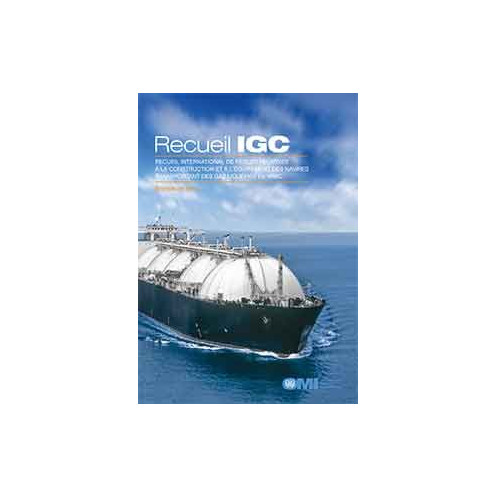





Essential French-language standards for liquefied gas carriers. This digital code ensures compliance with international safety and environmental regulations. Accessible with a free reader.
Data sheet
Specific References
This digital publication provides the complete French-language version of the International Code for the Construction and Equipment of Ships Carrying Liquefied Gases in Bulk (IGC Code), the cornerstone of maritime safety for gas carriers. Mandatory since July 1, 1986, under SOLAS Chapter VII and adopted through Resolution MSC.5(48), this code sets the global benchmark for designing, constructing, and equipping vessels transporting liquefied gases in bulk. It applies to ships carrying gases with a vapor pressure exceeding 2.8 bars absolute at 37.8°C, as well as specific substances listed in Chapter 19, ensuring uncompromising protection for crews, vessels, and the marine environment.
Developed by the International Maritime Organization (IMO), the IGC Code addresses the unique hazards of transporting liquefied gases, including flammability, toxicity, and cryogenic temperatures. The code mandates rigorous structural integrity, advanced containment systems, and fail-safe operational protocols to prevent leaks, explosions, or environmental contamination. Its provisions cover everything from hull design and cargo tank construction to ventilation systems, fire protection, and emergency shutdown procedures, making it indispensable for shipbuilders, naval architects, and maritime safety inspectors.
This digital edition offers seamless access to the IGC Code, optimized for use with the IMO’s free e-reader. Delivered via secure download, it ensures compliance teams, surveyors, and ship operators can reference the latest standards anytime, anywhere. The digital format eliminates the need for physical copies, reducing clutter while enabling quick searches, annotations, and updates—critical for staying aligned with evolving regulations. Whether for newbuild projects or retrofitting existing vessels, this publication is a vital tool for maintaining compliance and operational excellence.
The IGC Code is not just a regulatory requirement; it’s a framework for innovation in maritime safety. By harmonizing international standards, it facilitates the safe and efficient transport of liquefied gases—fuels that power industries worldwide. The code’s latest amendments, including Resolution MSC.370(93) (effective July 1, 2016), reflect advancements in technology and lessons learned from decades of gas carrier operations. For professionals in the maritime sector, this publication is the definitive guide to navigating the complexities of gas transportation with confidence and precision.
Your Blueprint for Gas Carrier Compliance and Safety
Navigating the complexities of liquefied gas transportation demands a rigorous, internationally recognized framework—and the International Code for the Construction and Equipment of Ships Carrying Liquefied Gases in Bulk (IGC Code) delivers exactly that. This digital publication, available in French, is the authoritative reference for designing, constructing, and equipping gas carriers built on or after July 1, 1986, under the mandatory provisions of SOLAS Chapter VII. It applies to vessels transporting gases with a vapor pressure exceeding 2.8 bars absolute at 37.8°C, as well as specific substances outlined in Chapter 19, ensuring unparalleled safety for crews, ships, and the environment.
Precision-Engineered for High-Stakes Maritime Operations
Developed by the International Maritime Organization (IMO), the IGC Code is a masterclass in risk mitigation for one of the maritime industry’s most hazardous sectors. It mandates state-of-the-art containment systems, robust structural integrity, and fail-safe operational protocols to prevent leaks, fires, or environmental disasters. From cargo tank design to emergency shutdown procedures, every detail is meticulously addressed to align with the latest advancements in gas carrier technology. The code’s latest amendments, including Resolution MSC.370(93) (effective July 1, 2016), reflect real-world operational insights and technological progress, making this publication an indispensable resource for shipbuilders, naval architects, and safety inspectors.
Optimized for the Digital Age
This digital edition of the IGC Code is designed for the modern maritime professional. Delivered via secure download and compatible with the IMO’s free e-reader, it provides instant access to critical regulations without the hassle of physical copies. The digital format enables quick searches, annotations, and updates, ensuring compliance teams can stay ahead of evolving standards. Whether you’re overseeing a newbuild project, retrofitting an existing vessel, or conducting safety inspections, this publication streamlines your workflow while upholding the highest safety standards.
Global Harmonization for a Safer Industry
The IGC Code isn’t just a regulatory requirement—it’s the backbone of global maritime safety for gas transportation. By establishing uniform standards, it enables the safe and efficient movement of liquefied gases, which are vital to industries worldwide. This publication ensures that every stakeholder, from ship operators to classification societies, adheres to the same rigorous benchmarks, fostering consistency and reliability across the industry. For professionals committed to excellence in maritime safety, the IGC Code is the ultimate guide to mastering the challenges of gas carrier operations.
This digital publication provides the French-language version of the International Code for the Construction and Equipment of Ships Carrying Liquefied Gases in Bulk (IGC Code), adopted under Resolution MSC.5(48) and mandatory since July 1, 1986. It applies to gas carriers with a vapor pressure exceeding 2.8 bars absolute at 37.8°C and includes provisions for specific substances listed in Chapter 19. The latest amendments, under Resolution MSC.370(93), entered into force on July 1, 2016. Delivered via secure download, this digital edition is compatible with the IMO’s free e-reader, ensuring seamless access to critical compliance standards.
The International Maritime Organization (IMO) is the United Nations’ specialized agency responsible for regulating global maritime safety, security, and environmental performance. Established in 1948, the IMO sets international standards for ship design, construction, and operation, ensuring the maritime industry operates safely, efficiently, and sustainably. Its codes and conventions, including SOLAS and the IGC Code, are the gold standard for maritime compliance, adopted by over 170 member states worldwide.
The regulations apply to ships with a gross tonnage of less than 500.
Yes, the latest amendments were adopted under resolution MSC.370(93) and entered into force on July 1, 2016.
The code applies to gases with a vapor pressure exceeding 2.8 bars absolute at 37.8 °C.
The digital version is locked and can only be read using the free dedicated reader provided.
These regulations are referenced in Chapter VII of the SOLAS convention.
The GC Code applies to ships constructed after October 31, 1976, and before July 1, 1986.
You might also like