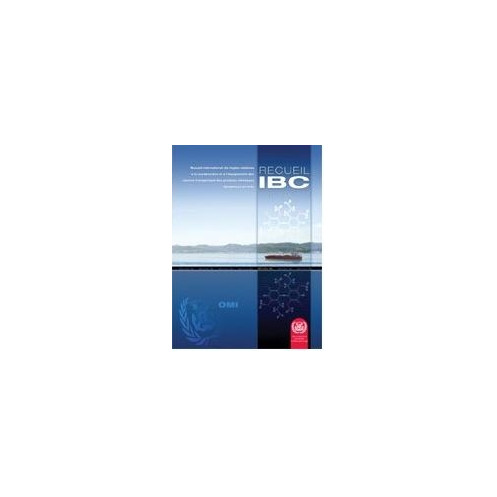





Meet international standards with this French digital IBC Code. Covers construction, equipment, and safety rules for chemical tankers, featuring searchable PDFs and MEPC updates for compliance.
Data sheet
Specific References
Ensure Compliance and Safety with the IBC Code Digital Edition
The International Code for the Construction and Equipment of Ships Carrying Dangerous Chemicals in Bulk (IBC Code) is the definitive regulatory framework for chemical tankers worldwide. This digital French-language edition delivers the complete, up-to-date text of the IBC Code, including all amendments adopted since its inception in 1983. Designed to align with SOLAS and MARPOL conventions, it sets the benchmark for vessel design, construction, and equipment, ensuring the safe transport of hazardous chemicals in bulk. Applicable to all chemical tankers built after July 1, 1986, this code is a non-negotiable requirement for compliance in the maritime industry.
Tailored Risk Management for Chemical Tankers
The IBC Code categorizes chemical tankers into three distinct types—Type 1, Type 2, and Type 3—based on the level of risk posed by their cargo. Type 1 vessels, intended for the most hazardous substances, require the highest level of preventive measures, including enhanced structural integrity and containment systems. Type 2 vessels address substantial risks with robust safety protocols, while Type 3 vessels provide moderate containment for lower-risk cargoes. This classification system ensures that each vessel is equipped with the appropriate safety features, from cargo handling systems to emergency response equipment, minimizing environmental and operational risks.
Optimized Digital Access for Maritime Professionals
This digital edition is engineered for efficiency and accessibility, offering a secure, locked format compatible with the IMO’s free reader software. The included compact disc features searchable PDFs of Chapters 17, 18, and 19, enabling users to swiftly navigate product-specific regulations and technical requirements. Additionally, the publication integrates MEPC.2 circulars, providing interim guidance for chemicals awaiting formal amendments. This ensures that maritime professionals have immediate access to the latest standards, facilitating seamless compliance and operational readiness.
Critical Resource for Regulatory and Operational Excellence
As the cornerstone of chemical tanker safety, the IBC Code is indispensable for naval architects, shipbuilders, classification societies, and regulatory bodies. By adhering to its provisions, stakeholders can ensure that vessels meet the highest international safety and environmental protection standards. This digital edition not only simplifies compliance but also enhances operational efficiency, making it an invaluable tool for professionals dedicated to safeguarding the maritime industry.
This digital publication provides the complete French-language version of the IBC Code, applicable to chemical tankers constructed after July 1, 1986. It includes three vessel classifications—Type 1, Type 2, and Type 3—each defining specific safety and containment requirements based on cargo risk levels. The secure digital format is compatible with the IMO’s free reader software and includes searchable PDFs of Chapters 17, 18, and 19 on a compact disc, along with MEPC.2 circulars for interim guidance.
With a legacy of setting global maritime standards, this organization is recognized as the leading authority in developing regulations for the safety, security, and environmental performance of international shipping. Its codes and conventions, adopted by governments worldwide, form the backbone of maritime law, ensuring consistent and rigorous compliance across the industry.
This code applies to chemical tankers constructed on or after July 1, 1986. For ships built before this date, the BCH Code is applicable.
Three types of ships are defined: Type 1 for high-risk chemicals requiring maximum preventive measures, Type 2 for substantial-risk chemicals requiring significant preventive measures, and Type 3 for moderate-risk chemicals requiring moderate containment.
Yes, the digital version includes searchable PDFs for chapters 17, 18, and 19, allowing for easy navigation and reference.
This version is supplemented by MEPC.2 circulars, which cover products pending amendments to ensure compliance with the latest updates.
The digital version is locked and can only be read using the free official reader provided by the issuing organization.
Yes, it establishes comprehensive standards for the design, construction, and equipment of ships to minimize risks to the vessel, crew, and environment.
You might also like