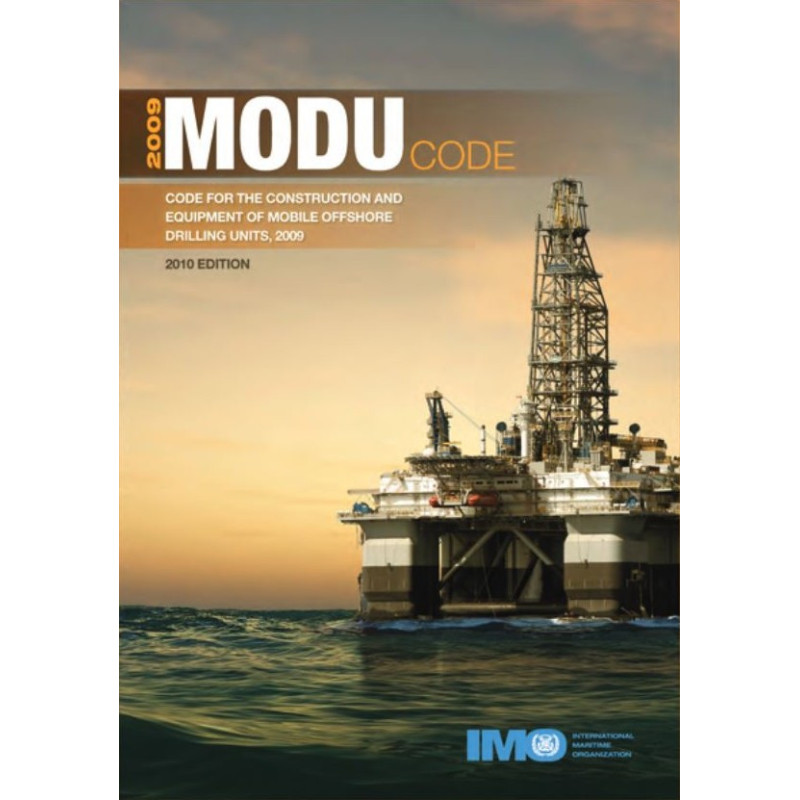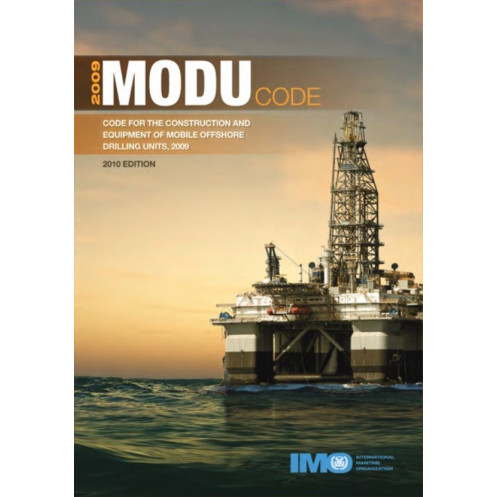




Essential for compliance, the 2009 MODU Code sets safety standards for mobile offshore drilling units. This 2020 edition aligns with SOLAS and load line conventions for units built from 2012.
Data sheet
Specific References
The Code for the Construction and Equipment of Mobile Offshore Drilling Units (MODU Code) 2009 is the definitive international standard for mobile offshore drilling units (MODUs) built from January 1, 2012, onward. Developed by the International Maritime Organization (IMO), this code ensures that MODUs meet rigorous safety requirements, enabling seamless global operations while maintaining safety levels equivalent to those mandated by the SOLAS Convention 1974 and the 1988 Protocol to the International Convention on Load Lines 1966. Whether you're involved in offshore drilling, maritime engineering, or regulatory compliance, this publication is an indispensable resource for ensuring operational safety and adherence to international maritime laws.
Adopted by IMO Resolution A.1023(26) in 2009, the MODU Code 2009 supersedes the 1989 version, incorporating critical amendments to address evolving industry needs. This edition includes updates through 2020, such as amendments from 2013 (MSC.359(92)), 2014 (MSC.384(94) and MSC.387(94)), 2016 (MSC.407(96)), and 2017 (MSC.435(98)). These revisions reflect the latest advancements in offshore drilling technology and safety protocols, making this code a dynamic tool for professionals navigating the complexities of modern maritime operations. The printed version ensures easy access to these regulations, whether for on-site reference or compliance verification.
Tailored for engineers, naval architects, offshore operators, and regulatory authorities, the MODU Code 2009 provides a structured framework for designing, constructing, and equipping mobile offshore drilling units. It covers everything from structural integrity and fire safety to life-saving appliances and environmental protection measures. By aligning with SOLAS and load line conventions, the code guarantees that MODUs are equipped to handle the unique challenges of offshore environments, ensuring the safety of personnel and the protection of marine ecosystems. This publication is not just a regulatory requirement—it’s a cornerstone of responsible offshore drilling practices.
Available in a convenient printed format, this edition of the MODU Code 2009 is designed for durability and ease of use. Weighing just 1.8 kg, it’s portable enough for fieldwork yet comprehensive enough for office reference. The English-language text ensures clarity and consistency for international stakeholders, while the inclusion of all relevant amendments up to 2020 guarantees that users have the most current information at their fingertips. For those who prefer digital access, a locked e-reader version is also available, providing flexibility without compromising security or usability.
Your Go-To Guide for Offshore Drilling Compliance
The Code for the Construction and Equipment of Mobile Offshore Drilling Units (MODU Code) 2009 is the gold standard for ensuring the safety and operational integrity of mobile offshore drilling units (MODUs). Published by the International Maritime Organization (IMO), this code sets the benchmark for MODUs constructed from January 1, 2012, onward, aligning their safety standards with those of the SOLAS Convention 1974 and the 1988 Protocol to the International Convention on Load Lines 1966. Whether you're designing, constructing, or operating offshore drilling units, this publication is your essential companion for navigating international maritime regulations.
Stay Ahead with the Latest Amendments
This 2020 edition of the MODU Code 2009 is not just a static document—it’s a living resource that incorporates critical amendments up to 2017, including MSC.359(92) (2013), MSC.384(94) and MSC.387(94) (2014), MSC.407(96) (2016), and MSC.435(98) (2017). These updates ensure that your operations remain compliant with the latest industry standards, addressing advancements in technology, safety protocols, and environmental considerations. With a weight of just 1.8 kg, this printed version is both portable and practical, making it ideal for on-site use or office reference.
Built for Professionals, Backed by Authority
Designed for maritime engineers, naval architects, offshore operators, and regulatory bodies, the MODU Code 2009 provides a comprehensive framework for the construction and equipment of MODUs. It covers structural integrity, fire safety, life-saving appliances, and environmental protection, ensuring that your units are prepared for the unique challenges of offshore environments. By adhering to this code, you’re not only meeting international safety standards but also safeguarding your crew, equipment, and the marine ecosystem. Trust in a publication that’s recognized globally as the definitive guide for offshore drilling compliance.
The Code for the Construction and Equipment of Mobile Offshore Drilling Units (MODU Code) 2009 is a printed publication in English, weighing 1.8 kg. Published in May 2020, this edition incorporates amendments up to 2017, including MSC.359(92), MSC.384(94), MSC.387(94), MSC.407(96), and MSC.435(98). It applies to MODUs constructed from January 1, 2012, onward, replacing earlier versions like the 1989 MODU Code. This code ensures safety standards equivalent to the SOLAS Convention 1974 and the 1988 Protocol to the International Convention on Load Lines 1966.
With a legacy rooted in maritime safety and regulatory excellence, the publisher behind this publication is a leading authority in the development of international maritime standards. Known for its commitment to advancing safety, security, and environmental protection in the shipping industry, this organization sets the global benchmark for maritime regulations, ensuring that professionals worldwide have access to the most reliable and up-to-date guidelines for their operations.
This code applies to mobile offshore drilling units (MODU) constructed on or after January 1, 2012.
This edition incorporates amendments from 2013 (MSC.359(92)), 2014 (MSC.384(94), MSC.387(94)), 2016 (MSC.407(96)), and 2017 (MSC.435(98)).
Yes, a locked digital version is available for use on the publisher’s e-reader.
It ensures a safety level equivalent to the SOLAS 1974 Convention and the 1988 Protocol to the 1966 Load Lines Convention for conventional ships.
The printed version weighs 1.8 kg.
Yes, errata can be downloaded from the publisher’s official website.
You might also like