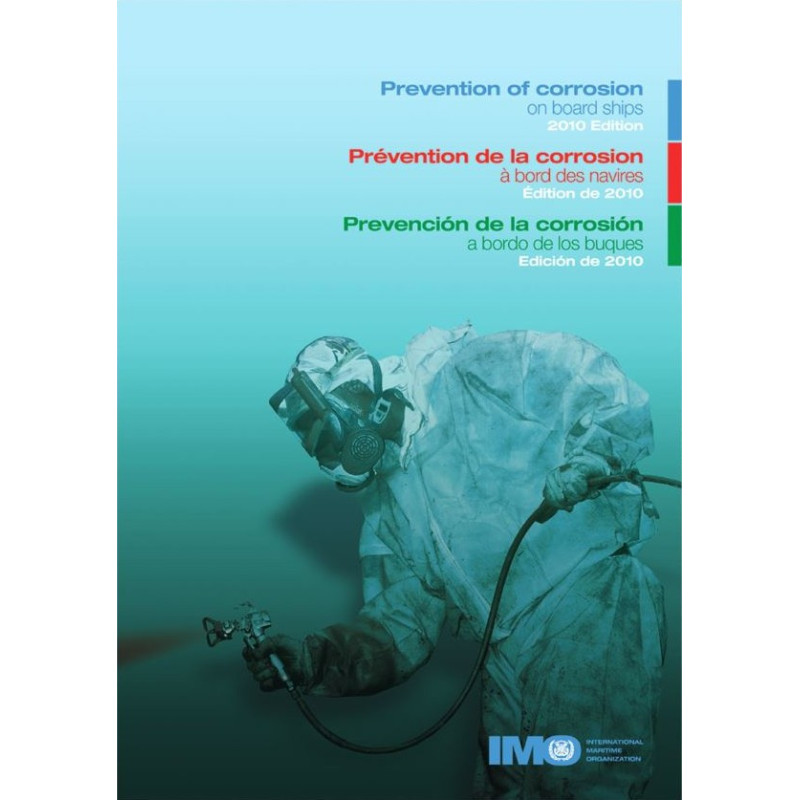







Essential guidelines for corrosion prevention in ship ballast tanks, ensuring compliance with international maritime standards. Available in English, French, and Spanish for global use.
Data sheet
Specific References
This official publication delivers the International Maritime Organization’s (IMO) performance standards and guidelines for protective coatings designed to prevent corrosion in dedicated seawater ballast tanks of container ships and other vessels. Developed in response to critical safety concerns identified in the 1990s—including bulk carrier losses and tragic fatalities—this document reflects extensive deliberations by the Maritime Safety Committee (MSC) and incorporates findings from Formal Safety Assessments (FSA) conducted by IMO Member States. It provides a robust framework for corrosion prevention, ensuring structural integrity and operational safety in demanding marine environments.
Tailored for shipowners, operators, naval architects, and maritime engineers, this publication presents official IMO texts in three key languages: English, French, and Spanish. The trilingual format ensures accessibility and clarity for global stakeholders, facilitating consistent implementation of corrosion prevention measures across international fleets. Whether for compliance audits, maintenance planning, or crew training, this resource serves as a critical reference for maintaining vessel safety and longevity.
At the heart of this publication are the IMO’s performance standards for protective coatings, which outline requirements for durability, application, and inspection in seawater ballast tanks. These standards address the unique challenges of marine corrosion, including exposure to saltwater, temperature fluctuations, and mechanical stress. By adhering to these guidelines, maritime professionals can mitigate corrosion-related risks, reduce maintenance costs, and extend the service life of critical vessel components.
The development of this publication was driven by the IMO’s commitment to enhancing maritime safety through evidence-based regulations. Following a series of bulk carrier incidents in the 1990s, the MSC conducted rigorous safety assessments to identify root causes and preventive measures. The resulting guidelines, now codified in this document, represent a collaborative effort among industry experts, flag states, and classification societies to establish a unified approach to corrosion prevention. This publication is not just a regulatory requirement—it is a cornerstone of modern maritime safety practices.
Beyond regulatory compliance, this publication offers practical insights for implementing corrosion prevention strategies onboard ships. It covers key aspects such as coating selection, surface preparation, application techniques, and inspection protocols. For ship operators, these guidelines provide actionable steps to ensure compliance with SOLAS (Safety of Life at Sea) regulations while optimizing maintenance schedules. The inclusion of multilingual texts further supports global adoption, making it an indispensable tool for international maritime operations.
Corrosion prevention is a critical factor in the sustainability and safety of maritime operations. By following the IMO’s performance standards, shipowners can minimize structural failures, avoid costly repairs, and reduce environmental risks associated with vessel deterioration. This publication aligns with broader industry goals of enhancing operational efficiency and environmental stewardship, making it a vital resource for the modern maritime sector.
Your Go-To Reference for IMO-Compliant Corrosion Prevention
This official IMO publication is the definitive guide to preventing corrosion in dedicated seawater ballast tanks and other critical areas of container ships and bulk carriers. Developed in response to high-profile maritime incidents, it provides performance standards and guidelines that are now mandatory under SOLAS regulations. With 248 pages of expert-validated content, this 2010 edition is an indispensable resource for ensuring compliance, safety, and structural integrity in marine environments.
Trilingual Accessibility for Global Maritime Operations
Available in English, French, and Spanish, this publication breaks down language barriers, making it accessible to maritime professionals worldwide. Whether you’re a shipowner, naval architect, or maintenance engineer, the multilingual format ensures that critical corrosion prevention guidelines are clearly understood and consistently applied across international fleets. This feature is particularly valuable for multinational crews and global compliance audits.
Performance Standards Backed by Rigorous Safety Assessments
The guidelines in this publication are the result of extensive research and collaboration by the Maritime Safety Committee (MSC) and IMO Member States. Following a series of bulk carrier losses in the 1990s, the IMO conducted Formal Safety Assessments (FSA) to identify corrosion as a key risk factor. The performance standards outlined here—covering coating durability, application, and inspection—are designed to address these risks and prevent future incidents. By adhering to these standards, maritime professionals can proactively safeguard vessels against structural failures.
Practical Solutions for Real-World Challenges
Beyond regulatory compliance, this publication offers actionable insights for tackling corrosion in real-world maritime conditions. It details best practices for surface preparation, coating selection, and inspection protocols, helping ship operators optimize maintenance schedules and reduce long-term costs. The 1.8 kg printed edition is designed for durability and ease of use, making it a reliable reference for onboard inspections, crew training, and compliance documentation.
Supporting Safety, Sustainability, and Operational Efficiency
Corrosion prevention is not just about compliance—it’s about protecting lives, assets, and the environment. This publication aligns with the IMO’s broader goals of enhancing maritime safety and sustainability by reducing the risk of structural failures and environmental incidents. By implementing the guidelines in this document, shipowners can extend the lifespan of their vessels, minimize downtime, and contribute to a safer, more sustainable maritime industry.
This 2010 edition of the IMO’s corrosion prevention guidelines is a 248-page printed publication, weighing 1.8 kg. It includes official texts in English, French, and Spanish, ensuring broad accessibility for global maritime professionals. Published in January 2010, this new, printed edition is designed for durability and ease of reference, making it ideal for onboard use, compliance audits, and crew training.
With a legacy of shaping global maritime safety standards, this organization is a leading authority in developing regulations and guidelines for the shipping industry. Its publications are widely recognized as essential references for compliance, operational safety, and best practices in maritime operations. Trusted by shipowners, naval architects, and regulatory bodies worldwide, its work plays a pivotal role in enhancing the safety, efficiency, and sustainability of international shipping.
The publication includes performance standards and guidelines for protective coatings specifically designed to prevent corrosion in dedicated seawater ballast tanks of container ships and other vessels.
Yes, this edition incorporates measures derived from formal safety assessments (FSA) conducted by various member states, making it suitable for such evaluations.
Yes, a digital version is available, which is locked and readable using the free OMI reader.
The guidelines primarily focus on preventing corrosion in dedicated seawater ballast tanks to enhance the safety and longevity of ships.
Yes, the guidelines specifically address container ships and other vessels with dedicated seawater ballast tanks.
The content is available in three languages: English, French, and Spanish.
You might also like