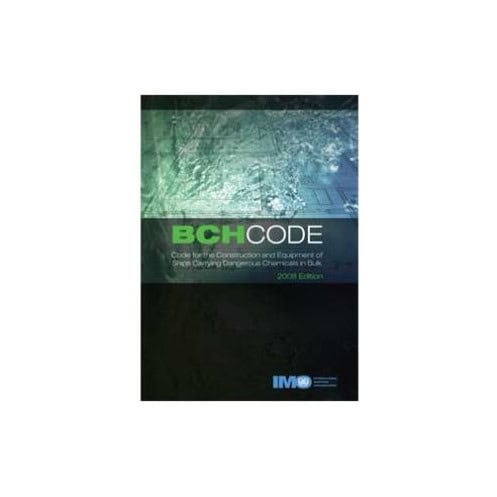


OMI - IMO772E - Code for the Construction and Equipment of Ships Carrying Dangerous Chemicals in Bulk (BCH Code)
search
  • googlemap
  • OMI - IMO772E - Code for the Construction and Equipment of Ships Carrying Dangerous Chemicals in Bulk (BCH Code)

IMO - 772E - Code for the Construction and Equipment of Ships Carrying Dangerous Chemicals in Bulk (BCH Code)

€45.00
Tax included
OMI
In English language
Estimated preparation time: 5 to 14 days

The BCH Code sets the standard for chemical tankers built before 1986. This 2008 edition ensures compliance with construction, equipment, and safety rules for transporting dangerous chemicals in bulk.

IMO772E

Data sheet

What is the size?
paper medium
Picto
In English language

Specific References

UPC
400000002804
EAN13
4000000010128
New
Description détaillée

IMO - 772E - Code for the Construction and Equipment of Ships Carrying Dangerous Chemicals in Bulk (BCH Code)

Publication in English
Paperback edition

Essential Compliance for Chemical Tankers

This authoritative publication is the cornerstone of safety and regulatory compliance for chemical tankers transporting hazardous substances in bulk. Developed by the International Maritime Organization (IMO), the BCH Code establishes rigorous standards for ship construction, equipment, and operational procedures to mitigate risks associated with the maritime transport of dangerous chemicals. Whether you're a shipowner, naval architect, or maritime safety inspector, this code provides the technical framework to ensure vessels meet international safety and environmental protection requirements.

Comprehensive and Updated Regulatory Framework

The BCH Code is specifically designed for chemical tankers built before July 1, 1986, as mandated by Annex II of MARPOL 73/78. This 2008 edition incorporates all amendments adopted through 2006, including critical updates from resolutions MEPC.144(54) and MSC.212(81), which entered into force in August 2007. It also integrates earlier revisions such as MEPC.41(29) and MEPC.56(33), ensuring that maritime professionals have access to the most current and consolidated regulatory requirements. The code streamlines compliance by cross-referencing Chapters 17 and 18 of the IBC Code, reducing redundancy while maintaining strict safety standards.

Engineered for Maritime Safety and Operational Efficiency

The BCH Code addresses every critical aspect of chemical tanker operations, from structural integrity and cargo containment to fire protection and pollution prevention. It outlines detailed specifications for ship design, including hull construction, cargo tank arrangements, and ventilation systems, tailored to the unique hazards of bulk chemical transport. The code also prescribes essential equipment requirements, such as cargo transfer systems, monitoring devices, and emergency response tools, to enhance onboard safety and environmental stewardship. By adhering to these guidelines, operators can minimize the risk of accidents, protect crew members, and prevent costly environmental incidents.

Indispensable Resource for Maritime Professionals

This publication is an invaluable tool for shipbuilders, classification societies, flag state authorities, and port state control inspectors. It serves as a definitive reference for verifying compliance with international maritime conventions, including MARPOL and SOLAS, and is essential for conducting risk assessments, safety audits, and certification processes. The BCH Code’s structured approach ensures that all stakeholders—from designers to operators—can implement consistent safety measures across the global fleet of chemical tankers. With its clear, actionable guidelines, this code is a must-have for anyone involved in the safe and efficient transport of dangerous chemicals by sea.

Ensure Compliance with the Gold Standard for Chemical Tanker Safety
The *Code for the Construction and Equipment of Ships Carrying Dangerous Chemicals in Bulk (BCH Code)* is the definitive regulatory framework for chemical tankers built before July 1, 1986, as required by MARPOL Annex II. This 2008 edition, published in May 2009, consolidates all amendments up to 2006, including critical updates from MEPC and MSC resolutions, ensuring your vessel meets the latest international safety and environmental standards. With 131 pages of technical guidelines, this paperback edition is an indispensable resource for maritime professionals tasked with designing, operating, or inspecting chemical tankers.

Engineered for Hazardous Cargo Transport
Developed by the International Maritime Organization (IMO), the BCH Code provides a comprehensive set of rules for the safe transport of dangerous chemicals in bulk. It covers every aspect of ship construction, from hull integrity and cargo tank design to fire protection systems and pollution prevention measures. The code also includes detailed requirements for onboard equipment, such as cargo transfer systems, monitoring devices, and emergency response tools, ensuring that vessels are equipped to handle the unique risks associated with chemical transport. By adhering to these standards, operators can minimize the risk of accidents, protect crew members, and prevent environmental contamination.

Streamlined Compliance for Pre-1986 Vessels
Unlike the IBC Code, which applies to chemical tankers built after July 1, 1986, the BCH Code is specifically tailored to vessels constructed before this date. This edition simplifies compliance by cross-referencing key sections with the IBC Code, reducing redundancy while maintaining rigorous safety standards. Whether you're a shipowner, naval architect, or maritime safety inspector, this publication provides the technical guidance needed to ensure your vessel meets international regulatory requirements under MARPOL and SOLAS.
This 2008 edition of the *Code for the Construction and Equipment of Ships Carrying Dangerous Chemicals in Bulk (BCH Code)* is a 131-page paperback publication in English, weighing 1.8 kg. Published in May 2009, it consolidates all amendments adopted through 2006, including resolutions MEPC.144(54) and MSC.212(81), ensuring compliance with the latest international maritime safety standards.

As a specialized publication from the International Maritime Organization (IMO), this code reflects decades of expertise in maritime safety and environmental protection. The IMO is the United Nations agency responsible for regulating international shipping, ensuring that vessels operate safely, securely, and with minimal environmental impact. Its standards, including the BCH Code, are recognized globally as the benchmark for maritime compliance.

  • The BCH Code offers unparalleled technical precision for chemical tanker compliance
  • providing clear, actionable guidelines for ship construction, equipment, and operational safety
  • Its consolidated amendments ensure up-to-date regulatory adherence
  • while its cross-referencing with the IBC Code simplifies compliance for pre-1986 vessels
  • This publication is an essential tool for reducing risks, enhancing operational efficiency, and meeting international maritime conventions.
What is the purpose of the BCH Code?

The BCH Code provides international standards for the construction and equipment of ships carrying dangerous chemicals in bulk, ensuring safety and environmental protection.

Which ships must comply with the BCH Code?

Chemical tankers constructed before July 1, 1986, must comply with the BCH Code as per MARPOL 73/78 Annex II requirements.

Are there any recent amendments included in this edition?

Yes, this 2008 edition includes amendments adopted in 2006, which entered into force on August 1, 2007, along with earlier amendments.

How does the BCH Code differ from the IBC Code?

The BCH Code applies to chemical tankers built before July 1, 1986, while the IBC Code applies to those constructed after that date under MARPOL and SOLAS.

Is a digital version of this publication available?

Yes, a secured digital version is available and can be read using the free reader provided.

What are the key chapters covered in this edition?

Chapters VI and VII are condensed and refer to Chapters 17 and 18 of the IBC Code for detailed requirements.

Loading...