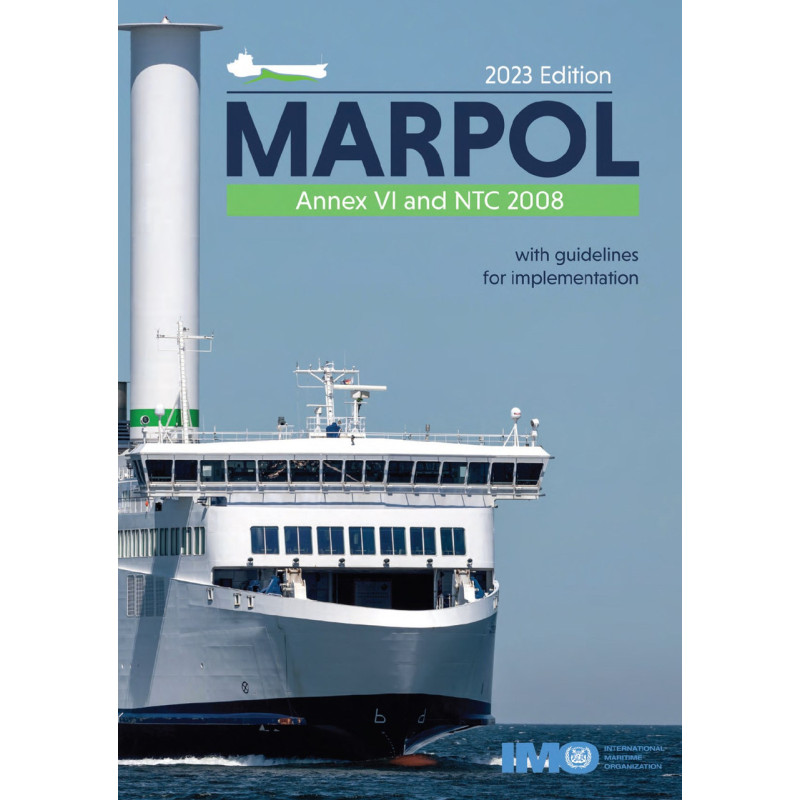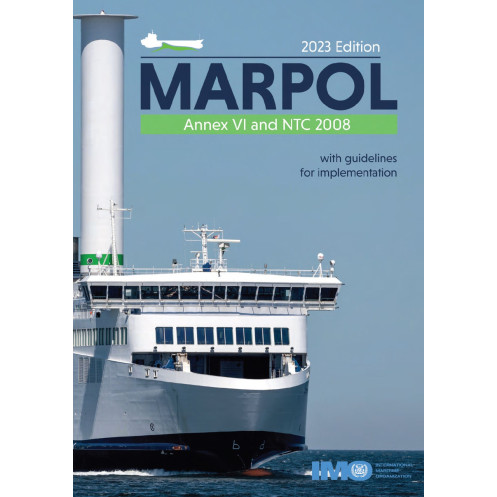





This 2023 edition of MARPOL Annex VI and NOx Technical Code 2008 ensures compliance with emission controls, greenhouse gas reduction measures, and energy efficiency rules for ships.
Data sheet
Specific References
The maritime industry faces ever-evolving environmental regulations, and staying compliant is critical for shipowners, operators, and maritime professionals. This essential digital publication provides the consolidated and revised text of MARPOL Annex VI, which governs air pollution prevention from ships, alongside the updated NOx Technical Code 2008. It includes all amendments adopted up to MEPC 76 in June 2021, ensuring you have the latest requirements for reducing greenhouse gas (GHG) emissions and improving energy efficiency in international shipping.
MARPOL Annex VI sets stringent standards for controlling air pollutants from ships, including sulfur oxides (SOx), nitrogen oxides (NOx), and particulate matter. Chapter 3 outlines emission control measures, while Chapter 4 introduces mandatory requirements for reducing carbon intensity in international shipping. The publication also integrates the latest short-term GHG reduction measures, such as the Energy Efficiency Existing Ship Index (EEXI), Carbon Intensity Indicator (CII), and enhanced Ship Energy Efficiency Management Plan (SEEMP). These regulations are pivotal for aligning maritime operations with global climate goals.
The NOx Technical Code 2008 complements MARPOL Annex VI by providing detailed technical and operational guidelines for controlling NOx emissions. It covers critical aspects such as exhaust gas treatment systems, emission reduction technologies, and fuel sulfur content limits. Additionally, it includes best practices for improving energy efficiency, which directly contributes to lowering GHG emissions. This section is indispensable for shipbuilders, equipment manufacturers, and maritime engineers tasked with implementing compliant and efficient solutions.
To ensure consistent application of these regulations, this publication includes comprehensive guidelines for uniform implementation. It provides methodologies for calculating the Energy Efficiency Design Index (EEDI), developing and verifying the SEEMP, and conducting certifications. These tools are designed to help maritime administrations, classification societies, and ship operators streamline compliance processes while maintaining operational efficiency. The guidelines also support training institutes in preparing maritime professionals for the challenges of modern environmental regulations.
Tailored for maritime administrations, classification societies, shipowners, training institutes, shipbuilders, and equipment manufacturers, this publication is a cornerstone resource for anyone involved in preventing air pollution and enhancing energy efficiency in the maritime sector. Its digital format ensures easy access and portability, allowing professionals to reference critical information anytime, anywhere. Stay ahead of regulatory changes and optimize your operations with this authoritative guide.
Stay Ahead of Maritime Emissions Regulations with the Latest Digital Compliance Guide
Navigating the complexities of maritime environmental regulations requires up-to-date and reliable resources. This digital publication delivers the fully revised and consolidated text of MARPOL Annex VI, the cornerstone of international regulations for preventing air pollution from ships. It integrates the NOx Technical Code 2008 and includes all amendments adopted up to MEPC 76 in June 2021, such as the latest short-term GHG reduction measures (EEXI, CII, and enhanced SEEMP). This ensures maritime professionals have immediate access to the most current standards for controlling emissions and improving energy efficiency in international shipping.
Comprehensive Coverage of Air Pollution and Carbon Intensity Standards
This publication addresses critical aspects of maritime environmental compliance, including the control of sulfur oxides (SOx), nitrogen oxides (NOx), and particulate matter under MARPOL Annex VI. Chapter 3 focuses on emission control measures, while Chapter 4 introduces mandatory requirements for reducing carbon intensity in shipping operations. The NOx Technical Code 2008 provides detailed technical guidelines for implementing emission reduction technologies, such as exhaust gas treatment systems, and improving energy efficiency. These standards are essential for aligning maritime operations with global climate objectives and avoiding costly non-compliance penalties.
Practical Guidelines for Implementation and Certification
Beyond regulatory texts, this publication offers practical guidelines for uniform implementation, including methodologies for calculating the Energy Efficiency Design Index (EEDI), developing the Ship Energy Efficiency Management Plan (SEEMP), and conducting certifications. These tools are designed to simplify compliance processes for maritime administrations, classification societies, and ship operators. The digital format, compatible with the free IMO e-reader, ensures seamless access to critical information, whether onshore or at sea. With 533 pages of authoritative content, this 2023 edition is an indispensable resource for professionals committed to sustainable maritime operations.
This digital publication provides the 2023 edition of MARPOL Annex VI and the NOx Technical Code 2008, updated with all amendments through MEPC 76 (June 2021). Available in English, it spans 533 pages and is formatted for secure digital access via the IMO e-reader. Published in August 2023, this resource is tailored for maritime professionals requiring the latest compliance guidelines for air pollution prevention and energy efficiency in shipping.
With decades of expertise in maritime publications, this organization is a leading authority in developing international regulations and guidelines for the shipping industry. Their publications are trusted by maritime administrations, classification societies, and industry professionals worldwide for their accuracy, relevance, and alignment with global standards. Each edition is meticulously updated to reflect the latest advancements in maritime law, technology, and environmental practices.
This edition includes all amendments up to those adopted at MEPC 76 in June 2021, such as short-term greenhouse gas reduction measures like EEXI, CII, and the enhanced SEEMP.
Yes, it includes regulations on the carbon intensity of international shipping under Chapter 4, along with guidelines for calculating the EEDI and developing the SEEMP.
Yes, it provides detailed requirements for controlling nitrogen oxide (NOx) and sulfur oxide (SOx) emissions, including exhaust gas treatment systems and fuel sulfur content limits.
It requires the free IMO e-reader, as the publication is in a locked digital format compatible only with this reader.
Yes, it is designed for maritime administrations, classification societies, shipowners, training institutes, shipbuilders, and equipment manufacturers.
The 2023 edition contains 533 pages.
No, it is a locked digital format and cannot be printed or shared outside the designated IMO e-reader.
You might also like