



Digital guidelines for in-situ burning (ISB) during offshore oil spill responses. Expert recommendations for safe, compliant operations in open waters and ice-covered environments.
Data sheet
Specific References
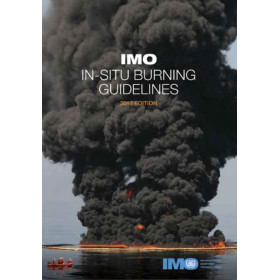
When every second counts in offshore oil spill response, having the right protocols at your fingertips can make the difference between containment and catastrophe. The IMO In-Situ Burning Guidelines – Digital Edition delivers critical, internationally recognized procedures for in-situ burning (ISB), a proven technique for rapidly eliminating oil slicks in open waters and ice-covered environments. Designed for maritime professionals who demand precision and reliability, this digital resource provides actionable recommendations to enhance response efficiency while minimizing environmental impact.
Compiled by the International Maritime Organization (IMO), these guidelines reflect decades of research, field testing, and expert consensus on in-situ burning—a method particularly effective in remote offshore locations, typically more than 5 kilometers from shorelines. Whether operating in open seas or ice-infested waters, responders gain access to standardized best practices that align with international safety and environmental regulations. The digital format ensures instant accessibility, allowing teams to reference protocols on vessels, in command centers, or during training exercises without the delays of physical documentation.
In-situ burning is a high-stakes operation requiring precise execution. This publication breaks down complex procedures into clear, step-by-step directives, covering everything from ignition methods to safety zones and monitoring requirements. With 101 pages of expert-vetted content, it addresses critical factors such as weather conditions, oil type compatibility, and environmental trade-offs, empowering responders to make informed decisions under pressure. The digital edition’s locked e-reader format ensures secure, tamper-proof access, while the IMO’s free reader software guarantees compatibility across devices—no specialized hardware required.
Beyond its technical depth, this guide serves as a benchmark for regulatory compliance, helping organizations align their response strategies with IMO standards. Updated in 2017, it incorporates the latest advancements in ISB technology and lessons learned from real-world incidents. For maritime operators, spill response teams, and environmental agencies, it’s not just a manual—it’s a strategic asset for safeguarding marine ecosystems and operational integrity in the most challenging conditions.
Why In-Situ Burning?
In-situ burning (ISB) is one of the most effective methods for removing large quantities of spilled oil from open water and ice-covered environments. Unlike mechanical recovery, which can be slow and limited by equipment capacity, ISB rapidly reduces oil volume by up to 90% or more, significantly lowering the risk of shoreline contamination. These guidelines provide the scientific and operational framework to implement ISB safely, ensuring responders can act decisively when time and conditions are critical.
Digital Accessibility for Modern Response Teams
The digital edition of the IMO In-Situ Burning Guidelines is engineered for the demands of today’s maritime operations. Compatible with the IMO’s free e-reader software, it eliminates the need for physical storage and reduces the risk of document loss or damage in harsh environments. Whether accessed on a tablet, laptop, or dedicated e-reader, the content remains secure, searchable, and always up-to-date with the latest IMO revisions. This format is ideal for training, drills, and real-time decision-making, ensuring all team members have consistent, authoritative information at their fingertips.
Comprehensive Coverage for Complex Scenarios
From the initial assessment of spill conditions to post-burn monitoring, these guidelines address every phase of in-situ burning operations. Key topics include: Safety protocols for personnel and equipment, including ignition systems and fire containment strategies. Environmental considerations, such as air quality impacts and wildlife protection measures. Operational limits, including oil type suitability, weather thresholds, and minimum slick thickness requirements. Regulatory compliance, ensuring alignment with international maritime and environmental laws. The 2017 edition reflects the most current research and field experience, making it an indispensable resource for professionals tasked with managing offshore oil spills.
The IMO In-Situ Burning Guidelines – Digital Edition is a 101-page publication in English, published in January 2017. Available as a downloadable digital file, it is designed for use with the IMO’s free e-reader software, ensuring secure and portable access. The locked e-reader format prevents unauthorized modifications, while the digital delivery method guarantees instant availability for global maritime operations.
With a legacy of setting global standards for maritime safety and environmental protection, the publisher behind these guidelines is a leading authority in the shipping and offshore industries. Their publications are trusted by governments, response organizations, and maritime professionals worldwide, providing the technical foundation for effective and compliant operations in some of the world’s most challenging environments.
It is available in a locked e-reader format, readable with a free dedicated e-reader application.
Yes, it includes recommendations for in-situ burning in both open sea and ice-covered waters.
The digital version contains 101 pages.
It requires a specific free e-reader application to access the locked digital format.
This edition was published in January 2017.
Yes, a paper version is also available.
You might also like