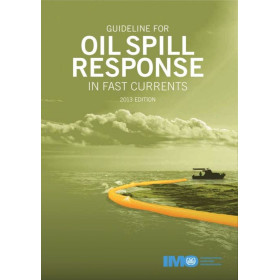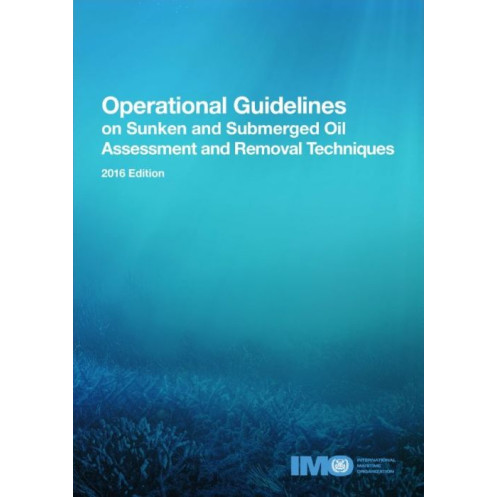





Essential guidelines for effective oil spill response in fast currents, offering practical strategies for detection, containment, and recovery in high-risk scenarios.
Data sheet
Specific References
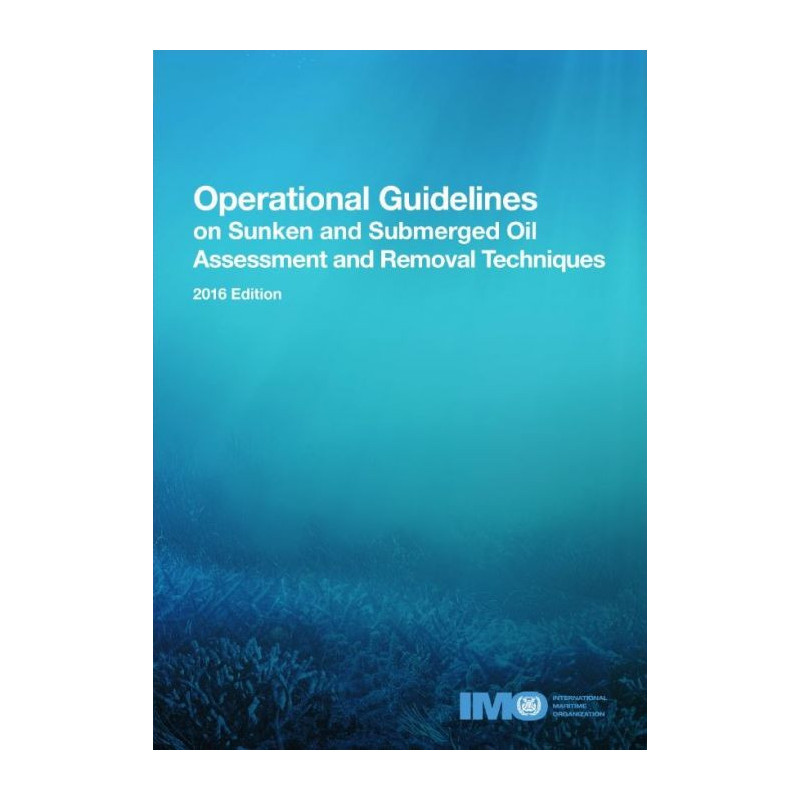
When fast currents threaten to spread oil spills rapidly, every second counts. This official digital publication delivers critical operational guidelines for assessing and responding to oil spills in high-velocity water conditions. Designed for maritime professionals, it provides actionable strategies to mitigate environmental damage and optimize cleanup efforts in challenging scenarios where traditional response methods may fail.
Focusing specifically on sunken and submerged oil—excluding wreck-related spills—this guide covers the entire response lifecycle. From the initial sinking mechanisms of spilled oil to advanced modeling techniques during active incidents, it equips responders with the knowledge to predict behavior, detect hidden oil, and implement effective containment and recovery operations. Both proven methods and innovative approaches are detailed, ensuring adaptability to evolving spill scenarios.
Beyond theoretical frameworks, this publication emphasizes field-ready solutions. It includes step-by-step guidance on detection technologies, containment strategies, and recovery techniques tailored for fast-moving waters. References to supplementary resources further enhance its utility, making it an indispensable tool for spill response teams, environmental agencies, and maritime safety professionals.
Available in a secure digital format compatible with the official reader, this edition ensures instant access to critical information—whether in the office or on-site. Its 90-page structure balances depth with usability, delivering concise, actionable insights without unnecessary complexity. Updated as of 2016, it reflects the latest industry best practices for managing oil spills in dynamic aquatic environments.
Mastering Oil Spill Response in Fast Currents
Oil spills in fast-moving waters demand specialized strategies to prevent catastrophic environmental and economic consequences. These *Guidelines to Oil Spill Response in Fast Currents* provide maritime professionals with a targeted framework for tackling the unique challenges of high-velocity spill scenarios. Unlike static water conditions, fast currents accelerate oil dispersion, complicate containment, and increase the risk of submerged oil—making this guide an indispensable resource for responders facing time-sensitive, high-stakes situations.
Engineered for Rapid Deployment
Published in January 2016, this digital edition distills decades of maritime expertise into 90 concise pages, focusing exclusively on sunken and submerged oil—excluding wreck-related spills. It bridges the gap between theory and practice by detailing the processes that lead to oil sinking, offering modeling techniques for real-time decision-making, and presenting both established and cutting-edge methods for detection, containment, and recovery. Whether addressing a spill in a river, tidal channel, or coastal current, the guidelines ensure responders can adapt to the unpredictable nature of fast-moving waters.
Field-Tested Strategies for High-Risk Scenarios
The publication’s strength lies in its practicality. It equips teams with actionable protocols for assessing spill behavior, deploying detection technologies, and executing recovery operations under pressure. By integrating references to additional resources, it serves as a gateway to broader industry knowledge, empowering professionals to stay ahead of evolving threats. Designed for accessibility, the secure digital format ensures critical information is always at hand—whether on a vessel, in a command center, or during training exercises.
This digital publication is optimized for professional use, featuring a secure, locked format compatible with the official reader. Released in January 2016, the 2016 edition spans 90 pages of expert guidance in English. With dimensions of 11.70 x 8.25 x 0.50 inches and a weight of 0.95 lb, it balances comprehensive content with portability, making it ideal for field operations and emergency response planning.
With a legacy of setting global maritime standards, this publisher is a leading authority in shipping safety, environmental protection, and regulatory compliance. Its publications are trusted by governments, industry leaders, and maritime professionals worldwide, offering authoritative guidance to navigate complex operational and environmental challenges.
The guidelines focus on sunken or submerged oil incidents, excluding oil on sunken wrecks. They address processes leading to oil sinking or submersion, modeling methods during response, and detection, containment, and recovery techniques.
Yes, the guidelines cover both existing and innovative approaches for detecting, containing, and recovering sunken or submerged oil.
No, the publication is currently available only in English.
The digital version is in a locked format, readable using the free reader provided by the publisher.
The publication contains 90 pages of detailed guidelines and references.
No, the digital format is locked and does not allow printing or copying to ensure content protection.
Yes, the guidelines include references to other sources of information for further reading and support.
You might also like