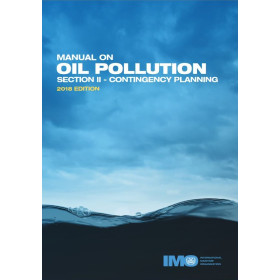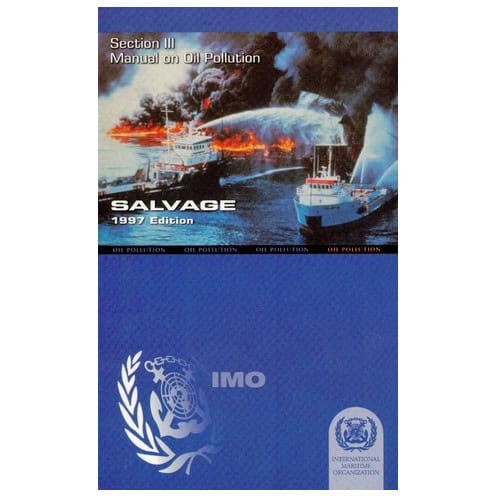





Essential guide for maritime professionals on oil pollution contingency planning. Offers expert strategies to mitigate spills and manage emergencies effectively in English.
Data sheet
Specific References
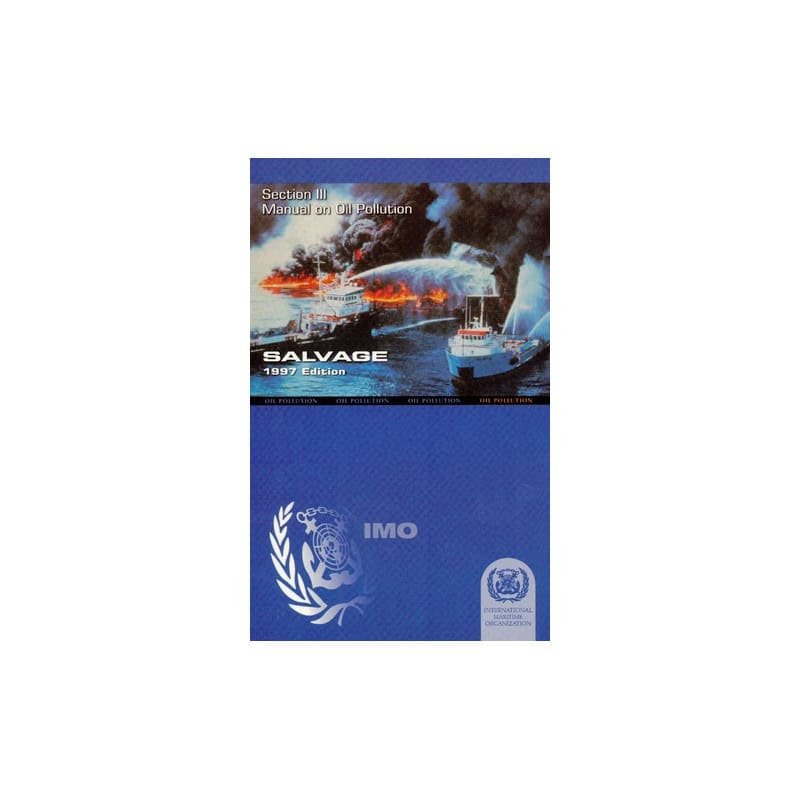
In the high-stakes world of maritime operations, preparedness is the key to mitigating environmental disasters. The IMO Manual on Oil Pollution – Section 2: Contingency Planning delivers critical, actionable guidance for developing robust response strategies to oil spills and other pollution incidents. Designed for maritime professionals, this digital publication equips administrators, responders, and industry stakeholders with the tools needed to minimize the impact of accidents—whether from oil tankers, cargo vessels, or passenger ships. As part of the International Maritime Organization’s (IMO) comprehensive manual series, this section focuses on contingency planning, ensuring that national and regional response frameworks are both effective and compliant with international standards.
This manual is a cornerstone resource for creating and refining national contingency plans, as outlined in the IMO’s broader guidelines. It provides a structured approach to planning, covering everything from risk assessment and resource allocation to coordination between agencies and private sector partners. By integrating lessons learned from past incidents, the manual helps users anticipate challenges and implement proactive measures. Whether addressing small-scale spills or large-scale emergencies, the guidance ensures that response efforts are swift, coordinated, and aligned with global best practices. The digital format enhances accessibility, allowing professionals to reference critical information anytime, anywhere—without the limitations of physical copies.
Tailored for those on the front lines of maritime safety, this publication is an indispensable tool for shipowners, port authorities, environmental agencies, and emergency responders. It bridges the gap between theoretical knowledge and practical application, offering clear, step-by-step instructions for developing contingency plans that are both adaptable and resilient. The manual’s focus on real-world scenarios ensures that users can translate its recommendations into actionable strategies, reducing the environmental, economic, and reputational risks associated with pollution incidents. With the maritime industry facing increasing scrutiny over environmental compliance, this resource provides the expertise needed to meet regulatory demands and protect marine ecosystems.
Available as a digital e-Reader file, this manual is optimized for use with the IMO’s free Bookshelf software, ensuring compatibility with most Windows-based systems. The digital format eliminates the need for physical storage, allowing users to carry an entire library of maritime references in a single device. While the software does not support Mac, iOS, or Android platforms, the convenience of instant access to up-to-date information outweighs these limitations. The manual’s 120-page layout is designed for clarity, with a standard A4 size (210 x 297 mm) that ensures readability whether viewed on-screen or printed for field use. This digital edition is part of the IMO’s commitment to providing cutting-edge resources that evolve alongside the industry’s needs.
Originally published in 1983 and extensively revised by the Marine Environment Protection Committee (MEPC), this manual reflects decades of collective expertise in maritime pollution response. The revisions expand its scope beyond oil spills to address a broader range of hazardous substances, ensuring that users are prepared for modern challenges. By aligning with the latest international regulations and technological advancements, the manual remains a trusted reference for professionals worldwide. Whether used as a standalone guide or in conjunction with other sections of the IMO’s manual series, it provides a foundation for building resilient, future-proof contingency plans that safeguard both the industry and the environment.
Master Maritime Pollution Response with Expert Contingency Planning
In an industry where environmental risks can escalate in minutes, having a well-structured contingency plan is not just a regulatory requirement—it’s a lifeline. The IMO Manual on Oil Pollution – Section 2: Contingency Planning is the definitive digital resource for maritime professionals tasked with preventing, preparing for, and responding to oil pollution incidents. This 120-page manual, published in 1997 and extensively revised by the Marine Environment Protection Committee (MEPC), provides a comprehensive framework for developing national and regional contingency plans that align with international standards. Whether you’re a port authority, shipowner, or environmental agency, this publication equips you with the strategies needed to mitigate the impact of spills from oil tankers, cargo vessels, or passenger ships, ensuring compliance and operational resilience.
From Risk Assessment to Real-World Application
This manual goes beyond theoretical guidance by offering practical, step-by-step instructions for every phase of contingency planning. It covers critical aspects such as risk identification, resource allocation, inter-agency coordination, and public-private partnerships, ensuring that response efforts are both efficient and effective. The digital format, compatible with the IMO’s free Bookshelf software, allows for seamless integration into modern workflows, with instant access to up-to-date information. While the software is limited to Windows-based systems, the manual’s A4-sized layout (210 x 297 mm) ensures optimal readability on-screen or in print. With a file size of just 0.35 kg, it’s designed for portability without sacrificing depth, making it an essential tool for professionals who need reliable guidance in high-pressure situations.
A Trusted Resource for Global Maritime Safety
As part of the IMO’s broader Manual on Oil Pollution series, this section builds on nearly four decades of expertise, with revisions that reflect the latest advancements in pollution response. Originally published in 1983, the manual has been updated to address not only oil spills but also the release of other hazardous substances, ensuring that users are prepared for a wide range of scenarios. By leveraging this resource, maritime professionals can develop contingency plans that are adaptable, compliant, and capable of minimizing environmental damage. Whether used independently or alongside other sections of the IMO’s manual series, this publication is a cornerstone for safeguarding marine ecosystems and maintaining the integrity of global shipping operations.
The IMO Manual on Oil Pollution – Section 2: Contingency Planning is a digital publication designed for maritime professionals, offering 120 pages of expert guidance in a convenient e-Reader format. Compatible with the IMO Bookshelf software, this manual is accessible on Windows-based systems and features a standard A4 layout (210 x 297 mm) for optimal readability. Published in 1997 and extensively revised by the MEPC, it provides up-to-date strategies for developing national and regional contingency plans to address oil spills and other pollution incidents. The digital file weighs just 0.35 kg, ensuring easy storage and portability for field use.
The International Maritime Organization (IMO) is the United Nations’ specialized agency responsible for regulating global shipping standards. With a focus on safety, security, and environmental protection, the IMO develops international conventions and guidelines that shape maritime operations worldwide. Its publications, including the Manual on Oil Pollution series, are trusted resources for industry professionals, offering expert guidance on compliance, risk management, and emergency response. The IMO’s commitment to innovation ensures that its resources remain at the forefront of maritime best practices, supporting a sustainable and efficient shipping industry.
The digital manual requires the IMO Bookshelf software to be read.
No, this digital manual is not supported on Macs, iPhones, or iOS devices.
The manual contains 120 pages.
The manual is formatted to A4 size, with dimensions of 210 x 297 mm.
Yes, it has been revised to extend coverage to substances other than oil, including releases from dry cargo or passenger ship bunkers.
Yes, it is designed to be used in conjunction with the national contingency plan described in the revised Section II on contingency planning.
You might also like