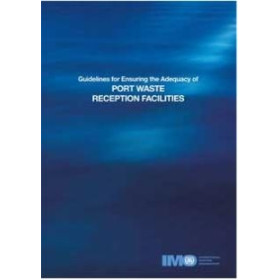





Ensure compliance with MARPOL Annex I regulations with these essential guidelines for port waste reception facilities. A must-have digital resource for maritime professionals.
Data sheet
Specific References
Optimize Port Waste Reception Facilities with IMO’s Official Guidelines
Ensure your port’s waste reception facilities meet international standards with the *IMO Guidelines for Ensuring the Adequacy of Port Waste Reception Facilities*. This digital publication provides a comprehensive framework for designing, operating, and monitoring waste management systems in compliance with MARPOL and other global regulations. Tailored for port authorities, shipping operators, and environmental compliance teams, it delivers actionable insights to enhance waste handling efficiency while minimizing environmental impact.
Align with Global Maritime Environmental Standards
Developed by the International Maritime Organization (IMO), these guidelines offer a structured approach to evaluating and improving port waste reception facilities. Covering critical aspects such as waste categorization, facility capacity planning, and operational best practices, this resource ensures ports can effectively manage ship-generated waste. It includes detailed recommendations for waste storage, treatment, and disposal, making it an essential tool for sustainable port operations.
Instant Digital Access for Seamless Compliance
Available in a secure digital format, this publication provides immediate access to the latest regulatory guidance. Compatible with leading maritime software platforms like IMO Reader and IMO Bookshelf, it integrates effortlessly into your workflow. The digital version features advanced search capabilities, allowing users to quickly locate specific regulations, case studies, and implementation strategies. With a focus on practical application, it supports maritime professionals in achieving and maintaining compliance with evolving environmental requirements.
Drive Sustainable Port Operations
As environmental regulations tighten, ports must adapt to meet stricter waste management demands. This publication serves as a roadmap for aligning port facilities with IMO’s environmental objectives, including reducing marine pollution and optimizing waste treatment processes. It also provides guidance on conducting facility assessments, helping ports identify inefficiencies and implement corrective measures. By following these guidelines, maritime stakeholders contribute to a cleaner, more sustainable shipping industry.
This digital publication is designed for maritime professionals seeking a reliable and accessible resource for port waste management compliance. Published in 2000, it is available in English and compatible with Windows-based systems (Mac users require an emulator like Boot Camp or Parallels Desktop). The digital format is secured with DRM, restricting access to a single computer and limiting printing to 75% of the text per day. It is accessible via IMO Reader, IMO Bookshelf, Witherby Connect, and other leading maritime software platforms, ensuring seamless integration into your compliance workflow.
With a legacy of shaping global maritime standards, the publisher behind this publication is a leading authority in international shipping regulations. Renowned for developing frameworks that enhance safety, security, and environmental sustainability in the maritime industry, their resources are trusted by port authorities, shipping companies, and regulatory bodies worldwide. Their digital publications combine technical precision with practical guidance, ensuring maritime professionals have the tools they need to navigate complex compliance landscapes.
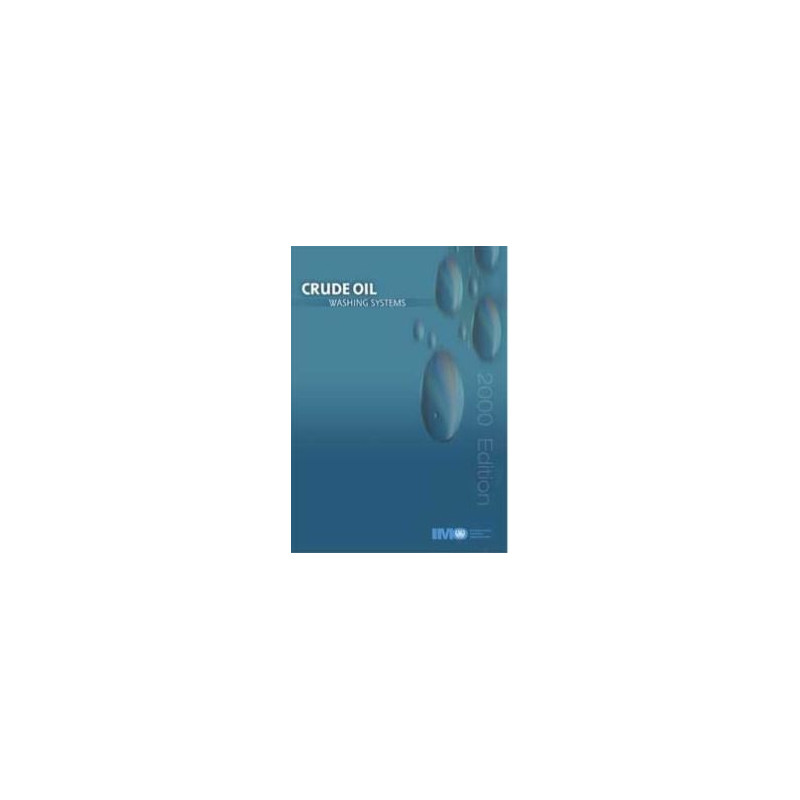
The guidelines provide revised specifications for the design, operation, and control of crude oil washing systems on oil tankers, ensuring compliance with MARPOL 73/78 Annex I Regulation 13. They also include standard formats for operation and equipment manuals, inspection directives, and examples.
It can be read using the free IMO Reader, IMO Bookshelf, Witherby Connect, IMO ePublications, or MS SeaReader. Compatibility is primarily with Windows, though Mac users may require a Windows emulator.
Printing is limited to 75% of the text per day, and saving or printing the entire document as a PDF is not permitted due to DRM restrictions.
Yes, but Mac users will need a Windows emulator such as Boot Camp or Parallels Desktop to access the content.
The publication is locked to a single computer and cannot be transferred or printed as a PDF. Daily printing is limited to 75% of the text.
It includes the standard format for crude oil washing manuals (resolution MEPC.3(XII), amended by MEPC.81(43)), along with directives for port inspections and examples of operation manuals. Amendments from resolutions A.446(XI), A.497(XII), and A.897(21) are also incorporated.
You might also like