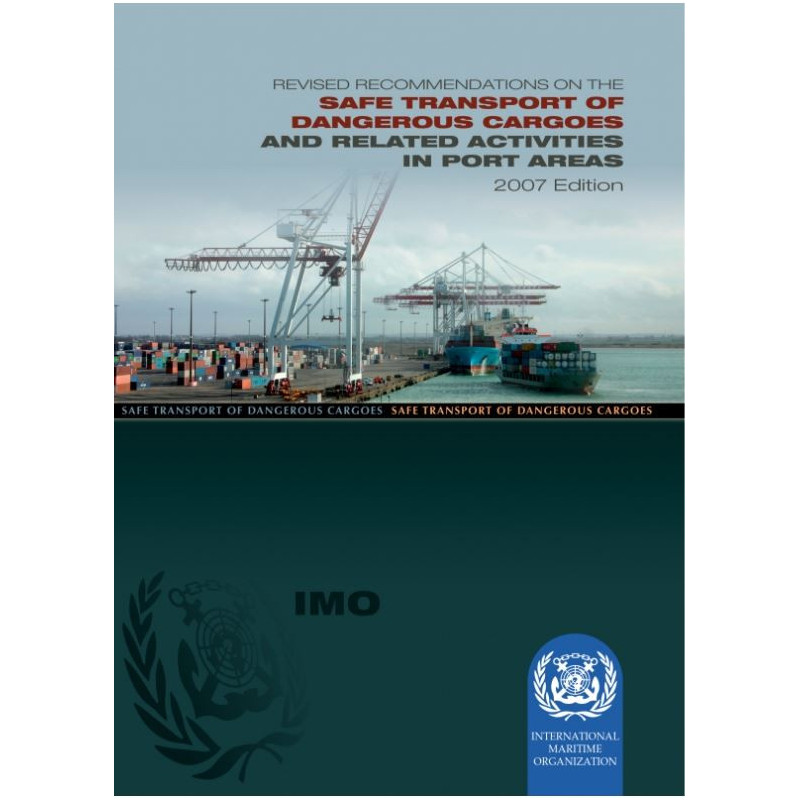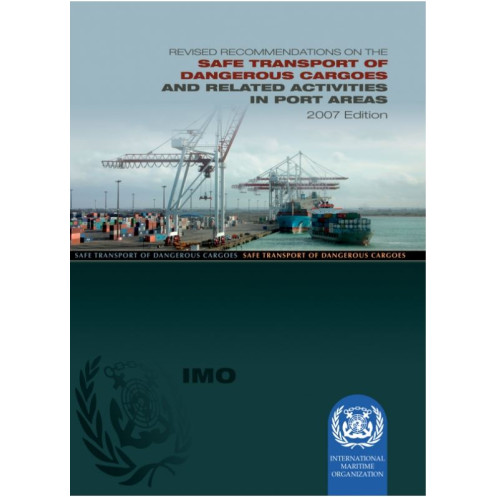




2007 revised recommendations for safe transport of dangerous cargo in ports. Covers packaging, bulk liquids, gases, and chemicals, aligning with IMDG and MARPOL for compliant, efficient operations.
Data sheet
Specific References
Elevate Port Safety with the Definitive Guide to Dangerous Cargo Handling
The Revised Recommendations on the Safe Transport of Dangerous Cargo and Related Activities in Port Areas is the cornerstone of modern maritime safety protocols. Published in 2007, this authoritative guide consolidates decades of industry expertise into a single, comprehensive resource. It addresses the unique challenges of transporting hazardous materials in port environments, offering standardized procedures to mitigate risks and streamline operations. With over 136 pages of detailed recommendations, it serves as an indispensable tool for professionals navigating the complexities of dangerous cargo logistics.
Engineered for Compliance and Operational Excellence
This publication is meticulously aligned with the International Maritime Dangerous Goods (IMDG) Code, ensuring full compliance with the SOLAS Convention and other global maritime regulations. It provides clear distinctions between "custody" and "storage," clarifying the roles and responsibilities of shippers, packers, and port operators. The 2007 edition introduces critical updates, including a new security chapter and an annex on fumigation, reflecting the latest advancements in maritime safety. These enhancements make it a dynamic resource for adapting to evolving industry standards and emerging threats.
Designed for Real-World Application
Available in a paperback format with dimensions of 250 mm x 210 mm, this guide is built for practical use in both office and field settings. Weighing just 1.8 kg, it is lightweight and portable, allowing professionals to reference it on the go. The publication covers a broad spectrum of dangerous cargo, including packaged goods, bulk liquids, solids, and liquefied gases, making it a versatile resource for diverse operational needs. Its structured approach ensures that users can quickly access the information they need to maintain safety and efficiency in port activities.
Trusted by Industry Leaders
Since its initial release in 1973 as Recommendation A.289(VIII), this publication has undergone multiple revisions to stay ahead of industry developments. The 2007 edition builds on this legacy, incorporating feedback from maritime professionals worldwide. It is widely recognized as a benchmark for safety and compliance in port operations, trusted by port authorities, shipping companies, and regulatory bodies to harmonize rules between vessels and shore facilities. By adopting these recommendations, organizations can ensure smoother, safer, and more efficient handling of dangerous cargo.
This publication is presented in a 136-page paperback format, with dimensions of 250 mm x 210 mm and a weight of 1.8 kg. Published in January 2007, it is written in English and serves as a comprehensive reference for the safe transport and handling of dangerous cargo in port areas. The guide aligns with the IMDG Code and includes updated chapters on security measures and fumigation practices.
With a legacy spanning decades, this organization is the leading authority in maritime safety and regulatory standards. Its publications are developed in collaboration with global experts and are recognized as the gold standard for compliance and operational excellence in the maritime industry. Trusted by professionals worldwide, its guidelines shape the future of safe and efficient maritime logistics.
It covers dangerous goods in packaged form, bulk liquids and solids, liquefied gases, oils, harmful chemicals, and substances regulated by the IMDG Code and MARPOL.
The 2007 edition includes a new chapter on security, an annex on fumigation, and a glossary, along with updated recommendations aligned with the IMDG Code.
While the publication itself is not mandatory, it aligns with the IMDG Code, which has been mandatory under SOLAS since 2004.
The publication clarifies the difference between custody (responsibility for goods) and storage (physical holding of goods), addressing the roles of shippers, packers, and other stakeholders.
Yes, a digital version is available in a locked format, accessible using the free OMI reader software.
The printed version measures 250 mm in height and 210 mm in width, with a paperback binding.
Yes, the 2007 edition includes an annex specifically addressing fumigation practices for dangerous cargo in port areas.
You might also like