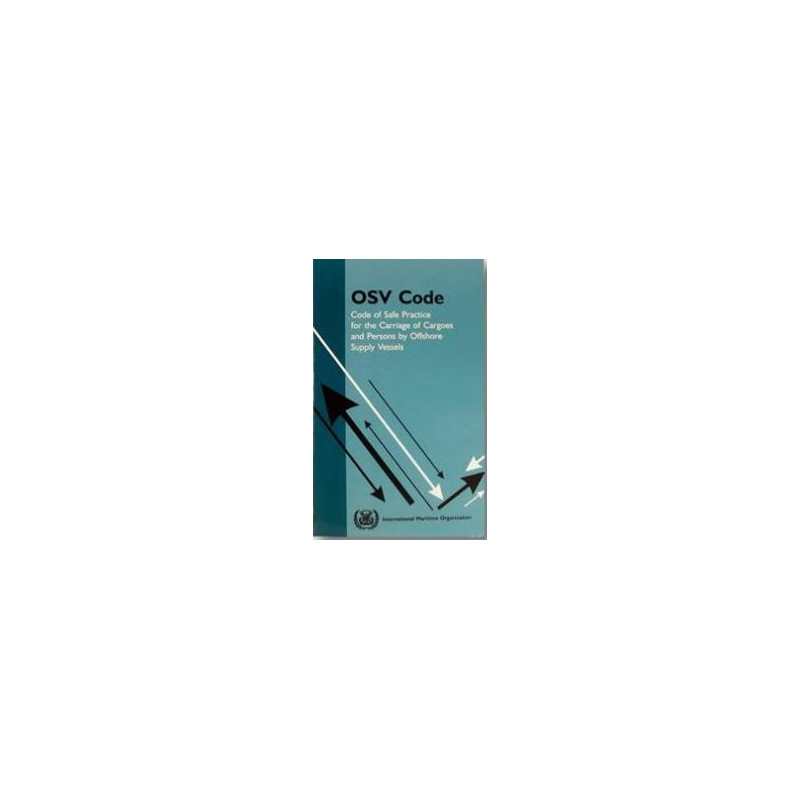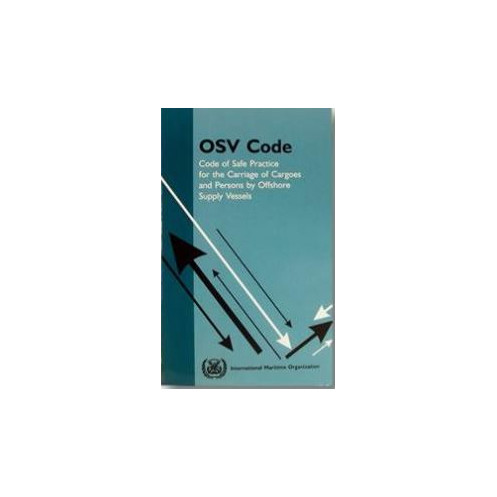




The OSV Code ensures safe offshore supply vessel operations. It covers secure cargo and personnel transport, design, construction, and compliance with international safety standards.
Data sheet
Specific References
Enhance Offshore Safety with the OSV Code: A Critical Resource for Maritime Professionals
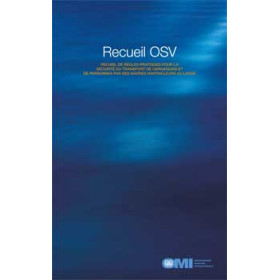
The *Code of Safe Practice for the Carriage of Cargo and Persons by Offshore Supply Vessels (OSV Code)* is an indispensable publication for ensuring the safety and efficiency of offshore supply operations. Adopted by the International Maritime Organization (IMO) under Resolution A.863(20), this code provides a standardized framework to minimize risks during the transportation of cargo and personnel to and from offshore installations. It is a must-have reference for vessel operators, contractors, and safety officers who prioritize compliance with international maritime safety standards.
Comprehensive Safety Protocols for Hazardous and Non-Hazardous Cargo
This publication offers detailed guidelines for the secure handling and transport of both hazardous and non-hazardous cargo, including bulk liquid substances classified as dangerous or noxious. By adhering to these protocols, maritime professionals can prevent accidents, spills, and other incidents that could jeopardize crew safety, vessel integrity, or environmental protection. The OSV Code is particularly valuable for operations involving the supply of offshore platforms, where the stakes for safety and compliance are exceptionally high.
Seamless Integration with the ISM Code for Robust Safety Management
One of the standout features of the OSV Code is its direct reference in paragraph 1.4 of the International Safety Management (ISM) Code. This integration makes it a critical component for organizations implementing a safety management system (SMS). By incorporating the OSV Code into their SMS, maritime operators can demonstrate compliance with international regulations, streamline risk assessment processes, and foster a culture of safety and continuous improvement. This alignment ensures that safety protocols are not only theoretically sound but also practically enforceable.
Practical and Authoritative Resource for Industry Professionals
Published in a user-friendly paperback format, the OSV Code is designed for easy reference and application in real-world scenarios. With 25 pages of concise, actionable guidelines, it provides maritime professionals with the tools they need to navigate the complexities of offshore supply operations safely and efficiently. The publication measures 210 mm in height and 146 mm in width, making it a compact yet comprehensive resource for desk or field use. Originally published in January 2000, this edition remains a cornerstone of maritime safety, reflecting the IMO's commitment to advancing industry standards.
The *Code of Safe Practice for the Carriage of Cargo and Persons by Offshore Supply Vessels (OSV Code)* is a 25-page paperback publication, measuring 210 mm in height and 146 mm in width. Adopted under IMO Resolution A.863(20), this English-language resource was first published in January 2000 and remains a key reference for maritime safety. It is also available in a digital e-Book format, ensuring accessibility for professionals across various platforms.
With a long-standing reputation in the maritime industry, this publisher is recognized for producing authoritative and reliable publications that support safety, compliance, and operational excellence. Their works are widely adopted by professionals and regulatory bodies, serving as essential references for navigating the complexities of international maritime standards.
The code was adopted under resolution A.863(20) by the IMO.
Yes, it covers the transport of hazardous and noxious liquid substances in bulk for offshore platform supply.
The digital version is locked and requires the free IMO e-reader for access.
Yes, a supplement is available for download on the IMO website.
The printed version measures 210 mm in height and 146 mm in width.
The printed version contains 25 pages.
Yes, it should be considered in implementing a safety management system under ISM Code paragraph 1.4.
You might also like