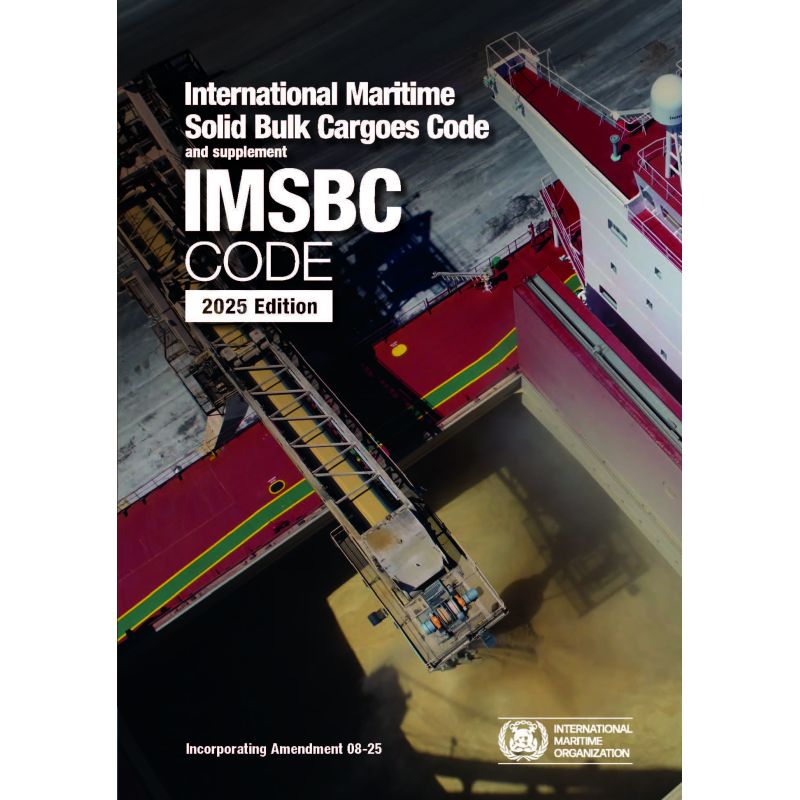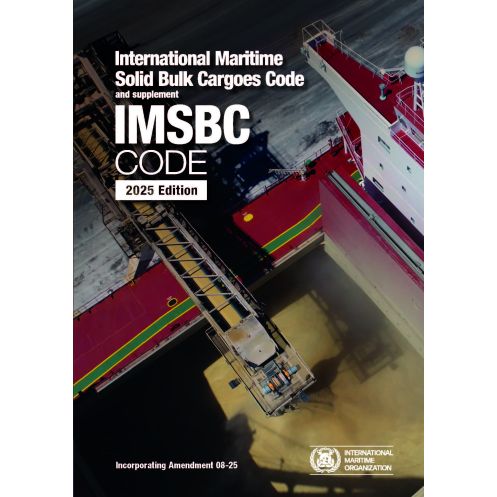




Comply with SOLAS regulations using the 2023 IMSBC Code. Includes Amendment 07-23, updated cargo guidelines, and safety protocols for secure solid bulk cargo transport.
Data sheet
Specific References
Essential Compliance Tool for Bulk Cargo Safety
The *International Maritime Solid Bulk Cargoes Code (IMSBC)* is the gold standard for mitigating risks in solid bulk shipping. This paperback edition, updated with Amendment 07-23, provides the latest protocols to prevent structural damage, stability loss, and hazardous chemical reactions during transit. Mandatory under SOLAS since 2011, it ensures vessels and crews adhere to the highest safety standards, with voluntary compliance starting January 2024 and mandatory enforcement in 2025.
Comprehensive Coverage for Industry Professionals
Designed for administrations, shipowners, and maritime operators, the IMSBC Code addresses critical challenges in bulk cargo transport. It includes detailed schedules for cargoes like aluminum fluoride, updated hazard classifications, and references to recent SOLAS amendments. Excluding grain transport (covered by the *International Grain Code*), this edition also features the *BLU Code* and *Manual*, offering step-by-step guidance for safe loading, unloading, and fumigation practices.
Practical and Up-to-Date Resources
This 2023 edition weighs 6.75 lb and remains valid until December 31, 2026. It combines regulatory compliance with real-world applicability, making it an indispensable tool for captains, shippers, and safety inspectors. With its clear instructions and updated annexes, the IMSBC Code ensures seamless adherence to international maritime safety standards.
The *International Maritime Solid Bulk Cargoes Code (IMSBC)* is a paperback publication in English, weighing 6.75 lb. Adopted in 2008 and mandatory under SOLAS since 2011, this 2023 edition includes Amendment 07-23, with voluntary compliance starting January 1, 2024, and mandatory enforcement from January 1, 2025. It excludes grain transport and remains valid until December 31, 2026.
For over a century, this organization has set the benchmark for maritime safety and regulatory standards. Recognized globally, its publications are trusted by governments, shipping companies, and industry professionals to ensure compliance, operational efficiency, and risk mitigation in international maritime operations.
It provides information on hazards like structural damage from improper cargo distribution, loss of stability during voyages, and chemical reactions of bulk solid cargoes.
No, it does not cover the transport of bulk grain, which is addressed by the International Grain Code (1991).
The printed version weighs 6.75 lb.
The amendment 07-23 becomes mandatory on January 1, 2025, though voluntary compliance is encouraged starting January 1, 2024.
Yes, it includes updated individual annexes for many cargoes and new schedules for substances like aluminum fluoride.
Yes, it includes the Code of Practice for the Safe Loading and Unloading of Bulk Carriers (BLU Code) and recommendations for safe pesticide use in cargo holds.
The current edition expires on December 31, 2026.
You might also like