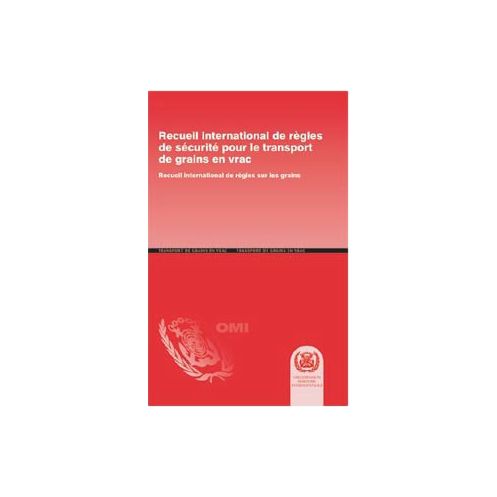




Ensure safe bulk grain transport with the 1991 International Code. This French-language edition details IMO’s binding regulations, replacing the original SOLAS Chapter VI requirements.
Data sheet
Specific References
This authoritative publication sets the global standard for safe bulk grain transportation, ensuring compliance with international maritime regulations. Developed by the International Maritime Organization (IMO), it consolidates critical safety protocols into a single, mandatory code that replaces earlier SOLAS Convention provisions. Maritime professionals rely on this document to navigate the complex requirements of bulk grain cargo operations while maintaining the highest safety standards.
The publication establishes a complete regulatory framework covering every aspect of bulk grain transport. From cargo securing methods to vessel stability calculations, it provides detailed technical guidance that shipping companies, port authorities, and maritime inspectors need to prevent cargo shifts and maintain vessel integrity. The rules address critical factors like grain flow characteristics, loading procedures, and emergency response protocols that directly impact operational safety.
Recognized as the definitive resource for bulk grain transportation, this publication serves as the primary reference for maritime training programs worldwide. Shipping companies, classification societies, and maritime academies use it to develop safety protocols and training curricula. The document's technical specifications and calculation methods form the basis for vessel design approvals and cargo planning in the global grain trade.
Beyond regulatory compliance, this publication delivers practical operational guidance that maritime professionals apply daily. It includes standardized calculation methods for grain heeling moments, detailed loading plans, and stability criteria that help prevent dangerous cargo shifts. The rules also specify documentation requirements and inspection procedures that ensure consistent safety standards across the international shipping industry.
Adopted by the Maritime Safety Committee in 1991, these rules represent the culmination of decades of maritime safety research and incident analysis. The publication reflects the IMO's commitment to continuous improvement in bulk cargo safety, incorporating lessons learned from maritime incidents and evolving shipping practices. As a mandatory code under SOLAS, it carries the full weight of international maritime law, making compliance essential for all vessels engaged in bulk grain transport.
International Safety Rules for the Transport of Bulk Grain
Discover the definitive regulatory framework that governs safe bulk grain transportation across global shipping routes. This essential publication consolidates the International Maritime Organization's mandatory safety rules into a single, authoritative reference, replacing the original SOLAS Convention Chapter VI with comprehensive, updated guidelines. Designed for immediate practical application, it provides maritime professionals with the technical foundation needed to ensure compliance and operational safety in bulk grain shipping operations.
Comprehensive Technical Resource for Maritime Operations
This 43-page paperback edition delivers the complete set of international safety regulations for bulk grain transport, including detailed technical specifications that shipping companies, port authorities, and maritime inspectors rely on daily. The publication covers critical aspects of bulk grain shipping, from cargo securing methods and stability calculations to emergency response protocols, all presented in clear, actionable terms. With a publication date of January 1992 and weighing 1.8 kg, this French-language edition remains the industry standard reference for compliance with IMO regulations.
Global Standard for Bulk Grain Safety
Adopted by the Maritime Safety Committee during its 59th session in May 1991, this publication represents the international shipping industry's commitment to continuous improvement in bulk cargo safety. It incorporates decades of maritime safety research and incident analysis into a cohesive regulatory framework that addresses the unique challenges of bulk grain transportation. As a mandatory code under SOLAS, these rules carry the full authority of international maritime law, making this publication an indispensable resource for all vessels engaged in the global grain trade.
This essential maritime publication presents the complete International Safety Rules for the Transport of Bulk Grain in a convenient 43-page paperback format. Published in January 1992 as the 1991 edition, the document weighs 1.8 kg and is presented entirely in French. As the official IMO reference, it contains the full text of the mandatory safety code adopted by the Maritime Safety Committee, including all technical specifications, calculation methods, and operational guidelines required for compliance with international maritime regulations.
The organization behind this publication sets the global standards for maritime safety and environmental protection in international shipping. With a membership comprising 175 member states, it develops and maintains the comprehensive regulatory framework that governs all aspects of maritime operations worldwide. Through its committees and subcommittees, the organization continuously updates and improves international maritime conventions, codes, and recommendations to address emerging challenges in the shipping industry.
This safety code provides mandatory regulations for the secure transport of bulk grain by sea, replacing the original Chapter VI of the SOLAS Convention with more detailed and updated requirements.
The paper version is only available in French, but a digital version may be accessible in other languages through the publisher’s official platform.
The paper version is a physical copy, while the digital version is a locked format requiring the publisher’s free e-reader for access.
Yes, this 1991 edition remains a mandatory reference for bulk grain transport, though it should be used alongside any subsequent amendments or updates.
The publication contains 43 pages of detailed safety regulations and guidelines.
Yes, it serves as an official reference for maritime professionals involved in the transport of bulk grain, making it suitable for training and compliance purposes.
You might also like