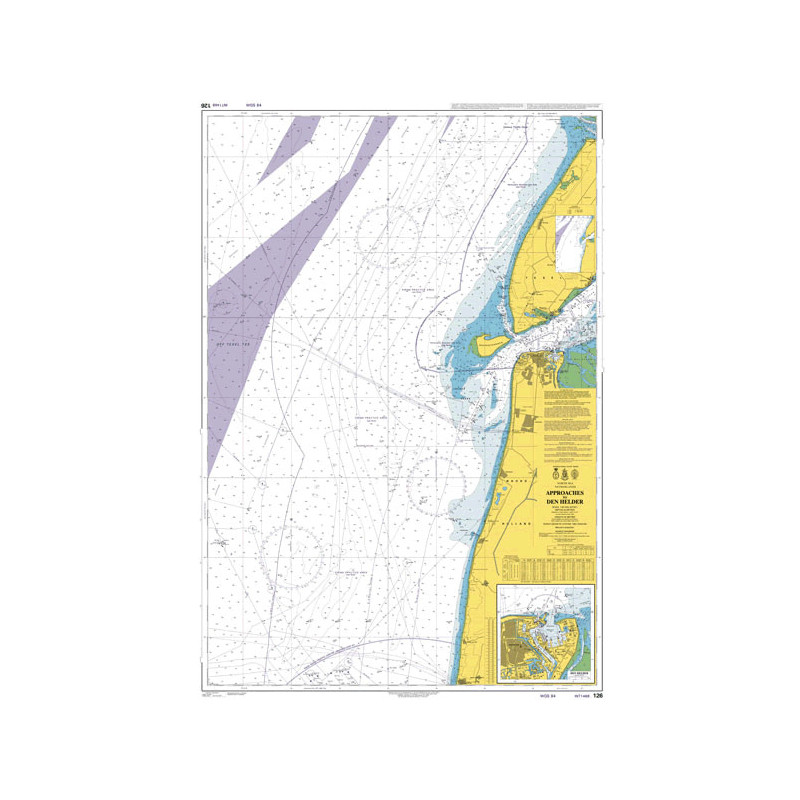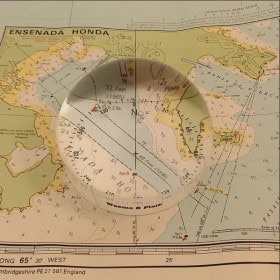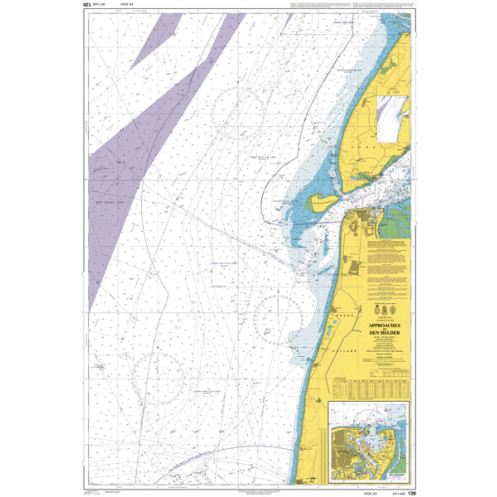



Admiralty - 0126 - nautical chart - Approaches to Den Helder
search
  • googlemap
  • Admiralty - 0126 - nautical chart - Approaches to Den Helder

Nautical chart Admiralty - 0126 - Approaches to Den Helder

€70.46
Admiralty - United Kingdom Hydrographic Office
In English language Rolled paper chart
chart printed to order
Estimated preparation time: 5 to 14 days
The Admiralty catalog is probably the most complete in the world.
ad-126

Data sheet

Year
chart printed to order incorporating the latest corrections
Author
Admiralty
Scale
1:60.000
Picto
In English language
Rolled paper chart
Classification scale paper chart
Inshore
Paper chart format
Flat chart (rolled in a tube)
Support
paper version
Navigation area
North Sea
Chart type
Navigation chart

Specific References

UPC
400000036786
EAN13
4000000031444
New
chart printed to order
Description détaillée

This Admiralty (UKHO) paper navigation chart (flat chart) covers North Sea, the area Approaches to Den Helder.

Admiralty nautical charts are published by the UK Hydrographic Office (UKHO), one of the most respected hydrographic authorities worldwide. They are an international reference standard for maritime navigation, particularly for offshore sailing, commercial shipping routes, and regions beyond national chart coverage.

Available on the Nautic Way online maritime bookstore, Admiralty charts provide comprehensive global coverage, making them essential tools for professional mariners, offshore sailors, and experienced yachtsmen seeking reliable, standardized, and internationally recognized cartography.

Choosing an Admiralty chart means addressing a critical need: navigating safely across international waters, planning long passages, and ensuring reliable situational awareness at sea.

What is an Admiralty nautical chart used for?

An Admiralty chart is designed to provide a highly accurate and standardized representation of the marine environment, supporting safe decision-making in all navigation contexts.

Practical navigation uses

Admiralty charts are commonly used for:

  • Offshore navigation and ocean crossings
  • Commercial shipping and professional maritime operations
  • International route planning
  • Navigating complex or high-traffic areas (straits, shipping lanes)
  • Sailing in regions not covered by national hydrographic offices

Real-life navigation scenarios

  • Planning a transatlantic or long-distance voyage
  • Navigating between multiple countries or continents
  • Managing vessel delivery or convoy operations
  • Anticipating dense maritime traffic zones
  • Unit of measurement in meters, except for some charts.

Added value compared to generic or digital-only charts

Admiralty charts offer:

  • Global consistency in chart presentation
  • Trusted accuracy used by professionals worldwide
  • Clear prioritization of critical navigational information
  • Full independence from electronic systems

Who are Admiralty charts recommended for?

Admiralty charts are designed for demanding navigation environments and are best suited for users with a solid understanding of marine navigation.

Target users

  • Experienced sailors navigating offshore
  • Skippers and delivery crews operating internationally
  • Maritime professionals (merchant navy, training institutions)
  • Offshore cruising yachtsmen

Navigation conditions

  • Suitable for day and night navigation
  • Ideal for regular or intensive use
  • Used alongside GPS, chartplotters, or ECDIS systems

These charts provide a strategic overview, essential for safe offshore navigation.

How to read and use an Admiralty nautical chart

Admiralty charts follow strict international standards, ensuring consistent interpretation anywhere in the world.

Understanding chart scale

  • Small scale: ocean-wide route planning
  • Medium scale: coastal approach
  • Large scale: ports, harbors, and complex areas

Choosing the right scale is critical to match the chart to each phase of navigation.

Key information displayed

An Admiralty chart includes:

  • Depth soundings and seabed composition
  • Navigational aids and buoyage (IALA system)
  • Shipping lanes and traffic separation schemes
  • Hazards (rocks, wrecks, shoals)
  • Restricted or regulated areas

Essential skills for users

  • Interpreting standardized chart symbols
  • Understanding tidal impact on depths
  • Reading and anticipating traffic flows

An Admiralty chart is a decision-making tool, not just a positioning aid.

Reliability, updates, and safety

A rigorous update system

The UKHO provides:

  • Notices to Mariners
  • Regular chart corrections
  • Updated editions incorporating the latest data

Keeping charts up to date is essential for maintaining safe navigation standards, especially in busy international waters.

Standards and compatibility

  • Based on the WGS 84 geodetic system (GPS compatible)
  • Compliant with international hydrographic standards
  • Fully aligned with ECDIS navigation systems

Best safety practices

  • Always check the chart edition date
  • Apply relevant updates and corrections
  • Keep a paper chart backup onboard

Safety at sea relies on accurate and up-to-date information.

Paper vs digital Admiralty charts – why keep paper onboard?

Advantages of paper charts

  • Immediate global visual overview
  • Better route anticipation and planning
  • No reliance on power or electronics
  • Recognized official navigation reference

A complementary approach

Even with modern systems:

  • Paper charts remain a critical backup solution
  • They help cross-check electronic data
  • They improve navigation preparation and situational awareness

Redundancy is a fundamental rule in offshore navigation.

FAQ – Admiralty nautical charts

Which Admiralty chart should I choose for international navigation?
It depends on your route, the regions covered, and the level of detail required. Multiple charts are often needed (general + detailed).

Is an Admiralty chart sufficient on its own?
Yes as a primary reference, but it is best used alongside GPS or electronic navigation systems.

How often should Admiralty charts be updated?
Whenever a new edition is released or when important corrections are issued through Notices to Mariners.

Are Admiralty charts compatible with GPS?
Yes, they use the WGS 84 system, ensuring full compatibility with modern navigation equipment.

What is the difference between SHOM and Admiralty charts?
SHOM charts mainly cover French waters, while Admiralty charts provide global coverage, making them ideal for international navigation.

Summary – Admiralty charts: the global standard for offshore navigation

Admiralty nautical charts are more than just maps: they are strategic navigation tools, designed to ensure safety, consistency, and reliability across the world’s oceans.

By choosing them from Nautic Way, you benefit from expert selection, trusted sources, and a navigation-focused approach, helping you sail with confidence wherever your route may lead.

Admiralty nautical charts are updated daily and printed only on demand. On the day of printing, they incorporate the latest updates. The chart's publication year is indicated on it.

We strive to offer only the latest versions of nautical charts incorporating the most recent updates.

All nautical charts, whether paper or digital, are printed on demand and include the latest updates. In accordance with Article L221-28 of the French Consumer Code, the right of withdrawal cannot be exercised for goods liable to become obsolete rapidly. Paper charts and digital charts are neither returnable nor exchangeable. Consequently, these orders are final upon placement by the Customer, according to the terms and conditions specified in these General Terms and Conditions of Sale.

Loading...