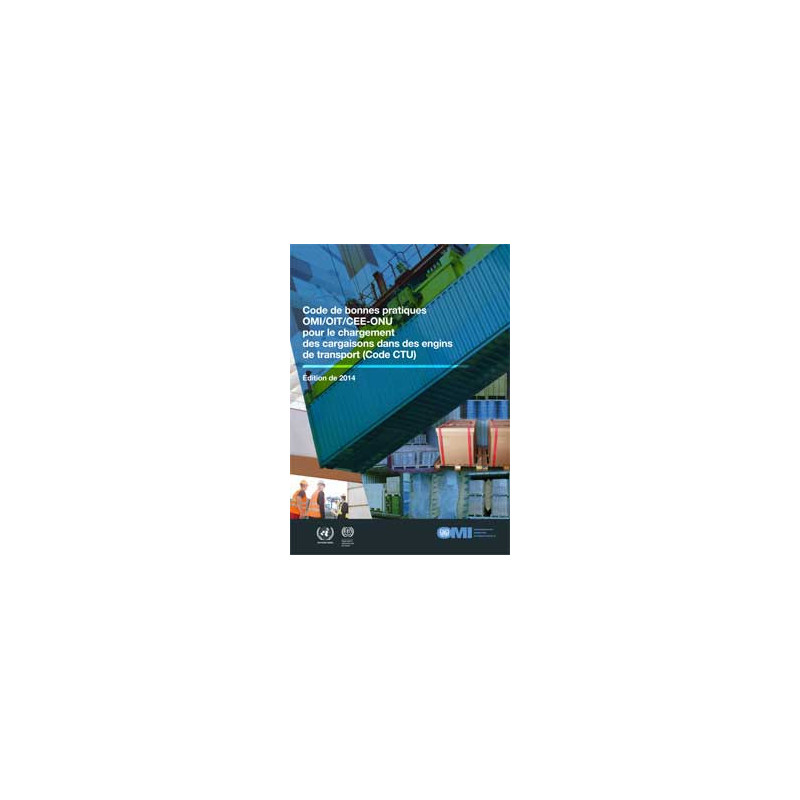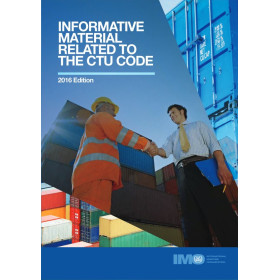




Official French-language guide for safe cargo loading in containers and transport units. Covers packing, securing, and transport best practices for professionals and trainers.
Data sheet
Specific References
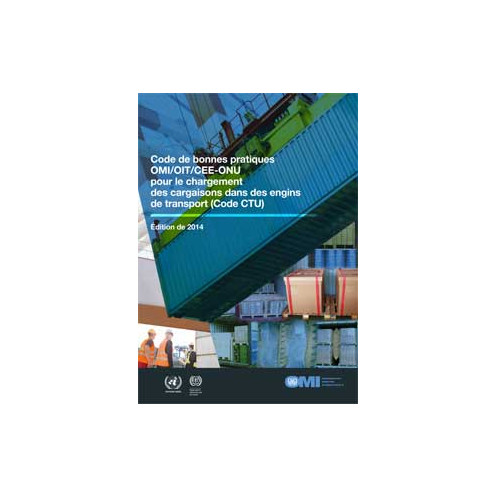
Master Cargo Safety with the IMO CTU Code – Best Practices for Transport Units
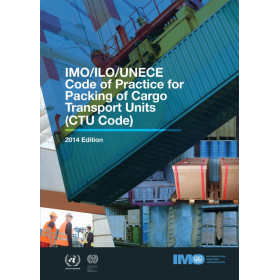
The *IMO CTU Code – Best Practices for Cargo Loading in Transport Units* is the definitive guide for professionals seeking to elevate safety and efficiency in cargo handling. This official publication, developed in collaboration with the IMO, ILO, and UNECE, delivers standardized protocols for packing, loading, securing, and transporting goods in containers, swap bodies, and roll cages. By integrating these best practices into daily operations, businesses can mitigate risks, prevent costly accidents, and ensure compliance with international maritime and transport regulations. Whether you're a logistics manager, freight forwarder, or training instructor, this code provides the essential framework to optimize cargo operations and safeguard personnel and assets.
Engineered for Real-World Application
Designed for practical use, this guide addresses the most critical challenges in cargo transport, from load distribution and securing techniques to risk assessment and emergency procedures. It offers clear, actionable recommendations to prevent cargo shifts, structural failures, and accidents during transit, making it an invaluable resource for professionals in maritime, road, and rail transport. The code’s structured approach ensures that all stakeholders—from dockworkers to senior managers—can implement safety measures consistently, reducing liabilities and enhancing operational reliability. With a focus on real-world scenarios, this publication bridges the gap between theory and practice, empowering teams to execute cargo handling tasks with precision and confidence.
Trusted Resource for Training and Compliance
Beyond its role as a technical manual, the *IMO CTU Code* serves as a cornerstone for training programs in cargo handling and transport safety. It equips personnel with the knowledge to identify hazards, apply corrective measures, and adhere to global best practices. Training institutions and companies can leverage this guide to standardize procedures, ensuring that all team members are aligned with the latest industry standards. The printed edition, weighing 1.8 kg, is built for durability, making it ideal for use in demanding environments where digital access may not be feasible. Published in 2014, this code remains a timeless reference for professionals committed to excellence in cargo transport.
This printed edition of the *IMO CTU Code – Best Practices for Cargo Loading in Transport Units* is presented in French, offering a comprehensive 5.92 MB-equivalent resource in a durable paper format. Published on January 2, 2014, the book is brand new and weighs 1.8 kg, making it a robust and portable reference for professionals in the field. While a locked digital version is available for electronic use, this physical edition ensures reliable access in environments where digital devices may not be practical.
With a legacy of setting global standards for maritime safety and efficiency, this organization is a leading authority in the development of international regulations and best practices for the shipping and transport industries. Its publications are trusted by professionals worldwide for their accuracy, relevance, and commitment to advancing operational excellence in cargo handling and logistics.
The publication date is January 2, 2014.
This version is only available in French.
The printed version weighs 1.8 kg.
It covers containers, swap bodies, and roll cages.
Yes, a locked digital version is available, readable with the free official reader.
The digital version has a file size of 5.92 MB.
It is intended for individuals responsible for loading cargo and training others in these tasks.
You might also like