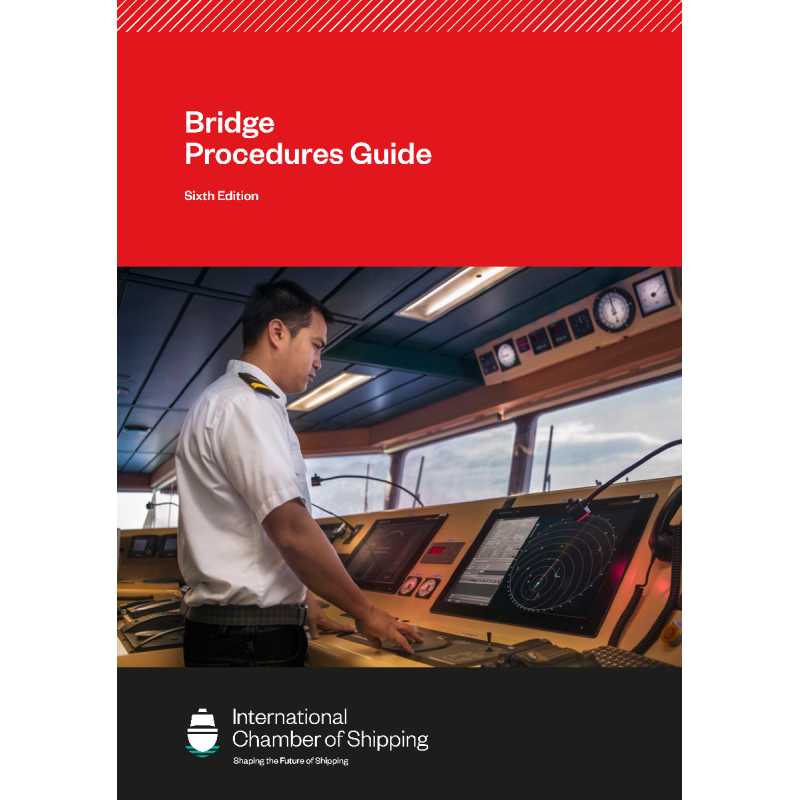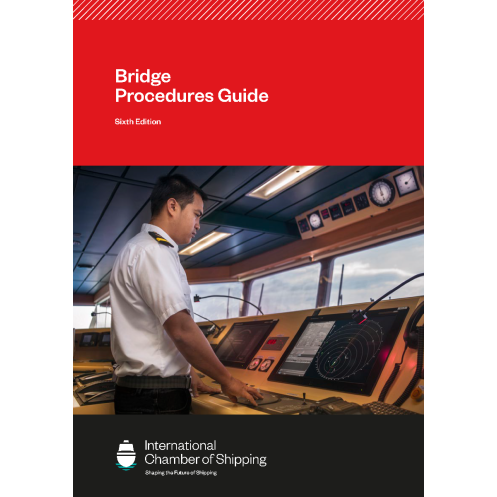



This industry-trusted guide covers modern bridge procedures, ECDIS, GNSS, risk assessments, and stability. Essential for officers, trainers, and maritime investigators worldwide.
Data sheet
Specific References
Master Safe and Efficient Bridge Operations with the Industry’s Leading Guide
The *Bridge Procedures Guide* is the ultimate resource for maritime professionals seeking to uphold the highest standards of safety, efficiency, and compliance on the bridge. Now in its sixth edition (2022), this authoritative publication has been fully updated to address the challenges of modern shipping, including the integration of advanced digital navigation systems, evolving regulatory requirements, and the critical role of human factors in operational safety. Whether you're a captain, officer of the watch, or maritime trainer, this guide provides the tools and knowledge needed to navigate today’s complex maritime environment with confidence.
Designed for Real-World Application
This guide is more than just a reference—it’s a practical manual tailored to the daily realities of bridge operations. With 160 pages of expertly curated content, it covers everything from watchkeeping best practices and electronic navigation (ECDIS, GNSS) to risk assessment, ship stability, and cargo operations. Each section is crafted to deliver clear, actionable guidance, ensuring crews can implement procedures efficiently and effectively. The inclusion of visual aids and simplified language further enhances usability, making complex topics accessible to all levels of maritime professionals.
Aligned with Global Standards and Regulatory Requirements
Recognized by the International Maritime Organization (IMO) as a recommended onboard document, the *Bridge Procedures Guide* is a trusted resource for achieving compliance with SOLAS, MARPOL, and other international conventions. It reflects the latest industry standards, including updated guidance on ECDIS safety parameters, CATZOC (Category Zone of Confidence) considerations, and weather routing strategies. By adhering to these best practices, shipping companies and crews can minimize risks, avoid costly incidents, and demonstrate their commitment to safety and operational excellence.
Enhanced Focus on Human Performance and Technology Integration
The sixth edition places a stronger emphasis on the human element in bridge operations, addressing critical factors such as fatigue management, decision-making under pressure, and effective communication. It also provides in-depth coverage of modern navigation technologies, including radar performance characteristics and the safe use of electronic charting systems. This dual focus ensures that crews are not only proficient in using advanced tools but also equipped to manage the psychological and operational challenges of life at sea.
Essential for Training, Accident Investigation, and Onboard Operations
Widely used by maritime academies, shipping companies, and accident investigators, the *Bridge Procedures Guide* serves as a benchmark for training and operational protocols. Its comprehensive approach makes it an indispensable tool for preparing cadets, conducting drills, and investigating incidents. For vessels of all types, this guide is a vital companion that supports safe, efficient, and compliant bridge operations—day in and day out.
The *Bridge Procedures Guide* (sixth edition, 2022) is a 160-page paperback publication, weighing 1.5 kg. Published in January 2022, it is written in English and serves as a comprehensive reference for bridge operations, covering modern navigation technologies, risk assessment, and compliance with international maritime standards.
With decades of expertise in shaping global maritime standards, this organization is a leading authority in the shipping industry. Its publications are developed in collaboration with industry experts, regulatory bodies, and maritime professionals to ensure accuracy, relevance, and alignment with international best practices. Trusted by shipping companies, training institutions, and regulatory agencies worldwide, its guides are essential resources for safe, efficient, and compliant maritime operations.
The 2022 edition includes enhanced guidance on the human element, updated ECDIS safety parameters, CATZOC considerations, weather routing, radar characteristics, more visual aids, and simplified language to improve clarity and usability.
Yes, it provides detailed best practices for navigation using modern technologies such as ECDIS and GNSS, ensuring compliance with industry standards.
Yes, it includes comprehensive guidance on risk assessments, stability management, and other critical safety procedures for bridge operations.
Absolutely, it is widely used by maritime training institutions, shipping companies, and officers for both operational and educational purposes.
The guide weighs 1.5 kg and contains 160 pages of detailed procedures and best practices.
Yes, it outlines clear communication procedures between the bridge and engine room to ensure coordinated and safe operations.
You might also like