



Data sheet
Specific References
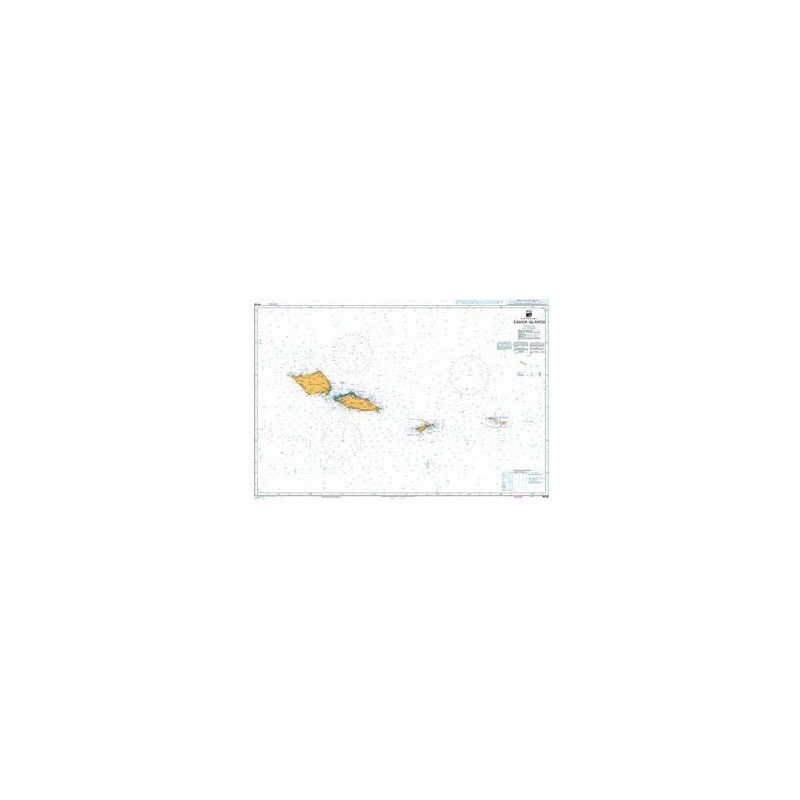
Nautical charts produced by Land Information New Zealand (LINZ) cover all New Zealand waters, including the coasts of the North and South Islands, surrounding archipelagos, and parts of the South Pacific. This region is renowned for its exceptional cruising grounds, but also for demanding navigation conditions: rugged coastlines, strong currents, rapidly changing weather, and exposed areas.
These charts are designed for all mariners operating in these waters, from recreational sailors and offshore cruisers to professional users (fishing, delivery crews, expeditions).
Choosing the right nautical chart for this region is not just a matter of convenience—it is a key safety decision. In New Zealand waters, accurate and detailed information is essential to anticipate hazards, plan routes, and navigate confidently in a complex maritime environment.
LINZ charts are designed to support real-world navigation across a wide range of situations.
They enable safe entry and exit from New Zealand ports, which are often exposed to ocean swell, with clear depiction of channels, aids to navigation, and anchorage areas.
For sailors crossing the South Pacific, these charts provide reliable reference points for landfall planning and safe routing along New Zealand’s coastline.
Exploring iconic areas such as northern bays or southern fjords requires precise knowledge of seabeds, sheltered anchorages, and isolated hazards.
Professionals and anglers benefit from detailed bathymetry, useful for identifying productive fishing grounds and avoiding underwater obstacles.
Unlike standalone digital charts, a LINZ paper chart provides a continuous, large-scale overview without reliance on electronic systems—an essential advantage in real navigation conditions.
LINZ charts are suitable for a wide range of users:
Recreational sailors on supervised or guided cruises can use these charts to better understand their environment and build navigation skills.
This is the core audience: autonomous skippers, coastal and offshore sailors who require reliable and comprehensive information.
Maritime professionals
Fishing operations, transport, and delivery crews rely on the precision and official status of LINZ data.
Thanks to detailed information on aids to navigation and lights, these charts are effective in all visibility conditions.
Even when equipped with GPS, chartplotters, or ECDIS, experienced navigators use paper charts as a primary reference and safety backup.
The goal is to help each user clearly project their real navigation needs—not to treat the chart as a simple accessory.
The value of a nautical chart lies both in its data and its readability.
LINZ charts are available in multiple scales:
small-scale charts for offshore navigation,
large-scale charts for coastal and complex areas.
The scale directly determines the level of detail: the larger the scale, the more precise the information.
A nautical chart is only effective if properly understood—it is an active navigation tool, not a passive document.
LINZ charts offer a high level of reliability as they are produced by an official government authority.
Regular updates
Nautical data evolves (buoyage, depths, infrastructure). LINZ issues updates through Notices to Mariners.
A recent chart ensures greater accuracy. An outdated chart without corrections may contain obsolete information.
LINZ charts are aligned with international standards such as WGS 84, ensuring full compatibility with modern GPS systems.
This is critical: a nautical chart is first and foremost a safety tool.
In the digital age, paper charts remain essential.
Complementarity with digital tools
Chartplotters and marine apps provide:
However, they do not replace the strategic overview offered by paper charts.
In practice, experienced navigators use both formats together.
Choosing a nautical chart also means choosing a trusted source.
Nautic Way does not offer a generic catalog but a curated, expert selection:
The goal is not simply to sell a chart, but to provide the right chart for the right navigator and the right use.
Which nautical chart should I choose for New Zealand waters?
It depends on your navigation plan: coastal cruising, offshore passages, or exploration. A combination of different scales is often required.
Is this chart sufficient on its own?
No. Safe navigation relies on combining paper charts, GPS, sailing directions, and real-time observations.
How often should I replace a nautical chart?
Whenever a new edition is released or when updates are no longer applied. In dynamic areas, regular updates are essential.
Can this chart be used with a GPS?
Yes. LINZ charts use reference systems compatible with modern GPS devices, allowing accurate position plotting.
What is the difference between LINZ charts and other publishers (e.g., SHOM)?
Each hydrographic office covers its own region. LINZ is the official reference for New Zealand waters, just as SHOM is for French waters.
Why not rely solely on marine apps?
Apps are useful but depend on power, signal, and onboard data. A paper chart remains the ultimate safety reference.
Land Information New Zealand nautical charts are not just mapping tools—they are essential instruments for safe navigation in one of the world’s most demanding maritime environments.
Choosing the right, up-to-date chart and using it correctly means navigating with anticipation, control, and confidence. Nautic Way supports this approach with a carefully curated selection designed for serious and safety-conscious mariners.
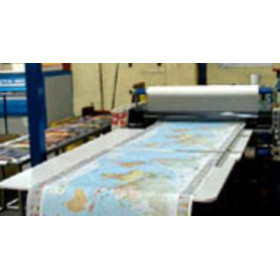
Land Information New Zealand nautical charts are updated daily and printed only on demand. On the day of printing, they incorporate the latest updates. The chart's publication year is indicated on the chart.
We strive to offer only the latest versions of nautical charts incorporating the most recent updates.
All nautical charts, whether paper or digital, are printed on demand and include the latest updates. In accordance with Article L221-28 of the French Consumer Code, the right of withdrawal cannot be exercised for goods liable to become obsolete rapidly. Paper charts and digital charts are neither returnable nor exchangeable. Consequently, these orders are final upon placement by the Customer, according to the terms and conditions specified in these General Terms and Conditions of Sale.
You might also like