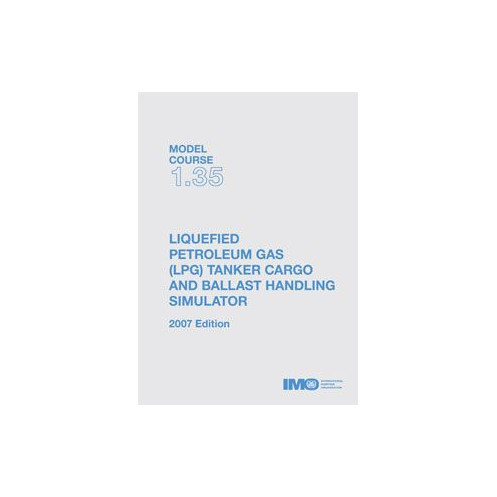





Enhance LPG tanker expertise with this IMO-approved digital training simulator. Covers cargo and ballast handling, safety protocols, and STCW-compliant procedures for liquefied gas operations.
Data sheet
Specific References
Master LPG Tanker Operations with IMO’s Advanced Digital Simulator
The IMO Model Course 1.35: Liquefied Petroleum Gas (LPG) Tanker Cargo and Ballast Handling Simulator is a groundbreaking digital training solution designed to elevate the competencies of maritime professionals. This course meets the mandatory advanced training requirements for LPG tanker cargo operations, providing an immersive, simulation-based learning experience that aligns with STCW standards. Whether you're an officer, engineer, or crew member, this tool equips you with the practical skills and theoretical knowledge needed to excel in one of the maritime industry’s most specialized fields.
Simulation-Based Learning for Real-World Readiness
Unlike traditional training methods, this course leverages approved simulators to create realistic scenarios for cargo and ballast handling. Trainees engage in hands-on exercises that mirror actual LPG tanker operations, from loading and unloading procedures to emergency response protocols. The simulations are adaptable to different experience levels, ensuring that both novices and seasoned professionals can benefit from targeted, practical training. This approach not only enhances skill retention but also prepares users for the challenges they will face in real-world operations.
Comprehensive Coverage of LPG Operations
This model course delves into every critical aspect of LPG tanker operations, including cargo containment systems, ballast management, safety protocols, and environmental compliance. It provides detailed guidance on the use of specialized equipment, such as cargo pumps, vapor return systems, and inert gas systems, ensuring that trainees understand their roles and responsibilities in maintaining operational safety. The course also emphasizes the importance of teamwork and communication, which are vital for the smooth execution of complex maritime tasks.
Flexible and Secure Digital Format
Available in a secure digital format, this course offers unparalleled convenience for maritime professionals. The 2024 edition, comprising 85 pages of expertly curated content, is accessible via a free dedicated e-reader, making it easy to study on the go. The digital format ensures that users always have access to the latest industry standards and regulatory updates, providing a future-proof resource for continuous professional development.
This digital model course is designed for maritime professionals seeking advanced training in LPG tanker operations. Published in December 2024, the 2024 edition spans 85 pages and is available exclusively in English. The course is delivered in a secure digital format, compatible with a free dedicated e-reader, ensuring accessibility and ease of use for trainees worldwide.
With decades of experience in maritime education and training, this provider is a trusted name in developing industry-leading resources for seafarers. Their publications are renowned for their adherence to international standards, such as those set by the IMO and STCW, ensuring that maritime professionals receive the highest quality training materials. Their digital solutions are designed to be both innovative and practical, catering to the evolving needs of the maritime industry.
The course uses approved simulators for hands-on exercises in cargo and ballast handling, designed to meet mandatory competency standards for LPG tanker operations.
Yes, the course is adapted to different experience levels, including beginners, and focuses on essential procedures, equipment, and safety protocols.
The digital version requires the free reader provided by the publisher and is compatible with standard e-book reading devices.
Yes, it includes comprehensive training on both cargo and ballast handling procedures specific to LPG tankers.
There are no specific prerequisites, but familiarity with basic maritime operations may enhance understanding.
The digital version contains 85 pages of instructional content.
You might also like