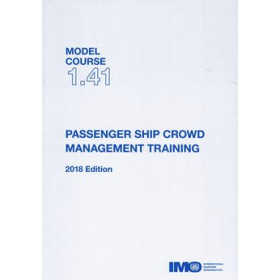





Essential digital training for passenger ship crisis management, meeting STCW standards. Covers emergency procedures, resource optimization, and effective communication to handle onboard crises.
Data sheet
Specific References
Equip your crew with the critical skills needed to handle emergencies on passenger vessels with this essential digital training course. Designed for maritime professionals, this model course provides structured guidance on crisis management, ensuring compliance with international safety standards and enhancing onboard emergency preparedness.
This digital training program aligns with the STCW Code Section A-V/2, paragraph 4, and Table A-V/2-2, meeting the mandatory minimum requirements for passenger ship personnel. It focuses on developing competencies in crisis management and human behavior during emergencies, ensuring that crew members can respond effectively under pressure.
Through this course, trainees will master the organization of emergency procedures, optimize resource allocation, and control responses to critical situations. The curriculum also emphasizes managing passengers and personnel during emergencies while establishing and maintaining clear, effective communication channels. These skills are vital for maintaining safety and order in high-stress scenarios.
Available as a downloadable PDF or secure e-reader version, this digital course offers flexibility for training providers and crew members alike. The 68-page manual is designed for easy navigation, allowing users to quickly reference key procedures and best practices. Its digital format ensures that the latest updates and revisions are always accessible, keeping training materials current with evolving maritime regulations.
This course is tailored for officers, crew members, and maritime training institutions responsible for passenger ship safety. It provides a structured approach to crisis management, ensuring that all personnel are prepared to act decisively in emergencies. By integrating this training into your safety protocols, you enhance operational resilience and compliance with international maritime standards.
Enhance Passenger Ship Safety with IMO-Approved Crisis Management Training
In the high-stakes environment of passenger shipping, preparedness is the key to safeguarding lives and maintaining operational control. The IMO Model Course 1.42: Passenger Ship Crisis Management Training 2019 is a digital training solution designed to meet the mandatory requirements for crisis management and human behavior under the STCW Code Section A-V/2. This course equips maritime professionals with the skills to organize emergency procedures, optimize resource use, and manage both passengers and crew during critical situations. With a focus on real-world applicability, it ensures that your team can respond effectively to emergencies, minimizing risks and maintaining order under pressure.
Structured Training for Compliance and Competence
Developed in alignment with international maritime regulations, this course provides a structured framework for training crew members in crisis management. It covers essential competencies, including the establishment of emergency protocols, control of emergency responses, and effective communication strategies. By completing this training, personnel gain the confidence and expertise needed to handle emergencies in compliance with STCW standards, ensuring that your vessel meets the highest safety benchmarks.
Digital Convenience for Modern Maritime Operations
Available in a downloadable PDF or secure e-reader format, this digital course offers unparalleled convenience for training providers and crew members. The 68-page manual is optimized for quick reference, allowing users to access critical information at a moment’s notice. Its digital nature ensures that the content remains up-to-date with the latest regulatory changes, providing a reliable resource for ongoing training and preparedness.
Proven Framework for Emergency Response
This model course is built on the proven methodologies of the International Maritime Organization (IMO), ensuring that it reflects best practices in crisis management. It is designed to be integrated into existing training programs, providing a standardized approach to emergency preparedness. Whether used for initial training or refresher courses, it delivers the knowledge and skills necessary to protect passengers, crew, and assets in any emergency scenario.
This digital training course is designed for maritime professionals seeking to comply with STCW Section A-V/2 requirements for passenger ship crisis management. Published in January 2018 and updated for the 2019 edition, it spans 68 pages and is available in English as a downloadable PDF or secure e-reader format. The course covers essential topics such as emergency procedure organization, resource optimization, and effective communication during crises, ensuring comprehensive preparedness for crew members.
A leader in maritime safety and regulatory training, this organization sets the global standard for shipping industry education. With a commitment to enhancing operational safety and compliance, their model courses are widely recognized and adopted by maritime professionals worldwide. Their digital training solutions provide accessible, up-to-date resources that align with international regulations, ensuring that crews are prepared to meet the challenges of modern maritime operations.
The training material is available in a digital format, either as a downloadable PDF or a locked e-reader version.
Yes, this training meets the mandatory minimum requirements under STCW Section A-V/2, paragraph 4, and Table A-V/2-2 for crisis management and human behavior on passenger ships.
The training manual contains 68 pages.
Trainees will learn to organize emergency procedures, optimize resource use, control responses to emergencies, manage passengers and personnel during crises, and establish effective communication.
Yes, once downloaded as a PDF or accessed via the locked e-reader, the training material can be used offline.
This edition was published in January 2018.
You might also like