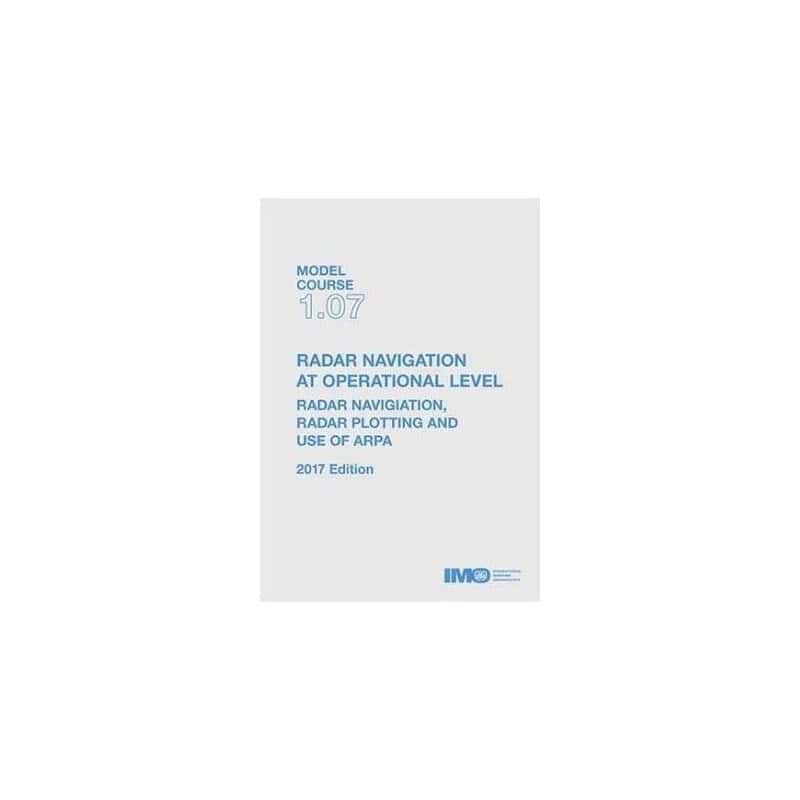





Enhance your radar navigation skills with IMO Model Course 1.07. Learn radar plotting, ARPA use, and system setup for operational safety. Digital edition, STCW-aligned, and ready for download.
Data sheet
Specific References
Elevate Your Radar Navigation Skills with IMO’s Official Digital Training Course
Radar navigation is a cornerstone of maritime safety, and mastering its principles is non-negotiable for professionals responsible for vessel operations. The *IMO Model Course 1.07: Radar Navigation, Radar Plotting and Use of ARPA at Operational Level* is the definitive digital training resource for deck officers, maritime students, and training institutions. This course bridges the gap between theoretical knowledge and real-world application, providing a structured, IMO-approved curriculum that aligns with STCW standards. With a focus on radar system configuration, data interpretation, and collision avoidance, it equips users with the skills needed to navigate safely in challenging conditions, from dense traffic to low visibility.
Comprehensive Coverage of Radar and ARPA Systems
This digital course delves into the core principles of maritime radar and ARPA (Automatic Radar Plotting Aid), offering in-depth training on system setup, performance factors, and operational controls. You’ll explore how to extract and analyze critical information from radar displays, understand the limitations of radar-derived data, and use ARPA to track vessel movements with precision. The course also addresses common challenges, such as sea clutter and weather interference, ensuring you can optimize radar performance for reliable navigation. Whether you’re learning to plot radar targets manually or interpreting ARPA outputs, this training provides the practical expertise required for operational-level proficiency.
Designed for Compliance and Professional Growth
Developed in accordance with Section A-I/12 of the STCW Code, this course is a must-have for maritime professionals seeking certification or recertification. The 2017 edition reflects the latest industry advancements and regulatory requirements, making it a trusted resource for both individual learners and training providers. The digital format ensures accessibility and convenience, allowing you to study anytime, anywhere, with the same rigor as the original print edition. With 232 pages of expertly crafted content, it’s an invaluable tool for enhancing your navigational skills and ensuring compliance with international maritime standards.
This digital training course is the 2017 edition of the IMO Model Course 1.07, offering 232 pages of comprehensive content on radar navigation, radar plotting, and ARPA use at the operational level. Published in January 2017, it is available exclusively in English and designed for use with the free IMO e-reader. The digital format ensures secure, instant access to the material, with a cover image optimized for clarity at 209x300 pixels.
With decades of expertise in maritime training and education, this provider is a trusted name in delivering IMO-approved courses and resources. Their materials are designed to meet the highest industry standards, ensuring maritime professionals receive accurate, up-to-date, and practical knowledge for safe and compliant operations.
This course is based on the STCW Code section A-I/12, which pertains to radar navigation, radar plotting, and the use of ARPA at the operational level.
No, the digital course is locked and can only be read using the free e-reader provided by the publisher.
The course covers system setup, radar and ARPA principles, performance factors, data acquisition, display and analysis of radar information, and operational control usage for optimal navigation safety.
The course is designed for individuals responsible for navigational watchkeeping, but no specific prerequisites are mentioned beyond operational-level maritime knowledge.
It details factors affecting radar performance, the accuracy and limitations of radar data, and best practices for maintaining optimal display and navigation safety.
No, the digital format is locked and cannot be printed or shared. It is intended for individual use only.
You might also like