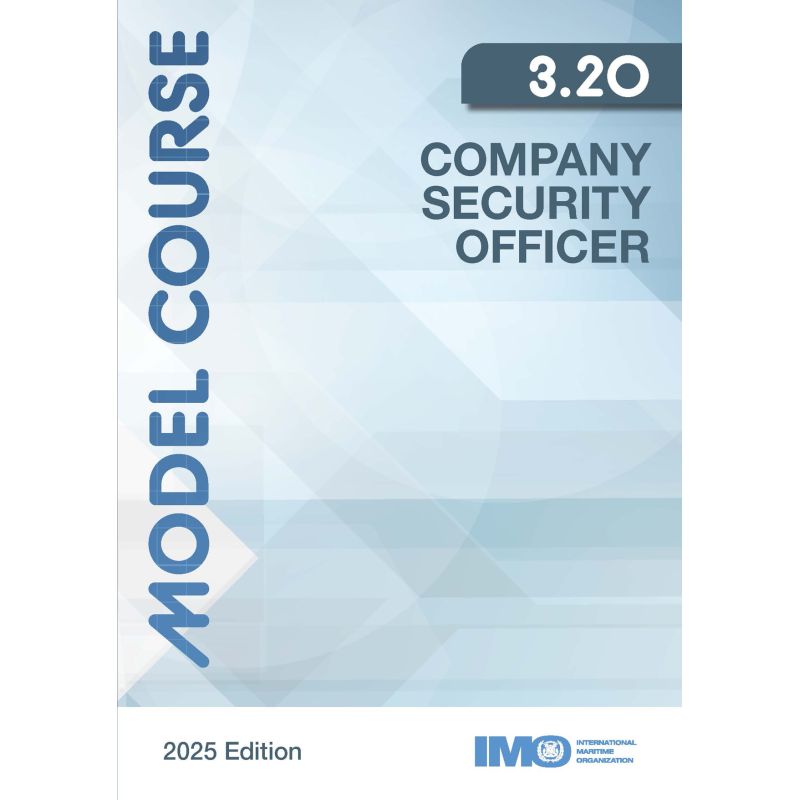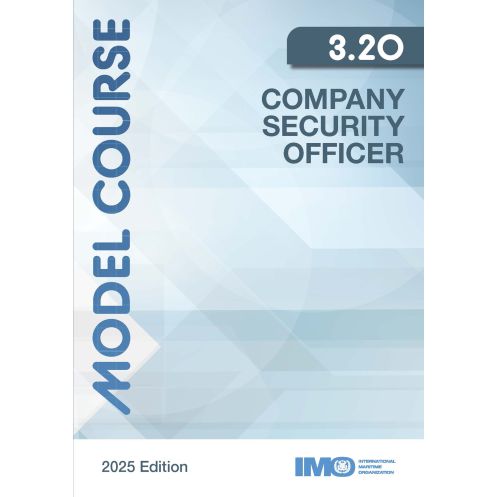





IMO Model Course 3.20 trains Company Security Officers to develop, implement, and maintain ship security plans while ensuring ISPS Code compliance in a digital format.
Data sheet
Specific References
The IMO Model Course 3.20 is designed to meet the mandatory minimum standards for training and certification of Company Security Officers (CSOs) as outlined in the ISPS Code, Part A, and the Guidelines on Training and Certification for Company Security Officers (MSC.1/Circ.1154). This course equips professionals with the essential knowledge and skills required to effectively manage maritime security operations, ensuring compliance with international regulations and safeguarding vessels against security threats.
This model course prepares CSOs to take on critical responsibilities, including advising on threat levels, conducting security assessments, and developing, implementing, and maintaining the Ship Security Plan (SSP). Participants will learn to organize internal audits, verify compliance with security protocols, and enhance security awareness among crew members. The course also emphasizes the importance of effective communication and coordination between Ship Security Officers (SSOs) and Port Facility Security Officers (PFSOs) to ensure seamless security operations.
The curriculum is structured to provide a thorough understanding of maritime security frameworks, risk assessment methodologies, and best practices for maintaining security on board. By the end of the course, participants will be capable of conducting security evaluations, updating security plans, and ensuring that all security measures align with both safety and security requirements. This training is essential for professionals seeking to uphold the highest standards of maritime security in an ever-evolving threat landscape.
Tailored for professionals in the merchant marine sector, this course is ideal for those responsible for overseeing security operations within shipping companies. It provides the tools needed to navigate complex security challenges, ensuring that vessels, crew, and cargo remain protected against potential threats. The course also fosters a proactive approach to security management, enabling CSOs to anticipate risks and implement preventive measures effectively.
Available in a digital format, this course offers flexibility and convenience for busy maritime professionals. The digital version is compatible with the free IMO reader, allowing users to access the content anytime, anywhere. This ensures that learners can stay up-to-date with the latest security protocols and industry standards without the need for physical copies, making it an efficient and sustainable choice for modern training needs.
Master Maritime Security with the IMO Model Course 3.20: Company Security Officer
Elevate your expertise in maritime security with the IMO Model Course 3.20, a specialized training program designed to equip Company Security Officers (CSOs) with the skills and knowledge needed to safeguard vessels and ensure compliance with international security standards. This digital course, published by the International Maritime Organization (IMO), is a cornerstone for professionals tasked with managing security operations in the merchant marine sector. With a focus on practical application, it prepares CSOs to handle real-world security challenges, from threat assessment to the implementation of robust security plans.
Comprehensive Curriculum Aligned with Global Standards
Developed in accordance with the ISPS Code, Part A, and the Guidelines on Training and Certification for Company Security Officers (MSC.1/Circ.1154), this course covers all mandatory competencies required for CSOs. The curriculum includes modules on security risk assessment, development and maintenance of the Ship Security Plan (SSP), internal audits, and compliance verification. Participants will also learn to foster security awareness among crew members and coordinate effectively with Ship Security Officers (SSOs) and Port Facility Security Officers (PFSOs). This ensures a holistic approach to maritime security, addressing both operational and strategic aspects.
Flexible and Accessible Digital Learning
This digital edition of the IMO Model Course 3.20 offers unparalleled convenience for maritime professionals. With 90 pages of in-depth content, the course is accessible via the free IMO reader, allowing users to study at their own pace and on their preferred devices. The 2025 edition reflects the latest updates in maritime security protocols, ensuring that learners are equipped with the most current knowledge and best practices. Whether you're looking to enhance your skills or meet regulatory requirements, this course provides a reliable and efficient pathway to achieving your goals.
The IMO Model Course 3.20: Company Security Officer is a digital publication available in English, featuring 90 pages of comprehensive training material. Published in September 2025, this edition aligns with the latest international maritime security standards, including the ISPS Code and MSC.1/Circ.1154 guidelines. The digital format ensures easy access and compatibility with the free IMO reader, making it a practical choice for professionals seeking to enhance their security expertise.
The International Maritime Organization (IMO) is the United Nations' specialized agency responsible for regulating shipping and ensuring maritime safety and security. With a global mandate, the IMO sets international standards for the maritime industry, including training and certification requirements for professionals. Their publications, such as the Model Course 3.20, are recognized worldwide for their authority and relevance in shaping best practices for maritime operations.
This course adheres to the mandatory minimum competency standards outlined in MSC.1/Circ.1154 and the ISPS Code, Part A, ensuring alignment with international maritime security regulations.
The course is designed to be read using the free dedicated e-reader provided by the publisher. It is available in a locked digital format.
Certified individuals can advise on threat levels, conduct security assessments, develop and approve security plans, organize internal audits, verify compliance, enhance security awareness, train personnel, and ensure communication between security and safety requirements.
The digital course consists of 90 pages, covering all required competencies for the role.
The latest edition of this course was published in September 2025.
Yes, the course covers coordination with Ship Security Officers (SSO) and Port Facility Security Officers (PFSO) to ensure cohesive security implementation.
You might also like