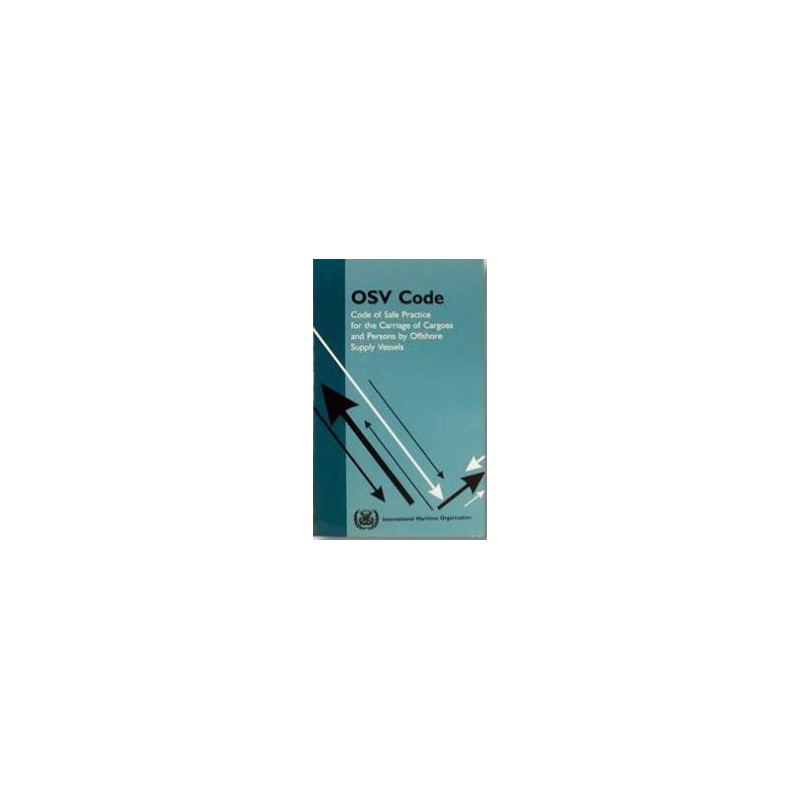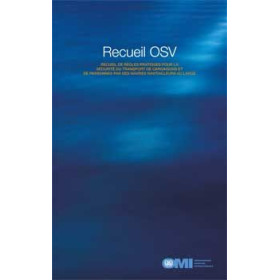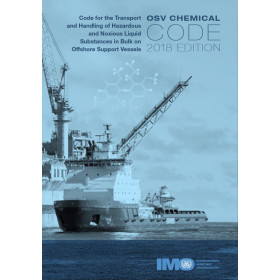





IMO OSV Code (A.863(20)) sets the standard for safe offshore supply vessel operations. Covers cargo and personnel transport, minimizing risks.
English digital edition, IMO e-reader compatible.
Data sheet
Specific References
Enhance Offshore Operations with the IMO OSV Code – Digital Edition
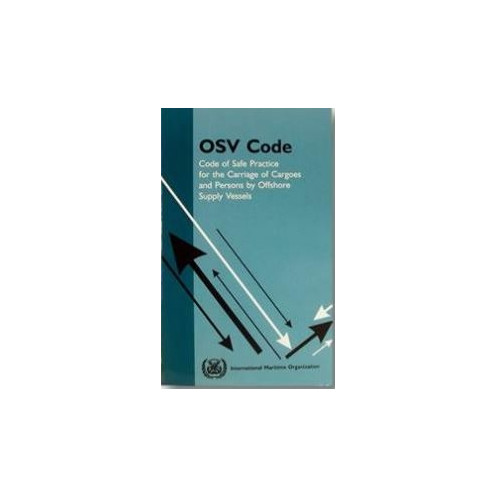
The *Code of Safe Practice for the Carriage of Cargo and Persons by Offshore Supply Vessels (OSV Code)* is the industry’s gold standard for mitigating risks in offshore logistics. Adopted by the International Maritime Organization (IMO) under Resolution A.863(20), this digital publication provides a robust framework for ensuring the safety of cargo and personnel transport in one of the maritime sector’s most high-stakes environments. Designed for immediate integration into safety management systems, the OSV Code is a must-have resource for operators, contractors, and crew members committed to operational excellence.
Tailored for Offshore Supply Vessel Operations
Offshore supply vessels (OSVs) face unique challenges, from unpredictable weather conditions to complex cargo handling requirements. The OSV Code addresses these challenges head-on, offering clear guidelines for minimizing risks during daily operations. Whether transporting equipment to offshore platforms or transferring personnel in rough seas, this code provides actionable protocols to prevent accidents, reduce downtime, and ensure compliance with international maritime regulations. Its provisions are particularly valuable for vessels operating under the International Safety Management (ISM) Code, where safety management systems must align with global standards.
Optimized for Digital Accessibility
This digital edition of the OSV Code is designed for the modern maritime professional. Compatible with the IMO’s free e-reader, it offers instant access to critical safety guidelines—anytime, anywhere. The publication spans 25 pages, delivering concise yet comprehensive coverage of cargo and personnel transport protocols. Additionally, a supplementary download is available on the IMO’s official website, providing further resources to support compliance and operational best practices. With dimensions of 210 mm x 146 mm, the digital format ensures easy navigation and readability, making it an indispensable tool for on-the-go professionals.
Published by the International Maritime Organization
As the leading authority on maritime safety, the International Maritime Organization (IMO) sets the standard for global shipping regulations. The OSV Code, published in January 2000, reflects the IMO’s commitment to enhancing safety in offshore operations. By adhering to this code, maritime professionals demonstrate their dedication to upholding the highest safety standards while optimizing efficiency in their operations.
The *Code of Safe Practice for the Carriage of Cargo and Persons by Offshore Supply Vessels (OSV Code)* is a digital publication in English, designed for use with the IMO’s free e-reader. Adopted under IMO Resolution A.863(20) and published in January 2000, this edition spans 25 pages and is distributed as a downloadable digital file. The publication is optimized for accessibility, with dimensions of 210 mm x 146 mm, ensuring easy navigation and readability for maritime professionals.
The International Maritime Organization (IMO) is the United Nations’ specialized agency responsible for regulating international shipping. Established in 1948, the IMO sets global standards for maritime safety, security, and environmental performance. Its publications, including the OSV Code, are recognized as the benchmark for best practices in the maritime industry, ensuring compliance and operational excellence for professionals worldwide.
This safety code was adopted by IMO resolution A.863(20).
No, the digital version is locked and can only be read using the free IMO e-reader.
The publication contains 25 pages.
Yes, a supplement is available for download on the IMO website.
The printed version measures 210 mm in height and 146 mm in width.
Yes, it should be considered when implementing an SMS as defined in paragraph 1.4 of the ISM Code.
You might also like