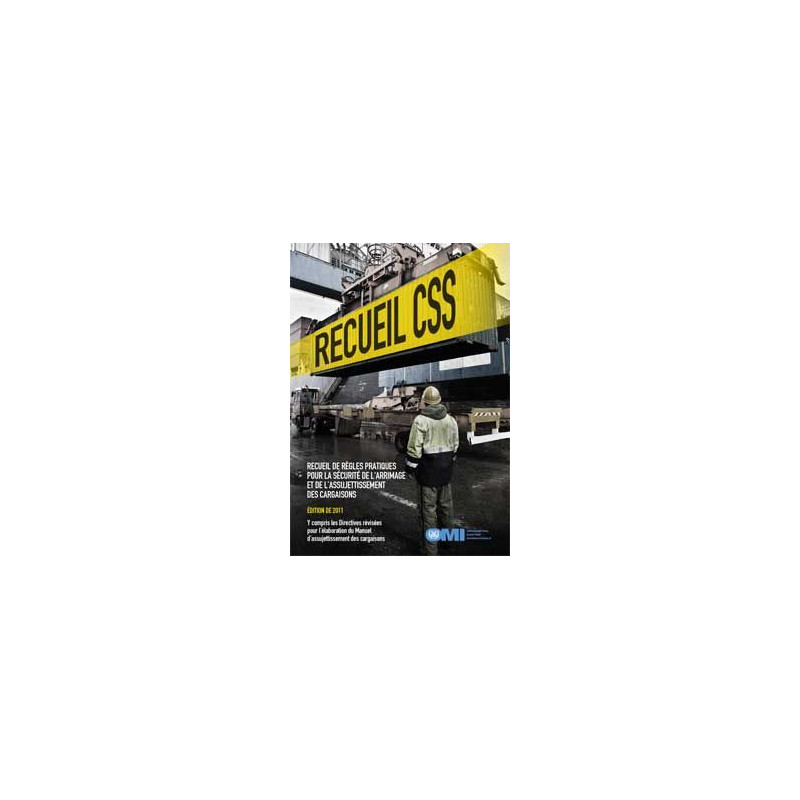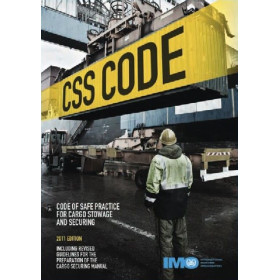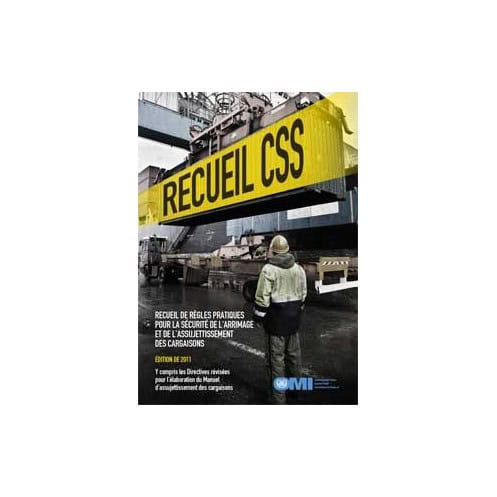





The *Cargo Stowage and Securing Code (CSS)* provides international standards for safe cargo handling. This French digital edition includes essential guidelines and updates to protect ships and crew.
Data sheet
Specific References
The IMO 292Fe – Cargo Stowage and Securing Safety Rules (CSS Code) is the definitive international standard for securing cargo on merchant vessels. Developed by the International Maritime Organization (IMO) and adopted in 1991, this publication establishes rigorous guidelines to prevent cargo shifting, structural damage, and safety hazards during maritime transport. Designed for shipowners, operators, and maritime professionals, it ensures compliance with global safety regulations while minimizing risks to crew, vessels, and cargo integrity.
This digital publication provides a structured framework for safe cargo handling, covering critical aspects such as vessel suitability, appropriate securing equipment, and risk mitigation strategies. It includes general and cargo-specific recommendations to address challenges like heavy weather conditions, problematic loads, and emergency response protocols. The CSS Code also features advanced calculation methods, force equilibrium analysis, and friction coefficient tables to optimize securing arrangements for diverse cargo types.
The 292Fe digital edition incorporates all major amendments, including MSC/Circ.664 and 691 (1994/1995), which introduced Annex 13, and MSC/Circ.740 (1996), expanding guidelines for unitized cargo under Annex 12. The 2002 update (MSC/Circ.1026) further enhanced the code with improved anchoring points, updated friction tables, and refined calculation methodologies. These revisions ensure alignment with evolving industry practices and technological advancements, making this publication an indispensable resource for maritime safety.
Available in a secure digital format, this version is compatible with the IMO’s free e-reader, offering seamless access to critical safety protocols. The digital format ensures quick navigation, searchability, and portability, allowing maritime professionals to reference guidelines efficiently—whether onboard or in operational planning. With its locked format, the publication maintains data integrity while providing instant access to the latest safety standards.
Tailored for ship operators, naval architects, cargo surveyors, and regulatory authorities, the CSS Code is the cornerstone of safe cargo transportation. By adhering to its guidelines, maritime stakeholders can enhance operational efficiency, reduce accident risks, and ensure compliance with international maritime regulations. This publication is not just a regulatory requirement—it’s a vital tool for safeguarding lives, vessels, and cargo in global shipping operations.
Master Cargo Safety with the IMO CSS Code Digital Edition
The IMO 292Fe – Cargo Stowage and Securing Safety Rules (CSS Code) is the authoritative digital reference for maritime professionals seeking to implement best practices in cargo securing. Adopted by the International Maritime Organization in 1991, this publication sets the global benchmark for safe stowage, offering actionable guidelines to prevent cargo displacement, structural failures, and operational hazards. With its focus on risk mitigation, equipment standards, and emergency protocols, it is an indispensable resource for ensuring compliance and safety in maritime logistics.
Engineered for Precision and Compliance
This digital edition delivers a comprehensive framework for cargo securing, addressing vessel suitability, securing equipment selection, and force distribution calculations. It includes detailed recommendations for high-risk cargoes, heavy weather preparedness, and corrective actions in case of cargo shifting. The publication integrates advanced methodologies, such as friction coefficient tables and force equilibrium analysis, enabling professionals to design securing arrangements tailored to specific cargo types and vessel configurations.
Updated with the Latest Industry Standards
The 292Fe version incorporates all critical amendments, including MSC/Circ.664 and 691 (1994/1995), which introduced Annex 13, and MSC/Circ.740 (1996), expanding guidelines for unitized cargo. The 2002 update (MSC/Circ.1026) further refined the code with enhanced anchoring points, updated friction tables, and improved calculation methods. These revisions ensure the publication remains aligned with contemporary maritime practices, providing users with the most current and reliable safety protocols.
Designed for Digital Efficiency and Accessibility
Available in a secure digital format, this edition is optimized for use with the IMO’s free e-reader, offering instant access to critical safety guidelines. The digital format enhances usability with searchable content, quick navigation, and portability, making it ideal for onboard use or operational planning. Its locked format ensures data integrity while providing maritime professionals with a reliable, up-to-date reference tool for cargo safety.
The IMO 292Fe – Cargo Stowage and Securing Safety Rules (CSS Code) is a digital publication in French, designed for use with the IMO’s free e-reader. This locked-format e-book includes all major amendments, such as MSC/Circ.664, 691, 740, and 1026, ensuring compliance with the latest international maritime safety standards. It features advanced calculation methods, friction coefficient tables, and guidelines for securing diverse cargo types, making it a comprehensive tool for maritime professionals.
The International Maritime Organization (IMO) is the United Nations’ specialized agency responsible for regulating global maritime safety, security, and environmental performance. Established in 1948, the IMO develops and maintains international conventions, codes, and guidelines to enhance the safety and efficiency of maritime operations. Its publications, including the CSS Code, are recognized as the gold standard for maritime compliance and best practices worldwide.
This digital version includes major amendments such as MSC/Circ.664 and 691 (1994/1995), MSC/Circ.740 (1996), and MSC/Circ.1026 (2002), covering updates like Annex 13, advanced calculation methods, and friction coefficient tables.
Yes, the digital reader needed to access this publication is provided free of charge by the publisher.
Yes, it provides specific advice for handling and securing problematic cargo types to minimize risks.
Yes, this version includes supplementary annexes, such as those addressing anchoring points and advanced force equilibrium methods.
No, the digital format is locked and can only be read using the designated free reader on authorized devices.
It includes advanced calculation methods for securing cargo, such as force equilibrium and friction coefficient tables for precise load distribution.
You might also like