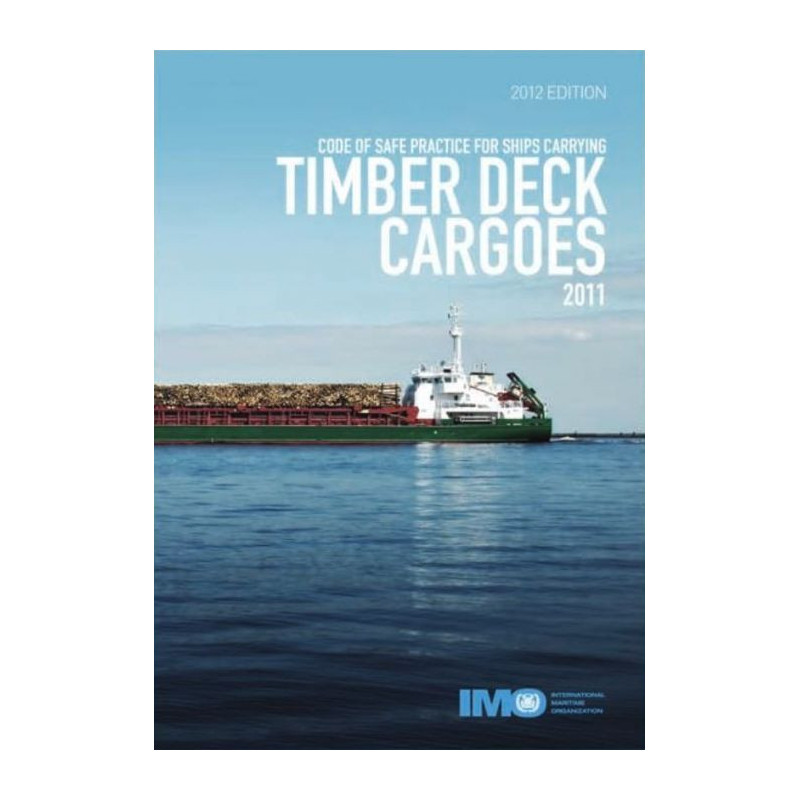





The 2011 Code of Safe Practice for ships carrying timber deck cargoes ensures secure stowage and lashing for vessels 24m or longer. Prevent cargo shifts with expert guidelines.
Data sheet
Specific References
The Code of Safe Practice for Ships Carrying Timber Deck Cargoes is a critical resource for maritime professionals involved in the transportation of timber on deck. This comprehensive code provides internationally recognized standards to ensure the safe stowage, securing, and transport of timber deck cargoes, minimizing risks associated with cargo shift, structural stress, and operational hazards. Designed for vessels of 24 meters or more, this code integrates advanced principles of cargo securing, accounting for acceleration forces and dynamic conditions encountered during voyages.
Developed under the auspices of the International Maritime Organization (IMO), this code reflects decades of maritime expertise and industry best practices. It supersedes the 1991 edition, incorporating updated methodologies for cargo securing, alternative design principles, and practical guidance for developing ship-specific cargo securing manuals. The code addresses critical aspects such as lashing arrangements, structural integrity, and operational procedures, ensuring compliance with international safety standards while optimizing cargo handling efficiency.
This publication is tailored for a broad spectrum of maritime professionals, including shipowners, charterers, operators, seafarers, port authorities, and cargo pre-conditioning organizations. It serves as a vital reference for naval architects, equipment manufacturers, and regulatory bodies, offering clear guidelines for implementing safe and efficient timber deck cargo operations. By adhering to these standards, industry stakeholders can enhance operational safety, reduce the risk of cargo-related incidents, and ensure compliance with global maritime regulations.
Available in a secure digital format, this code is accessible via the free IMO Bookshelf reader, providing maritime professionals with instant access to essential safety guidelines. The digital edition ensures that critical information is readily available onboard vessels and in offices worldwide, supporting real-time decision-making and operational planning. While optimized for desktop environments, this resource remains an indispensable tool for enhancing safety and efficiency in timber deck cargo transport.
Industry-Leading Standards for Timber Deck Cargo Safety
The Code of Safe Practice for Ships Carrying Timber Deck Cargoes is the definitive reference for ensuring the safe transport of timber on deck, adopted by the International Maritime Organization (IMO) under Resolution A.1048(27). This updated 2011 edition replaces the 1991 code, incorporating modern methodologies and alternative design principles to address the dynamic forces encountered during maritime voyages. Applicable to all vessels of 24 meters or more, this code provides a robust framework for secure cargo stowage and lashing, preventing cargo shift and structural damage while optimizing operational efficiency.
Comprehensive Guidelines for Secure Cargo Operations
This code delivers a holistic approach to timber deck cargo safety, covering essential aspects such as cargo securing arrangements, lashing methodologies, and structural design principles. It includes practical guidance for developing ship-specific cargo securing manuals, ensuring compliance with international safety standards. Key provisions address acceleration forces, lashing system design, and operational procedures, offering actionable insights for maritime professionals. The code also features sample checklists for safe stowage and securing, streamlining implementation across diverse vessel types and operational scenarios.
Designed for Maritime Professionals and Regulatory Compliance
Tailored for a wide range of stakeholders, including shipowners, charterers, operators, seafarers, port authorities, and naval architects, this publication serves as a critical tool for enhancing safety and regulatory compliance. It supports the development of standardized procedures for timber deck cargo operations, reducing the risk of incidents and improving operational reliability. By integrating these guidelines, maritime professionals can ensure that cargo securing practices meet the highest international standards, fostering safer and more efficient maritime transport.
Optimized Digital Access for Global Maritime Operations
Available in a secure digital format (EBK), this code is accessible via the free IMO Bookshelf reader, providing instant access to essential safety guidelines. The digital edition ensures that maritime professionals can reference critical information onboard vessels or in offices worldwide, supporting real-time decision-making and operational planning. While compatibility is limited to desktop environments, this resource remains an indispensable asset for enhancing safety and efficiency in timber deck cargo transport.
The Code of Safe Practice for Ships Carrying Timber Deck Cargoes provides a detailed framework for safe cargo operations, including guidelines for stowage, securing, and lashing timber deck cargoes. Adopted by the IMO in 2011, this code applies to vessels of 24 meters or more and integrates alternative design principles to account for acceleration forces during voyages. It includes methodologies for developing ship-specific cargo securing manuals, sample checklists, and practical recommendations for operational safety. Available in English as a digital edition (EBK format), it is compatible with the free IMO Bookshelf reader for desktop use.
With a legacy of setting global maritime standards, this organization is a leading authority in developing safety guidelines, operational protocols, and regulatory frameworks for the shipping industry. Its publications are widely recognized for their technical rigor and practical applicability, serving as essential references for maritime professionals worldwide. By providing actionable insights and internationally accepted best practices, this organization plays a pivotal role in enhancing safety, efficiency, and compliance across the maritime sector.
The code applies to ships that are 24 meters or more in length carrying timber deck cargoes.
Yes, the code includes principles of alternative design accounting for acceleration forces experienced during voyages to ensure secure cargo fastening.
Key provisions cover safe transport practices, methodologies for secure stowage and lashing, design principles for lashing systems, guidance for cargo securing manuals, and sample checklists for safe stowage and lashing.
No, this code is non-mandatory but provides recommended practices for the safe carriage of timber deck cargoes.
The digital version requires the IMO Bookshelf or IMO Reader software, which is available for free.
No, the digital version is not supported on Macs, iPhones, iOS, or Android phones.
The code is intended for shipowners, charterers, operators, seafarers, port industries, shippers, pre-shipment organizations, administrations, manufacturers, ship and equipment designers, and developers of cargo securing manuals.
You might also like