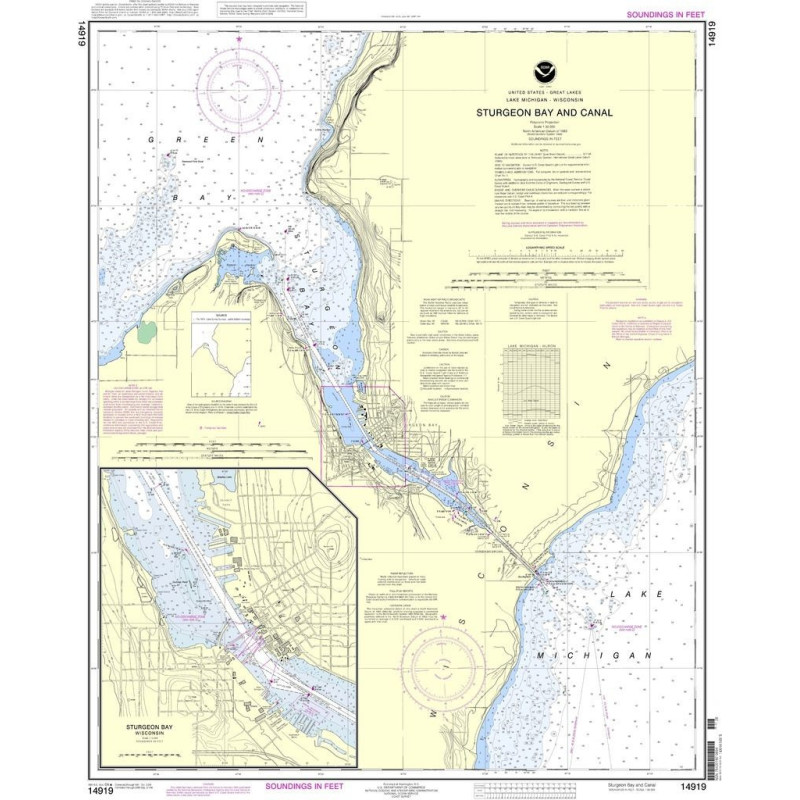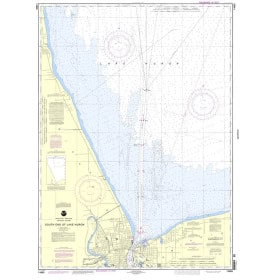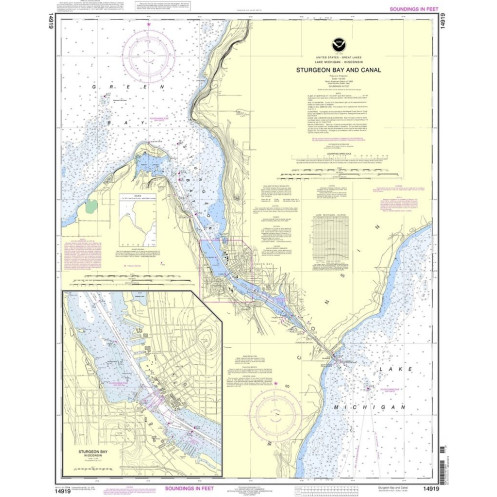



NOAA - 14919 - nautical chart - Sturgeon Bay and Canal - Sturgeon Bay
search
  • googlemap
  • NOAA - 14919 - nautical chart - Sturgeon Bay and Canal - Sturgeon Bay

Nautical chart NOAA - 14919 - Sturgeon Bay and Canal - Sturgeon Bay

€64.45
NOAA - National Oceanic and Atmospheric Administration
In English language Rolled paper chart
chart printed to order
Estimated preparation time: 5 to 14 days
NOAA Publishes US Nautical Charts in US Territorial Waters.
noaa-14919

Data sheet

Year
chart printed to order incorporating the latest corrections
Author
NOAA - National Oceanic and Atmospheric Administration
Picto
In English language
Rolled paper chart
Paper chart format
Flat chart (rolled in a tube)
Support
paper version
Navigation area
American Great Lakes
Chart type
Navigation chart

Specific References

UPC
400000167909
EAN13
4000000162384
New
chart printed to order
Description détaillée

This National Oceanic and Atmospheric Administration paper navigation chart (flat chart) covers American Great Lakes, the area Sturgeon Bay and Canal - Sturgeon Bay.

We strive to offer only the latest versions of nautical charts incorporating the most recent updates.

NOAA regularly maintains its portfolio of digital nautical charts but no longer publishes paper charts.

  • To create paper charts, the Nautic Way Maritime Bookstore retrieves the digital data from NOAA and prints it directly onto its plotters. These paper charts are based on the same geographic features as the older NOAA paper charts.

Upon request, we can create new areas to meet your specific needs. NOAA nautical charts use meters, feet, or fathoms as units of measurement; this unit is clearly indicated on the charts.

NOAA nautical charts are the official reference for safe navigation in United States waters. Produced by the National Oceanic and Atmospheric Administration, they provide comprehensive coverage of:

  • the U.S. East and West Coasts,
  • the Gulf of Mexico,
  • Alaska,
  • Hawaii and U.S. territories.

Available from the Nautic Way online maritime bookstore, these charts are designed to meet the challenges of diverse navigation environments, including busy coastal routes, complex harbor approaches, regulated waterways, shifting sandbanks, tides, and strong currents.

Choosing the right NOAA chart ensures navigation based on official, accurate, and internationally compliant data.

What is a NOAA nautical chart used for?

NOAA charts are essential tools for navigating in U.S. waters, whether for recreational or professional purposes.

Practical uses

They are used for:

  • Coastal navigation along the United States
  • Accessing ports and marinas
  • Navigating within regulated areas
  • Fishing and cruising activities
  • Transiting sensitive zones such as shoals, channels, and estuaries

Real-life navigation scenarios

  • Entering a busy East Coast harbor with dense traffic
  • Navigating shallow waters in the Gulf of Mexico
  • Following marked channels in Florida
  • Operating in remote and demanding Alaskan waters

Added value compared to generic or digital-only charts

NOAA charts provide:

  • Official U.S. cartography
  • High accuracy in complex coastal areas
  • Detailed information on buoyage systems and local regulations

They are essential for safe and compliant navigation in U.S. waters.

Who are NOAA charts recommended for?

NOAA charts are suitable for a wide range of navigators.

Target users

  • Beginner to experienced recreational boaters
  • Sailors cruising in U.S. waters
  • Professional skippers
  • Fishermen and regular coastal users

Navigation conditions

  • Suitable for day and night navigation
  • Designed for coastal and near-offshore sailing
  • Used alongside GPS, chartplotters, or ECDIS systems

They help users adapt to varied and sometimes technically demanding environments.

How to read and use a NOAA nautical chart

NOAA charts follow strict standards while remaining user-friendly.

Understanding chart scale

  • Small scale: general planning
  • Medium scale: coastal navigation
  • Large scale: harbors, channels, and detailed areas

Choosing the right scale is essential for effective navigation in U.S. waters.

Key information displayed

A NOAA chart includes:

  • Detailed depth soundings
  • Navigation aids and buoyage systems
  • Regulated areas
  • Hazards (rocks, wrecks, shoals)
  • Ports, marinas, and anchorages

Essential user knowledge

  • Interpreting local buoyage and channel markings
  • Accounting for tides and currents
  • Understanding U.S.-specific regulatory zones

NOAA charts provide precise and operational insight into the marine environment.

Reliability, updates, and safety

A structured update system

NOAA provides:

  • Notices to Mariners
  • Regular corrections
  • Updated chart editions

Standards and compatibility

  • Based on the WGS 84 geodetic system
  • Fully compatible with GPS
  • Compliant with international standards

Best safety practices

  • Always check the chart edition date
  • Apply available corrections
  • Keep paper charts onboard

Up-to-date charts are essential for safe navigation.

Paper vs digital NOAA charts ? why keep paper onboard?

Advantages of paper charts

  • Immediate overall view of the navigation area
  • Better anticipation of complex zones
  • Independence from electronic systems
  • Reliable, officially recognized reference

Complementarity with digital tools

  • Supporting route planning
  • Cross-checking GPS data
  • Providing a backup solution

Paper charts remain a key safety element onboard.

FAQ ? NOAA nautical charts

Which NOAA chart should I choose for navigating in the U.S.?
Choose based on your sailing area (East Coast, West Coast, Gulf, Alaska) and the level of detail required.

Is a NOAA chart sufficient on its own?
Yes as a primary reference, but it can be complemented with electronic navigation tools.

How often should NOAA charts be updated?
Whenever a new edition is released or significant corrections are issued.

Are NOAA charts compatible with GPS?
Yes, they are based on the WGS 84 system.

What is the difference between NOAA and SHOM or Admiralty charts?
NOAA charts are specifically designed for U.S. waters, with detailed local information.

Summary ? NOAA charts: safe navigation in U.S. waters

NOAA nautical charts are essential tools for navigating in the United States. They provide official, accurate, and locally adapted cartography, crucial for operating safely in sometimes complex environments.

By choosing them from Nautic Way, you benefit from expert selection, trusted data, and professional guidance, ensuring safe and confident navigation in all conditions.

National Oceanic and Atmospheric Administration (NOAA) nautical charts are updated daily and printed only on demand. On the day of printing, they incorporate the latest updates. The chart's publication year is indicated on the chart.

We strive to offer only the latest versions of nautical charts incorporating the most recent updates.

All nautical charts, whether paper or digital, are printed on demand and include the latest updates. In accordance with Article L221-28 of the French Consumer Code, the right of withdrawal cannot be exercised for goods liable to become obsolete rapidly. Paper charts and digital charts are neither returnable nor exchangeable. Consequently, these orders are final upon placement by the Customer, according to the terms and conditions specified in these General Terms and Conditions of Sale.

Cette carte marine papier, carte fluviale National Oceanic and Atmospheric Administration (carte à plat) couvre sur la Grands lacs américains la zone de Grands Lacs, du lac Champlain au lac des Bois.

Loading...