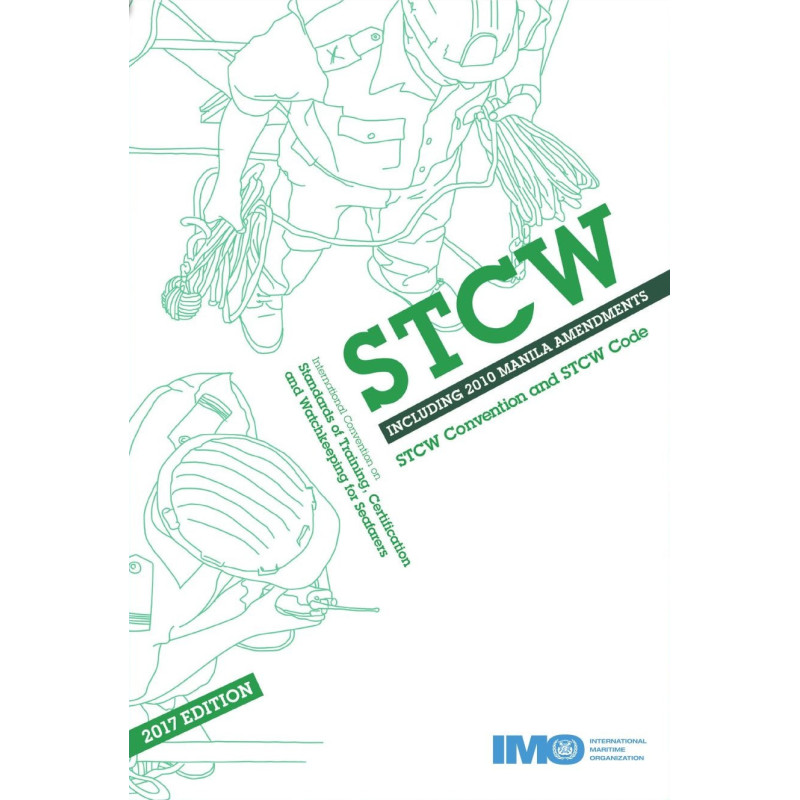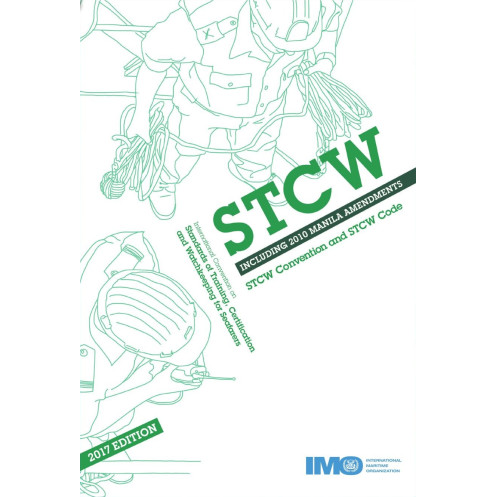



The official STCW 1978 Convention and Code, updated with the 2010 Manila Amendments. Sets global standards for seafarer training, certification, and watchkeeping.
2017 edition.
Data sheet
Specific References
The International Convention on Standards of Training, Certification and Watchkeeping for Seafarers (STCW) 1978, as amended, remains the definitive global framework governing the qualifications, training, and certification of maritime professionals. This official publication consolidates the original 1978 Convention alongside its mandatory Code, incorporating the landmark 2010 Manila Amendments—transformative updates that redefined competency benchmarks for the modern maritime workforce. Designed for shipowners, training institutions, flag state authorities, and seafarers, this document is not merely a regulatory text but a strategic tool for ensuring operational safety, compliance, and professional excellence across the industry.
This edition delivers a fully revised and expanded set of standards that address the evolving demands of 21st-century shipping. The 2010 Manila Amendments introduced critical enhancements, including stricter competency requirements, updated training methodologies, and new provisions for emerging technologies such as electronic navigation systems and alternative fuels. The publication also formalizes guidelines on work and rest hours, drug and alcohol abuse prevention, and medical fitness standards—all aimed at mitigating human error, a leading cause of maritime incidents. By integrating these updates, the STCW Convention ensures that seafarers are equipped with the skills and knowledge necessary to operate safely in an increasingly complex and digitized maritime environment.
Organized into two core components—the Convention itself and the accompanying STCW Code—the publication provides a clear, hierarchical structure that facilitates both regulatory compliance and practical implementation. The Convention outlines the overarching legal obligations, while the Code details the technical standards, including mandatory minimum requirements for training, certification, and watchkeeping across all seafaring roles. This dual-layered approach allows maritime stakeholders to navigate the regulatory landscape with precision, ensuring that training programs, certification processes, and onboard procedures align with internationally recognized best practices.
This publication is an indispensable resource for a broad spectrum of maritime professionals. Training providers rely on it to develop curricula that meet global standards, while flag states use it to verify compliance during inspections and audits. Ship operators and crewing agencies depend on its guidelines to ensure their personnel possess the requisite competencies, while seafarers themselves use it as a reference for career development and certification. The inclusion of the 2010 Manila Amendments—developed through extensive industry consultation—reflects a forward-looking approach, anticipating future challenges such as cybersecurity threats, environmental sustainability, and the integration of autonomous technologies.
Presented in a durable paperback format, this edition is engineered for frequent use in both office and onboard settings. Weighing 1.8 kg, it strikes a balance between portability and robustness, making it suitable for training centers, vessels, and regulatory offices alike. The English-language text ensures broad accessibility, as English remains the lingua franca of the maritime industry. For those requiring digital access, a secured electronic version is also available, compatible with the free IMO reader, offering flexibility without compromising on security or usability.
The STCW Convention is not a static document but a living framework that evolves alongside the maritime industry. The 2010 Manila Amendments marked a significant milestone in this evolution, addressing gaps in the original 1978 text and introducing provisions for emerging technologies and operational practices. This publication reflects that commitment to progress, providing a foundation for future updates as the industry continues to adapt to new challenges. By adhering to these standards, maritime stakeholders contribute to a safer, more professional, and more resilient global shipping sector.
Elevate Maritime Compliance with the Definitive STCW Reference
The International Convention on Standards of Training, Certification and Watchkeeping for Seafarers (STCW) 1978, as amended, is the bedrock of global maritime safety and professionalism. This official 2017 edition, published in English, integrates the landmark 2010 Manila Amendments—comprehensive updates that modernized competency standards, training protocols, and certification requirements for the digital age. Weighing 1.8 kg, this paperback volume is designed for durability and frequent use, making it an essential resource for shipowners, training institutions, flag state authorities, and seafarers worldwide.
Comprehensive Coverage of Modern Maritime Standards
This publication consolidates the original 1978 Convention and its mandatory Code, incorporating critical revisions that address contemporary challenges in maritime operations. The 2010 Manila Amendments introduced stricter competency benchmarks, updated training methodologies, and new provisions for emerging technologies, such as electronic navigation systems and alternative fuels. Additionally, the text includes enhanced guidelines on work and rest hours, drug and alcohol abuse prevention, and medical fitness standards—key factors in reducing human error and improving onboard safety.
Structured for Regulatory Precision and Practical Application
The STCW Convention and Code are presented in a clear, two-part structure that simplifies compliance and implementation. The Convention outlines the legal obligations binding on flag states, while the Code provides detailed technical standards for training, certification, and watchkeeping. This dual-layered approach ensures that maritime stakeholders can align their operations with internationally recognized best practices, whether for developing training programs, conducting audits, or verifying crew competencies.
Designed for Maritime Professionals Across the Industry
This edition is tailored to meet the needs of a diverse range of maritime stakeholders. Training providers use it to design curricula that meet global standards, while flag states rely on it to enforce compliance during inspections. Ship operators and crewing agencies depend on its guidelines to ensure their personnel are fully qualified, and seafarers use it as a roadmap for career advancement. The 2010 Manila Amendments, developed through extensive industry collaboration, reflect a forward-thinking approach that anticipates future challenges, including cybersecurity risks, environmental sustainability, and the rise of autonomous shipping technologies.
This official publication of the International Maritime Organization (IMO) presents the International Convention on Standards of Training, Certification and Watchkeeping for Seafarers (STCW) 1978, as amended, in a durable paperback format. The 2017 edition includes the original 1978 Convention and its mandatory Code, fully updated with the 2010 Manila Amendments. Weighing 1.8 kg, the publication is available in English and is designed for both regulatory and practical use in maritime training, certification, and compliance.
With a legacy spanning decades, the publisher of this publication is a specialized United Nations agency dedicated to the safety, security, and environmental performance of international shipping. Renowned for developing global maritime standards, its conventions and guidelines are the foundation of modern maritime regulation, ensuring uniformity and excellence across the industry. This publication reflects the organization’s commitment to advancing professional standards and operational safety in the maritime sector.
The 2017 edition incorporates the amendments adopted at the 2010 Manila Conference, including updated competence standards, revised training and certification requirements, new regulations on work and rest hours, and enhanced measures for drug and alcohol abuse prevention.
No, the paper version is only available in English. A digital version is also offered but is locked and readable using the free reader provided.
It outlines the physical fitness standards required for seafarers, including health assessments and medical certification criteria to ensure operational safety and compliance.
Yes, the publication includes detailed guidelines on preventing substance abuse, including testing protocols, permissible limits, and procedures for handling violations.
The 2017 edition integrates standards for training on emerging technologies, ensuring seafarers are prepared for advancements in navigation, communication, and vessel operations.
The printed version weighs approximately 1.8 kilograms.
Yes, it details mechanisms for enforcing compliance with training, certification, and watchkeeping standards, including audits and verification processes.
You might also like