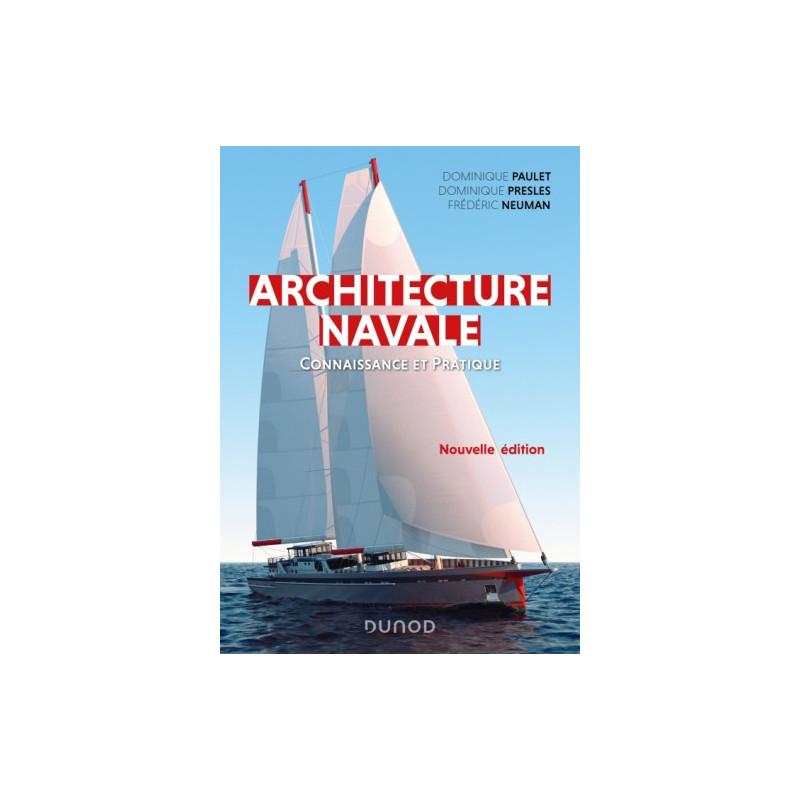



Explore naval architecture with this comprehensive 2nd edition. Featuring clear explanations, formulas, and illustrations, it’s ideal for designers, engineers, and maritime enthusiasts.
Data sheet
Specific References
Unlock the Science Behind Modern Ship Design
Naval Architecture – Knowledge and Practice – 2nd Edition is the ultimate reference for engineers, architects, and maritime professionals who demand precision in vessel design. This updated edition distills decades of expertise into a single, accessible volume, covering everything from hydrostatics to structural mechanics. With 520 pages of in-depth analysis, it eliminates guesswork by providing proven methodologies, industry-standard formulas, and practical case studies. Whether you're designing cargo ships, naval vessels, or luxury yachts, this book ensures your projects meet the highest standards of performance and safety.
From Theory to Real-World Application
Unlike academic texts that focus solely on abstract concepts, this guide emphasizes real-world application. It breaks down complex topics—such as stability calculations, resistance prediction, and propulsion efficiency—into actionable steps. The inclusion of detailed diagrams, comparative tables, and step-by-step examples allows professionals to apply these principles immediately. For students, it serves as a bridge between classroom learning and industry practice, while experienced engineers will find it an invaluable refresher on emerging trends and best practices.
Built for Durability and Long-Term Use
Engineered for frequent reference, this 2nd Edition features a sturdy paperback binding and high-quality paper that resists wear. Its dimensions (17 x 24 cm) strike the perfect balance between portability and readability, making it ideal for both office and fieldwork. Weighing just 870 grams, it’s lightweight enough to carry yet comprehensive enough to cover every critical aspect of naval architecture. The 2023 update ensures all content aligns with current maritime regulations and technological advancements, giving you confidence in its relevance.
Trusted by Industry Leaders
Written by Dominique Paulet, Dominique Presles, and Frédéric Neuman—renowned experts in naval engineering—this book reflects the collective knowledge of decades in ship design. It’s widely adopted in maritime academies and engineering firms worldwide, serving as a benchmark for quality and accuracy. Whether you're a seasoned professional or a student entering the field, this edition provides the tools to innovate, optimize, and excel in naval architecture.
This 2nd Edition of *Naval Architecture – Knowledge and Practice* spans 520 pages, offering a thorough exploration of ship design principles. Published in November 2023, it features a durable paperback format (17 x 24 cm) with a weight of 870 grams, making it both portable and resilient. Written entirely in French, it targets professionals in the maritime industry, providing updated standards, practical formulas, and real-world examples to support modern naval engineering projects.
With a legacy of excellence in technical publishing, this publisher has established itself as a trusted source for engineering and maritime literature. Known for producing high-quality, authoritative references, their books are widely used in academic institutions and professional settings, ensuring readers gain practical, up-to-date knowledge from industry-leading experts.
The 2nd edition includes updated content reflecting the latest advancements in naval architecture, additional case studies, and expanded sections on modern design techniques and materials.
While the book is rich in technical details and aimed at professionals, it is also structured didactically with examples and illustrations, making it accessible to informed amateurs and students.
Yes, it contains numerous examples, croquis, and photographs to illustrate concepts, along with practical applications of formulas and design principles.
The book measures 17.0 cm × 24.0 cm × 2.7 cm and weighs 870 grams, making it a substantial yet manageable reference.
The book itself is a printed edition, and no digital or supplementary resources are included. It focuses on providing comprehensive content within its 520 pages.
Yes, it is designed for educational purposes and is suitable for use in university-level courses on naval architecture, particularly for students and professionals in the field.
The book covers the design principles for a wide range of vessels, including industrial, military, and private ships, with detailed explanations of their architectural considerations.
You might also like