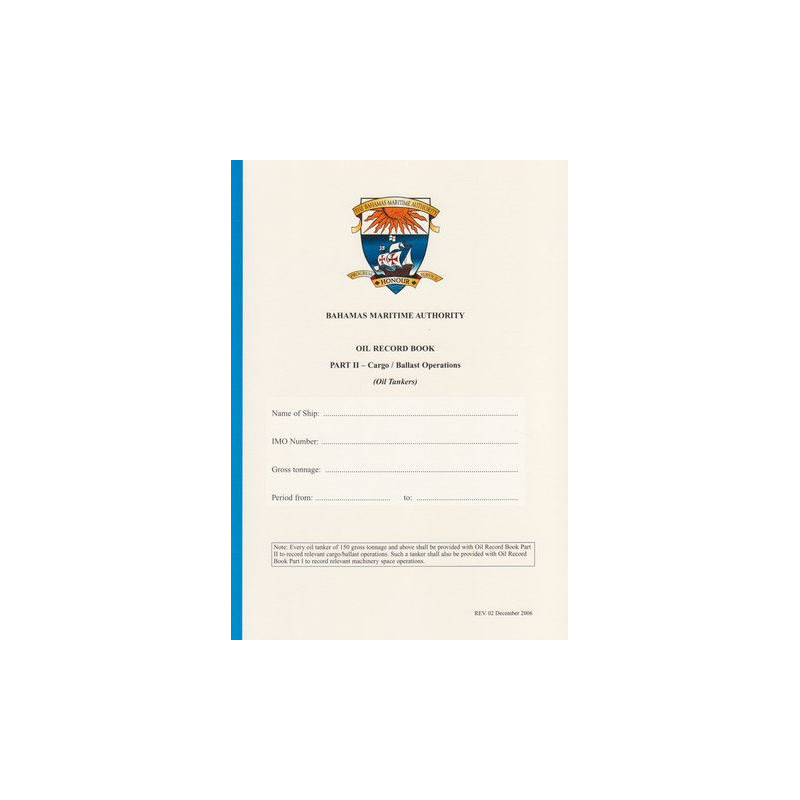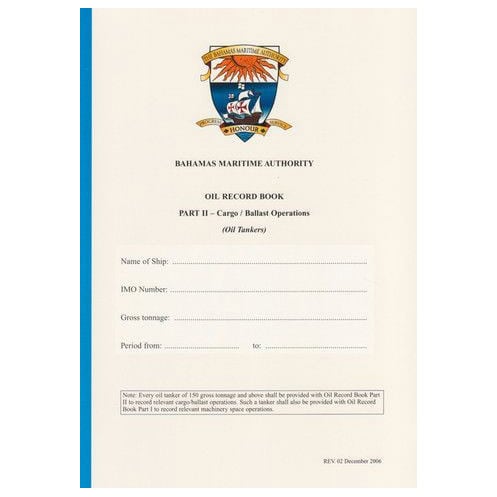




Essential for tankers over 150 GT, this official Oil Record Book Part II logs cargo and ballast operations as required by MARPOL Annex I. Keep compliant with clear, structured records for inspections.
Data sheet
Specific References
Every oil tanker operating under international maritime regulations must maintain accurate and detailed records of cargo and ballast operations. This official Oil Record Book Part 2 is the mandated logbook for tankers of 150 gross tonnage and above, ensuring full compliance with MARPOL Annex I Regulations 17 and 36. Designed for precision and reliability, this book provides a structured format to document every critical operation, from loading and unloading to internal transfers and ballasting. With clear guidelines and standardized entries, it simplifies compliance while safeguarding against regulatory oversights.
Tailored for shipowners, managers, captains, and recognized organizations, this publication serves as a vital tool for maintaining transparency and accountability in maritime operations. It outlines the responsibilities of the designated officer in charge of oil transfers, ensuring that all procedures are conducted safely and in accordance with international standards. The book must be kept on board for a minimum of three years, readily available for inspection by port state control or authorized surveyors. Its durable, A4-sized format ensures ease of use and long-term preservation of records, making it an indispensable asset for any tanker fleet.
This Oil Record Book Part 2 is more than just a log—it’s a legal document that protects your vessel and crew. Each entry must be completed with care, as inaccuracies or omissions can lead to penalties or delays. The book’s structured layout includes dedicated sections for all required operations, ensuring no detail is overlooked. Whether recording cargo handling, ballast water management, or sludge disposal, this publication provides the clarity and consistency needed to meet regulatory demands. By maintaining meticulous records, tanker operators can demonstrate compliance, streamline inspections, and avoid costly disruptions.
Engineered for the rigors of life at sea, this paperback edition is lightweight yet durable, weighing just 0.6 kg for easy handling. Its A4 format offers ample space for detailed entries while remaining compact enough for storage in shipboard offices. Updated to Revision 03 (2010), it reflects the latest regulatory requirements, ensuring your records align with current standards. As an official publication, it carries the authority needed to satisfy inspectors and auditors, making it a cornerstone of your vessel’s documentation.
Ensure MARPOL Compliance with the Official Oil Record Book for Tankers
Navigating international maritime regulations demands precision, and this Oil Record Book Part 2 is your vessel’s first line of defense against non-compliance. Mandated for all oil tankers of 150 gross tonnage and above, this official logbook provides a standardized system for recording cargo and ballast operations in accordance with MARPOL Annex I. Every entry serves as a legal record, ensuring transparency and accountability for shipowners, captains, and crew. With its structured format and clear guidelines, this book simplifies the complex task of regulatory reporting while minimizing the risk of errors or oversights.
Designed for Real-World Maritime Operations
Built to endure the demands of life at sea, this paperback edition is lightweight (0.6 kg) and compact, yet durable enough to withstand frequent use. Its A4 format offers ample space for detailed entries, while its Revision 03 (2010) ensures alignment with the latest regulatory updates. The book’s user-friendly layout includes dedicated sections for all critical operations, from loading and unloading to ballast water management, making it an indispensable tool for officers responsible for oil transfers. By maintaining accurate records, tanker operators can streamline inspections, avoid penalties, and demonstrate their commitment to environmental stewardship.
A Legal Safeguard for Your Vessel and Crew
This Oil Record Book Part 2 is more than just a log—it’s a legal document that protects your vessel during port state control inspections. Each entry must be completed with care, as inaccuracies can lead to costly delays or fines. The book’s guidelines ensure that all operations are recorded in accordance with international standards, providing a clear audit trail for regulators. With a three-year retention requirement, it serves as a long-term record of your vessel’s compliance history, offering peace of mind for shipowners and managers. Whether you’re handling cargo, ballast, or sludge disposal, this publication ensures every detail is documented with precision.
This official Oil Record Book Part 2 for tankers is a paperback publication in A4 format, weighing 0.6 kg. It is written in English and adheres to the latest Revision 03 (2010) of MARPOL Annex I regulations. Designed for durability and ease of use, it provides a structured system for recording cargo and ballast operations, ensuring compliance with international maritime standards.
As the governing body responsible for maritime safety and regulatory compliance, this authority sets the standards for vessel documentation and operational procedures. Their publications are trusted by shipowners, managers, and maritime professionals worldwide, ensuring vessels meet the highest international requirements. With a focus on clarity and precision, their resources are designed to simplify compliance while safeguarding against regulatory risks.
This book is used to record cargo and ballast operations on tankers of 150 gross tonnage and above, as required by MARPOL Annex I Regulations 17 and 36.
The record book must be retained on board for at least three years and made available for inspection upon request.
Entries must be made by a responsible officer, and all oil transfer operations must be documented accordingly.
No, this record book is published exclusively in English.
The latest revision is Rev.03, published in 2010.
This record book is available in A4 format.
Yes, it includes guidelines for entries in both Oil Record Book Part I and Part II, applicable to tankers.
You might also like