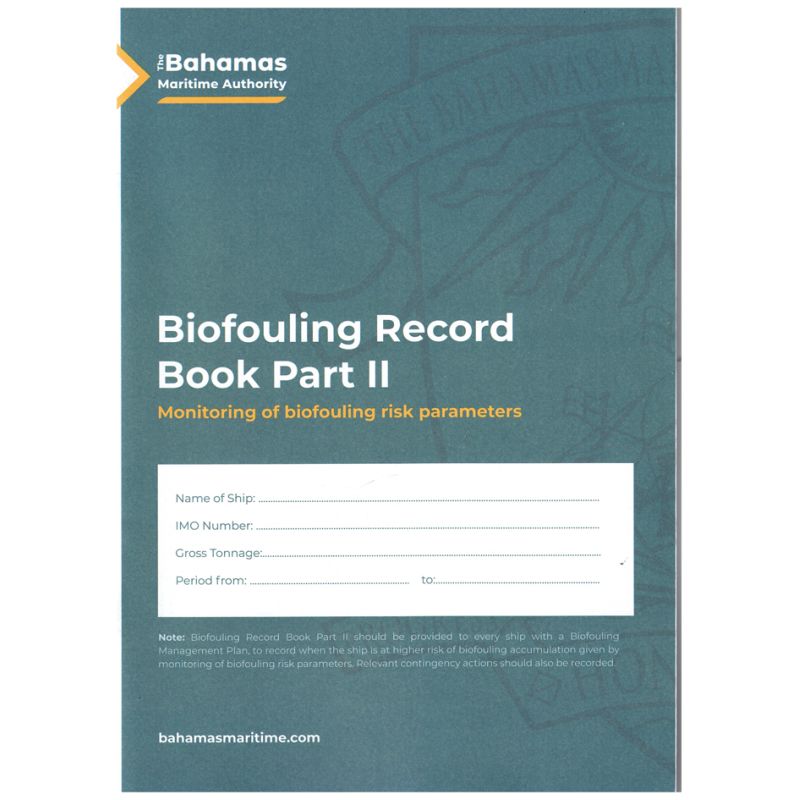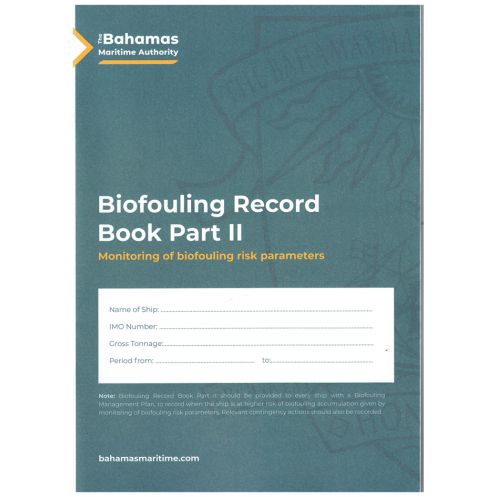




Streamline biofouling management with this official record book for vessels. Log inspections and anti-fouling measures to assess effectiveness, ensure compliance, and avoid operational delays.
Data sheet
Specific References
Ensure full regulatory compliance and operational efficiency with the Biofouling Record Book – Part 2, a critical tool for documenting biofouling inspections and management measures on board vessels. Designed for shipowners, operators, and crew, this official record book provides a structured framework to log all biofouling-related activities, supporting both environmental protection and smooth port state control inspections.
Biofouling—the accumulation of aquatic organisms on a vessel’s hull—poses significant risks, including increased fuel consumption, reduced vessel performance, and the potential transfer of invasive species. This record book enables ship operators to systematically track inspections, cleaning procedures, and anti-fouling system performance, ensuring adherence to international guidelines such as the IMO Biofouling Guidelines and BWM Convention. By maintaining accurate records, vessel operators can demonstrate proactive biofouling management, reducing the risk of delays during port calls and avoiding costly penalties.
This publication is engineered for practical use in demanding maritime environments. Its structured format allows for quick and precise documentation of biofouling assessments, cleaning events, and maintenance actions. Whether used as a standalone document or integrated into a vessel’s Planned Maintenance System (PMS), it provides a clear audit trail for port state authorities, flag administrations, and environmental inspectors. The record book also helps shipowners evaluate the effectiveness of their anti-fouling coatings and operational practices, enabling data-driven decisions to enhance vessel performance and sustainability.
Tailored for ship managers, technical superintendents, marine surveyors, and crew members, this record book is an essential component of a vessel’s operational documentation. Its user-friendly layout ensures that all relevant details—such as inspection dates, locations, methods, and findings—are recorded consistently and comprehensively. By fostering transparency and accountability, it supports compliance with flag state requirements and port state control expectations, while also contributing to broader industry efforts to minimize the environmental impact of shipping.
Published in a durable, lightweight format, this record book is designed to withstand the rigors of onboard use. The latest edition, updated and verified as of May 2024, reflects current best practices and regulatory expectations. Its compact size (0.6 kg) makes it easy to store and access, ensuring it remains a practical resource throughout a vessel’s operational lifecycle. Whether for newbuilds or existing fleets, this record book is a vital tool for maintaining compliance, optimizing performance, and safeguarding marine ecosystems.
Streamline Biofouling Compliance with the Official Record Book – Part 2
Navigating the complexities of biofouling management just got simpler with the Biofouling Record Book – Part 2, an official publication designed to help vessel operators document and track all biofouling-related activities. This essential tool ensures compliance with international maritime regulations while providing a clear, structured approach to monitoring hull condition, anti-fouling system performance, and maintenance actions. By maintaining accurate records, shipowners and operators can avoid operational disruptions, reduce fuel costs, and demonstrate their commitment to environmental stewardship.
Engineered for Precision and Regulatory Alignment
This record book is meticulously structured to align with IMO Biofouling Guidelines and Ballast Water Management (BWM) Convention requirements, offering a standardized format for logging inspections, cleaning events, and corrective measures. Each entry provides a detailed snapshot of a vessel’s biofouling status, including the date, location, and method of inspection, as well as the condition of anti-fouling coatings. This level of detail not only simplifies compliance but also enables data-driven decision-making, helping operators assess the long-term effectiveness of their biofouling management strategies.
Built for the Demands of Maritime Operations
Designed with the realities of shipboard life in mind, this record book is lightweight (0.6 kg) and durable, making it easy to store and access on board. Its softcover format ensures flexibility and resilience in harsh marine environments, while the 2024 edition, updated and verified through May 2024, reflects the latest industry standards. Whether used as a standalone document or integrated into a vessel’s Planned Maintenance System (PMS), it provides a reliable audit trail for port state control inspections, flag state authorities, and internal reviews.
Supporting Sustainability and Operational Efficiency
Beyond compliance, this record book plays a critical role in enhancing vessel performance and sustainability. By systematically tracking biofouling, operators can identify trends, optimize cleaning schedules, and evaluate the effectiveness of anti-fouling coatings. This proactive approach not only reduces fuel consumption and greenhouse gas emissions but also minimizes the risk of invasive species transfer, protecting marine ecosystems. For shipowners and managers, it’s a small investment with significant returns—improved efficiency, reduced operational costs, and a stronger reputation for environmental responsibility.
The Biofouling Record Book – Part 2 is a printed publication in English, designed for professional use in the maritime industry. It features a lightweight, softcover format (0.6 kg) and is updated to the 2024 edition, with corrections verified through May 2024. Based on the Rev. 01 January 2019 revision, this record book provides a structured and compliant framework for documenting biofouling inspections and management measures.
With a long-standing reputation in maritime regulation and compliance, this organization sets the standard for safety, environmental protection, and operational efficiency in the shipping industry. Its publications are trusted by shipowners, operators, and maritime authorities worldwide, providing reliable tools to navigate complex regulatory landscapes and maintain the highest industry standards.
Maintaining a separate record for each vessel allows owners and operators to track and evaluate the effectiveness of anti-fouling systems, operational practices, and the overall biofouling management plan. It also helps port authorities quickly assess biofouling risks, reducing operational delays.
Yes, it can either serve as a standalone document or be integrated into the vessel’s operational manuals and planned maintenance system for streamlined record-keeping.
The latest revision date for this edition is January 2019, as indicated by the Rev. 01 designation.
No, this record book is officially available only in English.
All inspections and biofouling management measures should be recorded as they occur to ensure accurate and up-to-date documentation for compliance and assessment purposes.
The record book weighs 0.6 kg, making it lightweight and easy to handle.
You might also like