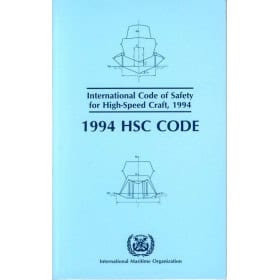





Access the 1994 HSC Code in French—key safety regulations for high-speed craft. This digital edition applies to vessels under SOLAS Chapter X, ensuring compliance for international voyages since 1996.
Data sheet
Specific References
The International Code of Safety for High-Speed Craft (HSC Code 1994) is a cornerstone regulation developed by the International Maritime Organization (IMO) to ensure the highest safety standards for fast-moving vessels. Adopted in May 1994 during the 63rd session of the Maritime Safety Committee, this code was made mandatory through the addition of Chapter X to the SOLAS Convention, entering into force in January 1996. Designed to replace the earlier Code of Safety for Dynamically Supported Craft, this updated version reflects advancements in vessel size, technology, and operational demands, providing a robust framework for the safe design, construction, and operation of high-speed craft.
This digital publication is an indispensable resource for naval architects, marine engineers, shipbuilders, classification societies, flag state authorities, and maritime safety inspectors. It offers clear, actionable guidelines for compliance with international safety regulations, ensuring that high-speed craft—whether passenger ferries, cargo vessels, or specialized maritime units—meet rigorous operational and structural requirements. The code addresses critical aspects such as stability, fire protection, life-saving appliances, navigation systems, and crew training, making it a vital tool for professionals involved in the certification, inspection, and operation of high-speed vessels.
The HSC Code 1994 applies to high-speed craft constructed on or after January 1, 1996, engaged in international voyages. It establishes distinct operational limits based on vessel type: passenger craft must remain within four hours of a place of refuge at operational speed when fully loaded, while cargo craft with a gross tonnage of 500 or more must not exceed eight hours from a port of refuge. The code also mandates that all passengers be provided with seating and prohibits enclosed berths, prioritizing safety and accessibility in high-speed maritime transport.
Available in a secure digital format, this publication ensures instant access to up-to-date regulatory information, eliminating the need for physical storage while maintaining compliance with IMO standards. The digital version is optimized for use with the IMO’s free reader, providing a seamless experience for professionals who require reliable, on-demand access to critical maritime regulations. Whether for design validation, regulatory audits, or operational planning, this digital edition delivers the precision and convenience demanded by today’s fast-paced maritime industry.
While the HSC Code 1994 remains a foundational document, it is important to note that vessels constructed after July 1, 2002, are subject to the updated HSC Code 2000. This ensures that maritime safety standards evolve alongside technological advancements, reinforcing the IMO’s commitment to protecting lives, cargo, and the marine environment. For professionals working with high-speed craft, this publication is not just a regulatory requirement—it is a strategic asset for ensuring compliance, operational efficiency, and safety in one of the most dynamic sectors of the maritime industry.
Unlock Compliance and Safety for High-Speed Maritime Operations
The International Code of Safety for High-Speed Craft (HSC Code 1994) is the definitive regulatory framework for ensuring the safety of fast-moving vessels in international waters. Developed by the International Maritime Organization (IMO) and adopted in 1994, this code was integrated into the SOLAS Convention as Chapter X, becoming mandatory for all high-speed craft constructed from January 1996 onward. This digital edition, presented in French, provides maritime professionals with immediate access to the exacting standards governing vessel design, construction, equipment, and operational protocols for high-speed craft.Designed to address the unique challenges of high-speed maritime transport, the HSC Code 1994 establishes clear operational boundaries: passenger vessels must remain within four hours of a place of refuge at operational speed when fully loaded, while cargo vessels with a gross tonnage of 500 or more must not exceed eight hours from a port of refuge. The code also mandates that all passengers be seated, with no enclosed berths permitted, ensuring both safety and comfort during transit. These regulations are critical for shipbuilders, naval architects, and maritime authorities tasked with certifying vessels for international voyages.This digital publication, comprising 253 pages, is delivered in a secure, IMO-locked format, ensuring compliance with the organization’s distribution policies. It is accessible via the IMO’s free reader, offering a practical and efficient solution for professionals who require reliable, on-demand access to regulatory content. Whether for design validation, safety inspections, or operational planning, this code is an essential tool for maintaining compliance and enhancing safety in the high-speed maritime sector.
This digital publication of the International Code of Safety for High-Speed Craft (HSC Code 1994) is presented in French and adheres to the following key specifications: published in 1994 by the International Maritime Organization (IMO), this 253-page document is available in a secure digital format, compatible exclusively with the IMO’s free reader. It applies to high-speed craft constructed on or after January 1, 1996, and sets operational limits for passenger vessels (within four hours of a place of refuge) and cargo vessels (within eight hours of a port of refuge for those with a gross tonnage of 500 or more). The code also includes specific passenger seating requirements and excludes enclosed berths.
The International Maritime Organization (IMO) is the United Nations’ specialized agency responsible for regulating international shipping. Established in 1948, the IMO sets global standards for maritime safety, security, and environmental performance, ensuring that shipping remains the most efficient and sustainable mode of global transport. Its conventions, codes, and guidelines—such as the SOLAS Convention and the HSC Code—are recognized as the benchmark for maritime regulation, shaping the industry’s operational and safety practices worldwide.
The digital version is available in French.
No, it applies specifically to high-speed craft (HSC) constructed from January 1, 1996 onward.
All passengers must have a seat, and no enclosed berths are permitted.
Passenger craft must not travel more than 4 hours at operational speed from a place of refuge when fully loaded.
The digital publication contains 253 pages.
No, it is a locked digital format and can only be read using the free IMO e-reader.
You might also like