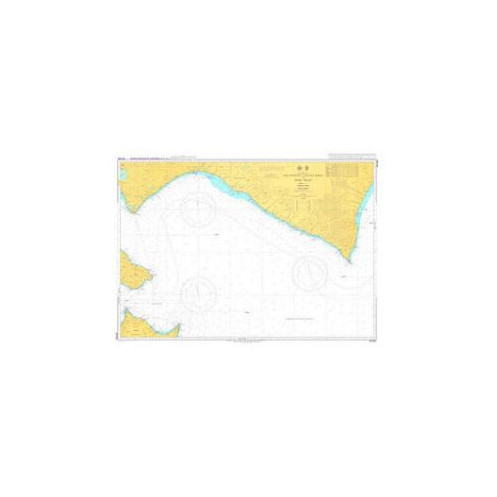
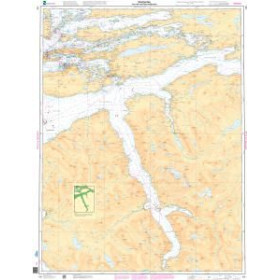
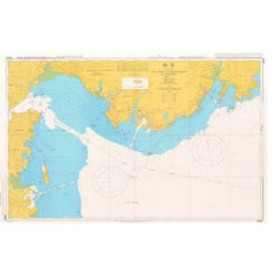
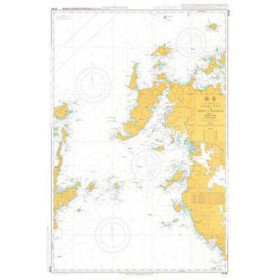
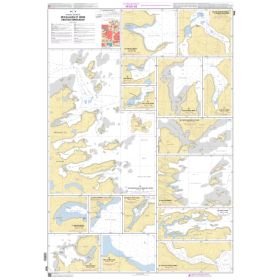
This Hydrographic and Oceanographic Départment - Japan paper navigation chart (flat chart) covers Banda, Celebes, Solomon, Bismarck, China, Philippine, Yellow, Java, Japanese, Okhotsk Seas, Gulf of Thailand, the area East Entrance of Tsugaru Kaikyo to Erimo Misaki.
Navigating around Japan requires careful preparation. The Japanese archipelago, made up of thousands of islands and surrounded by complex maritime zones, presents a wide variety of conditions: narrow straits, strong currents, heavily trafficked port areas, and sometimes steep underwater relief.
Nautical charts published by the Hydrographic and Oceanographic Department of Japan (JHOD) cover all Japanese waters with a high level of detail. They are suitable for both coastal navigation and offshore sailing in the Sea of Japan or the Pacific Ocean.
Choosing the right chart for this region is not just a matter of convenience—it is a key safety requirement. Accurate cartography allows mariners to anticipate hazards, understand the marine environment, and comply with local regulations.
What is this nautical chart used for?
A Japanese nautical chart is not just a visual aid—it is a practical navigation tool.
Practical uses
- Coastal navigation: following a rugged coastline, identifying headlands, bays, and shelter areas
- Strategic passages: transiting straits such as Kanmon or Tsugaru
- Offshore navigation: planning routes between major islands (Honshu, Hokkaido, Kyushu, Shikoku)
- Port approaches: accessing major ports like Tokyo, Osaka, or Yokohama
- Fishing and anchoring: identifying seabed types, authorized zones, and underwater hazards
Real-life navigation situations
- Anticipating strong currents in narrow straits
- Identifying shallow areas before entering a bay
- Planning a safe anchorage based on seabed composition
- Navigating at night using lighted buoys and beacons
Why not rely solely on digital charts?
Electronic charts are useful, but they do not replace official paper charts:
- Immediate global overview of the area
- Independence from electronic systems
- Better strategic planning capability
Who is this chart for?
JHOD charts are designed for a wide range of users, from recreational sailors to professionals.
Beginner navigator
- Ideal for learning how to read charts in a demanding environment
- Helps understand fundamentals: buoys, depths, routes
Experienced navigator
- Essential for planning complex passages
- Enables detailed interpretation of local conditions
Professional mariners (merchant navy, fishing, delivery)
- Meets navigation requirements
- Used as an official reference in certain contexts
Navigation conditions
- Day navigation: easier visual identification of coastal landmarks
- Night navigation: reliance on light signals and alignments
- Regular navigation: requires up-to-date charts
- Occasional navigation: enhances safety in unfamiliar waters
Compatibility with modern tools
These charts work perfectly alongside:
- Marine GPS
- Chartplotters
- ECDIS systems (professional use)
They provide a reliable reference to validate electronic data.
Reading and understanding the chart
Scale: a key factor
Each chart is defined by its scale, which determines its use:
- Large scale (e.g., 1:25,000): ideal for port approaches
- Medium scale (e.g., 1:100,000): coastal navigation
- Small scale (e.g., 1:500,000 and above): offshore navigation
The larger the scale, the greater the level of detail.
Essential information displayed
- Bathymetry: depths and seabed relief
- Seabed nature: sand, mud, rock (important for anchoring)
- Aids to navigation: buoys, lights, leading lines
- Hazards: reefs, wrecks, restricted areas
- Ports and shelters: access channels and facilities
- Recommended routes
What you need to know to use it properly
- Understand standardized symbols (international conventions)
- Read soundings in relation to tides
- Interpret currents and turbulence zones
- Cross-check chart data with real-world observations
A nautical chart is not just read—it is interpreted.
Reliability, updates, and safety
An official and trusted source
The Hydrographic and Oceanographic Department of Japan is the official authority responsible for nautical charting in Japan. Its charts are based on:
- Regular hydrographic surveys
- Continuously updated data
- International standards
The importance of updates
Charts evolve over time:
- Changes in seabed conditions
- New or relocated navigation marks
- Regulatory updates
An outdated chart can become unsafe.
Best practices
- Check the edition date
- Apply Notices to Mariners when available
- Replace charts regularly
Geodetic references
Japanese charts are generally compatible with the WGS 84 system used by modern GPS devices.
This ensures consistency between your actual position and the chart.
Paper chart vs digital chart
Advantages of paper charts
- Total reliability (no battery or system failure)
- Immediate overall view
- Excellent for passage planning
- Essential backup in emergencies
Limits of all-digital navigation
- Technological dependency
- Risk of misinterpretation
- Misleading zoom levels (loss of context)
A necessary complementarity
Best practice remains:
Paper chart + electronic tools
- Digital for real-time tracking
- Paper for strategy and safety
FAQ – Your questions about Japanese nautical charts
Which chart should I choose for navigating Japan?
It depends on your sailing plan:
- Coastal cruising ? large or medium scale
- Inter-island passages ? small scale
- Port approaches ? highly detailed charts
Combining several charts is often the best option.
Is this chart sufficient on its own?
No. A single chart usually does not cover all needs.
- Use multiple scales
- Complement with electronic tools
- Adapt to your route
How often should a nautical chart be replaced?
Generally:
- Every 2 to 5 years
- Or as soon as a major update is issued
In dynamic areas like Japan, staying updated is critical.
Can this chart be used with a GPS?
Yes, absolutely.
- Compatible with the WGS 84 system
- Allows verification of GPS data accuracy
It serves as a reliable cross-check tool.
What is the difference with charts from other publishers (e.g., SHOM)?
- SHOM mainly covers French and international waters
- JHOD specializes in Japanese waters
For navigation in Japan, local official charts are the most accurate.
Are paper charts still useful today?
Yes, absolutely.
- Essential backup in case of electronic failure
- Provides a global overview
- Required in some regulatory contexts
They remain a cornerstone of safe navigation.
Conclusion
Nautical charts from the Hydrographic and Oceanographic Department of Japan are far more than simple navigation tools—they are essential assets for safe and efficient navigation in Japanese waters.
By choosing them through Nautic Way, you benefit not only from reliable official cartography, but also from expert guidance to help you make the right choices based on your real navigation needs.
Sailing in Japan requires precision and anticipation. The right chart is your best ally.
Hydrographic and Oceanographic Départment Japan nautical charts are updated daily and printed only on demand. On the day of printing, they incorporate the latest updates. The chart's publication year is indicated on it.
We strive to offer only the latest versions of nautical charts incorporating the most recent updates.
All nautical charts, whether paper or digital, are printed on demand and include the latest updates. In accordance with Article L221-28 of the French Consumer Code, the right of withdrawal cannot be exercised for goods liable to become obsolete rapidly. Paper charts and digital charts are neither returnable nor exchangeable. Consequently, these orders are final upon placement by the Customer, according to the terms and conditions specified in these General Terms and Conditions of Sale.