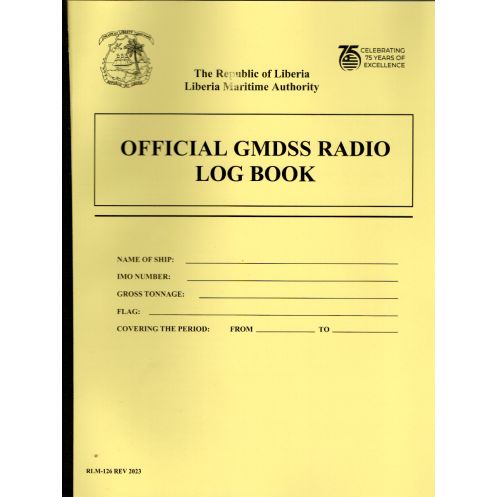

Liberia Maritime Authority - Liberian GMDSS radio log book
search
  • googlemap
  • Liberia Maritime Authority - Liberian GMDSS radio log book

Liberia Maritime Authority - Liberian GMDSS radio log book

€62.30
Tax included
Liberia Maritime Authority
In English language
Estimated preparation time: 5 to 14 days

Designed for Liberian-flagged ships, this GMDSS radio logbook offers a clear format for documenting radiocommunications. Includes guidelines to meet maritime regulatory standards effectively.

RLM126

Data sheet

Picto
In English language

Specific References

UPC
400000145303
EAN13
4000000141792
New
Description détaillée

Liberian GMDSS Radio Log Book

Publication in English
Paperback edition

Essential Compliance for Liberian-Flagged Vessels

This official radio log book is a critical tool for maritime professionals operating under the Liberian flag. Designed to meet stringent international and Liberian maritime regulations, it ensures accurate and legally compliant record-keeping of all GMDSS (Global Maritime Distress and Safety System) radiocommunications. Every entry serves as a vital record for safety, regulatory audits, and operational transparency, making it indispensable for vessels subject to Liberian registry requirements.

Designed for Professional Use

Engineered for the demanding environment of commercial shipping, this log book provides a structured and systematic approach to documenting radio communications. It includes comprehensive instructions to guide officers in maintaining precise records, ensuring consistency and reliability. The publication is tailored exclusively for vessels registered under the Liberian flag, aligning with the specific requirements outlined in RLM-126, Section 10.296, which mandates the captain’s responsibility for accurate log-keeping.

Regulatory Alignment and Legal Assurance

Compliance with maritime regulations is non-negotiable, and this log book is crafted to meet the exacting standards set by the Liberian Maritime Authority. It supports adherence to international conventions, including SOLAS (Safety of Life at Sea), while addressing the unique administrative and operational needs of Liberian-flagged ships. By using this official log book, maritime professionals can demonstrate compliance during inspections, audits, and investigations, reducing the risk of penalties or operational disruptions.

Structured for Clarity and Efficiency

The log book’s layout is optimized for ease of use, allowing officers to record essential details such as distress calls, safety communications, and routine radio traffic with precision. Its structured format minimizes errors and ensures that all critical information is captured systematically. This efficiency is particularly valuable in high-pressure situations where clarity and accuracy are paramount.

Durability and Accessibility

Printed in a durable paperback format, this log book is built to withstand the rigors of life at sea, including exposure to moisture, frequent handling, and varying environmental conditions. Its physical form ensures accessibility even in situations where digital systems may fail, providing a reliable backup for critical communications records. The publication is available through specialized maritime bookstores, often sold in sets or by special order, with delivery typically taking 7-10 days.

Mandatory for Specific Vessel Types

This log book is a requirement for vessels meeting specific tonnage and operational criteria under Liberian law. It applies to oil tankers with a gross tonnage of 150 or more, as well as other ships with a gross tonnage of 400 or more. Additionally, it is mandatory for vessels carrying 200 cubic meters or more of oil in bulk as cargo. Compliance with these requirements is essential for maintaining the vessel’s operational status and avoiding regulatory complications.

Long-Term Record-Keeping Obligations

The log book is not just a tool for daily operations; it also serves as a long-term record that must be retained for a minimum of two years on board the vessel. After this period, the records must be kept under the company’s control for an additional three years. This extended retention period ensures that historical data is available for future reference, investigations, or regulatory reviews, reinforcing the importance of meticulous record-keeping.

Your Compliance Partner for Liberian-Flagged Vessels
Meet the Liberian GMDSS Radio Log Book, the official record-keeping solution for vessels registered under the Liberian flag. Designed to align with international maritime standards and Liberian regulations, this log book ensures that every radio communication is documented with precision, providing a legally sound and auditable trail for safety, regulatory, and operational purposes. Whether navigating routine operations or emergency situations, this log book is your assurance of compliance and accountability.

Engineered for Maritime Professionals
Built to withstand the demands of commercial shipping, this log book offers a structured and user-friendly format for recording GMDSS radiocommunications. It includes detailed instructions to guide officers in maintaining accurate and consistent records, reducing the risk of errors and omissions. The publication is exclusively tailored for Liberian-flagged vessels, ensuring full compliance with RLM-126, Section 10.296, which outlines the captain’s responsibilities for log-keeping. With a weight of 0.6 kg, it is lightweight yet durable, making it easy to handle and store on board.

Regulatory Compliance Made Simple
Navigating maritime regulations can be complex, but this log book simplifies the process by providing a clear and standardized framework for record-keeping. It supports compliance with SOLAS (Safety of Life at Sea) and other international conventions, while addressing the specific requirements of the Liberian Maritime Authority. By using this official log book, maritime professionals can confidently demonstrate adherence to regulations during inspections, audits, or investigations, minimizing the risk of penalties or operational disruptions.

Mandatory for Specific Vessel Categories
This log book is a legal requirement for vessels meeting specific criteria under Liberian law. It applies to oil tankers with a gross tonnage of 150 or more, as well as other ships with a gross tonnage of 400 or more. Additionally, it is mandatory for vessels carrying 200 cubic meters or more of oil in bulk as cargo. Ensuring compliance with these requirements is essential for maintaining the vessel’s operational status and avoiding regulatory complications.

Long-Term Record-Keeping for Peace of Mind
Beyond daily operations, this log book serves as a long-term record that must be retained for a minimum of two years on board the vessel. After this period, the records must be kept under the company’s control for an additional three years. This extended retention period ensures that historical data is available for future reference, investigations, or regulatory reviews, reinforcing the importance of meticulous and reliable record-keeping.

This official Liberian GMDSS Radio Log Book is designed to meet the rigorous demands of maritime record-keeping. Printed in English and available in a durable paperback format, it weighs 0.6 kg, making it lightweight yet robust for onboard use. The publication is valid through 2026 and aligns with Liberian maritime regulations, including RLM-126, Section 10.296. It is mandatory for oil tankers with a gross tonnage of 150 or more, other vessels with a gross tonnage of 400 or more, and ships carrying 200 cubic meters or more of oil in bulk. Records must be retained for a minimum of two years on board, followed by three years under company control.

The organization behind this publication is a globally recognized authority in maritime regulation and compliance. With a focus on safety, operational transparency, and adherence to international standards, it provides essential tools and resources for vessels registered under its flag. Its publications are trusted by maritime professionals worldwide for their accuracy, reliability, and alignment with regulatory requirements.

  • Ensure compliance with Liberian maritime regulations while maintaining accurate and auditable records of all GMDSS radiocommunications.
  • This official log book provides a structured and user-friendly format, reducing the risk of errors and simplifying record-keeping for officers.
  • Its durable paperback design ensures longevity in demanding maritime environments.
  • Its alignment with international standards guarantees legal and operational reliability.
  • Mandatory for specific vessel categories, it offers peace of mind by meeting long-term record retention requirements and supporting seamless regulatory compliance.
What is the required gross tonnage for vessels to use this log book?

This log book is required for tankers with a gross tonnage of 150 or more, and for other vessels with a gross tonnage of 400 or more.

How long must the log book be retained on board the ship?

The log book must be retained on board for a minimum of 2 years, followed by 3 years under the company's control.

Is a digital version of this log book available and acceptable?

Yes, a digital version (eRLM-300) is available and acceptable as a replacement for the paper version, provided it is the most recent revision.

Are there specific vessels that this log book does not apply to?

Yes, this log book is exclusively for vessels registered under the Liberian flag and does not apply to other registries.

What is the weight of the log book?

The log book weighs 0.6 kg.

What is the latest revision year for this log book?

The latest revision year for this log book is 2026.

Is the log book available for immediate purchase?

It is typically available through special order with a delivery time of 7-10 days, often requiring the IMO number and vessel name.

Loading...