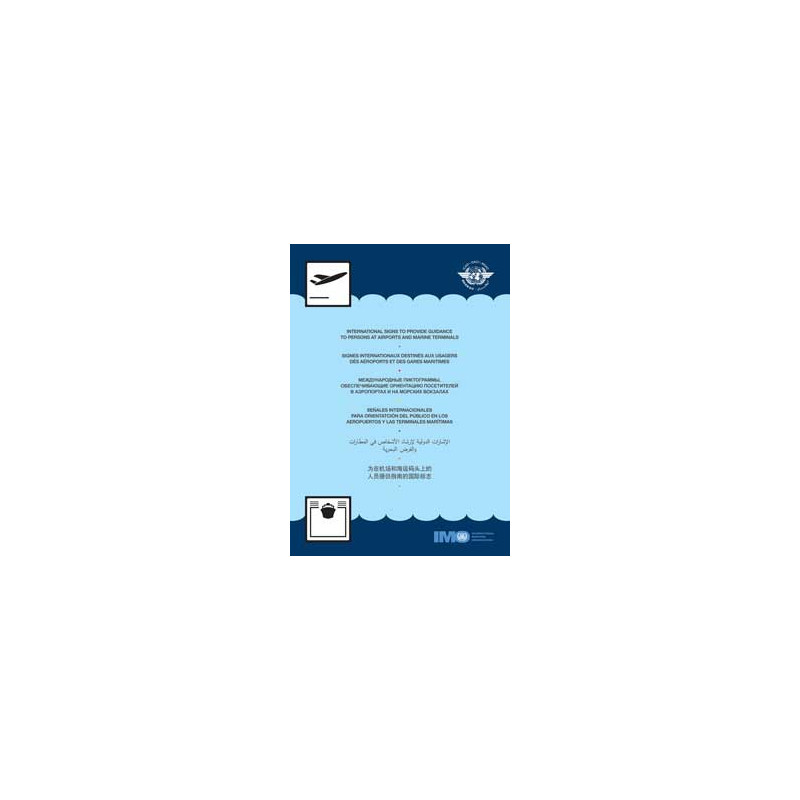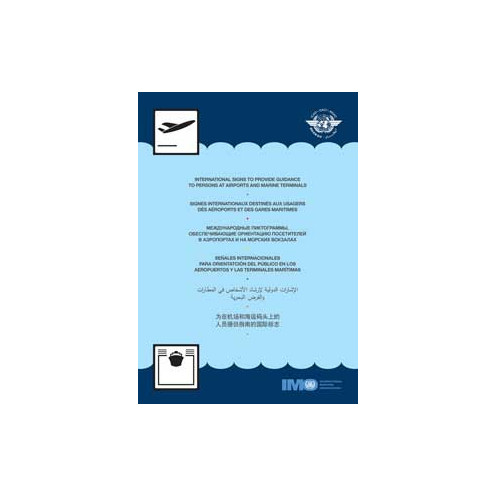






Ensure seamless navigation for travelers with this official multilingual guide to standardized airport and maritime terminal signs. A must-have reference for global facilities.
Data sheet
Specific References
Streamline Global Travel with Standardized International Signage
In the fast-paced world of international travel, clear communication is non-negotiable. This official guide to international signs for airports and maritime terminals is the gold standard for visual communication in transportation hubs. Developed by the International Civil Aviation Organization (ICAO) and the International Maritime Organization (IMO), it provides a unified system of symbols and guidelines that transcend language barriers, ensuring seamless navigation for millions of travelers worldwide.
Trusted by Industry Leaders for Over Two Decades
Since its publication in 1995, this guide has been the go-to reference for professionals in aviation, maritime, and logistics. With 106 pages of meticulously curated content, it covers every aspect of signage—from passenger flow and safety instructions to accessibility and emergency protocols. Its multilingual format (English, French, Spanish, German, Russian, and Arabic) makes it an invaluable resource for global operations, supporting compliance with international regulations and enhancing operational efficiency.
Designed for Real-World Application
This guide isn’t just a theoretical manual—it’s a practical tool for real-world implementation. Whether you’re designing signage for a new airport terminal, updating maritime port facilities, or ensuring compliance with accessibility standards, this publication provides the clarity and precision needed to create intuitive, user-friendly environments. Its symbols are recognized globally, reducing confusion and improving the passenger experience in high-traffic areas like boarding gates, baggage claim, and customs zones.
An Indispensable Resource for Compliance and Safety
As an official ICAO (Doc 9636) and IMO (IMO370M) publication, this guide is more than just a reference—it’s a requirement for organizations committed to safety and regulatory compliance. By adhering to its standards, professionals can ensure that their signage meets the highest levels of clarity, consistency, and accessibility, reducing risks and enhancing the overall efficiency of transportation networks.
This official guide is a 106-page paperback publication, jointly released by ICAO and IMO in 1995. It features standardized international signs and symbols in six languages—English, French, Spanish, German, Russian, and Arabic—making it a versatile resource for global transportation hubs. While the paper edition remains widely used, digital versions are also available through official platforms for enhanced accessibility.
With decades of expertise in developing international standards for aviation and maritime industries, this organization is a trusted authority in global transportation. Its publications are relied upon by governments, regulatory bodies, and industry professionals worldwide to ensure safety, efficiency, and compliance in high-stakes environments.
The publication is available in English, French, Spanish, German, Russian, Chinese, and Arabic.
The original 1995 edition was available in paper format, but it is now primarily distributed as a digital product. Physical copies may be out of stock.
Access to the digital version is granted for a period of 5 years from the date of purchase.
The digital version is available in PDF format, compatible with Adobe Reader, and also in ebk format, which is fully bookmarked and indexed.
Yes, the publication contains internationally standardized signs and symbols designed for use in both international airports and maritime terminals.
Yes, the digital version is fully bookmarked and indexed, allowing for easy navigation and search.
This document is a joint publication by the International Civil Aviation Organization (ICAO) and the International Maritime Organization (IMO).
You might also like