- Out-of-Stock




Data sheet
Specific References
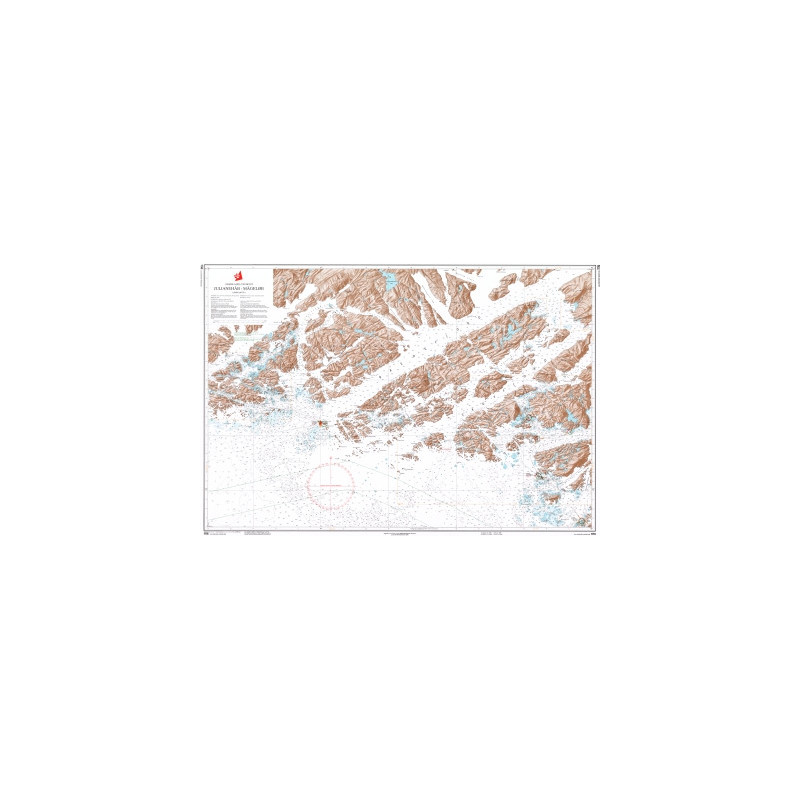
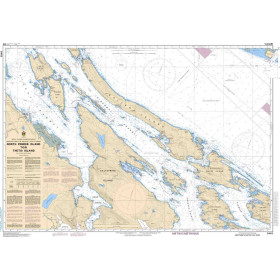
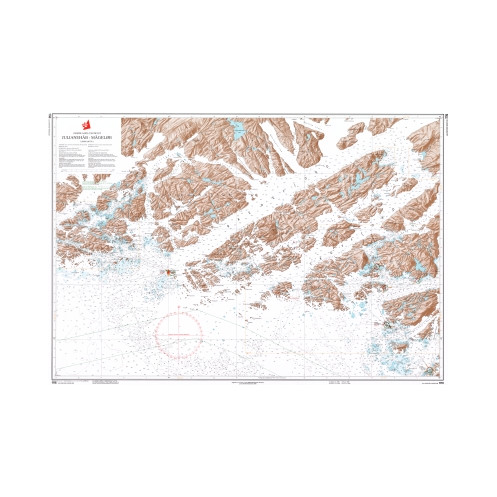
Nautical charts produced by the Danish Hydrographic Office, part of the Danish Geodata Agency, primarily cover the waters of Greenland—a vast, remote, and highly demanding maritime environment.
Sailing in Greenland is unlike conventional navigation. It involves operating in polar regions where isolation, extreme weather, drifting ice, limited infrastructure, and sparse support require thorough preparation and a high level of autonomy.
These charts are intended mainly for experienced sailors, offshore skippers, expedition crews, and professionals operating in Arctic waters. In such conditions, choosing the right nautical chart is not just important—it is critical for safety.
Danish Hydrographic Office charts for Greenland are designed for specific, real-world uses in extreme environments.
Greenland’s coastline is made up of deep fjords, rugged shores, and partially surveyed areas. These charts provide essential structure for navigating where visual references are limited.
Safe anchoring areas are rare and must be identified precisely. Charts provide key information to secure anchorage in often unpredictable conditions.
For Arctic crossings, expeditions, or scientific missions, these charts form a critical foundation for route planning and risk management.
Ice presence, abrupt seabed variations, shoals, and isolated dangers are key risks. Charts help identify and anticipate these hazards in an environment where margins for error are minimal.
Compared to digital-only solutions—often limited in polar regions—paper charts provide a reliable, independent, and comprehensive overview.
These charts are primarily intended for skippers with solid offshore experience and familiarity with demanding environments.
Polar explorers, scientific missions, and technical expeditions rely on these charts for planning and execution.
Fishing, logistics, and research operations require accurate and dependable hydrographic data.
Although Arctic navigation depends heavily on conditions, the information provided allows use in various visibility scenarios.
In remote regions, electronic systems may be limited by coverage or conditions. Paper charts become a primary navigation tool rather than a backup.
These charts are not designed for casual use—they support committed and technically demanding navigation projects.
Greenland charts are available at scales suitable for:
However, some regions remain less detailed than heavily trafficked parts of the world.
Charts must be interpreted cautiously and always complemented by real-time observation and experience.
Charts are produced by the Danish Hydrographic Office, ensuring a solid data foundation within the limits of Arctic surveying conditions.
Corrections are issued through Notices to Mariners, although updates may be less frequent than in high-traffic regions.
Using the most recent edition is essential, even though some data limitations are inherent to polar regions.
Charts are aligned with international standards such as WGS 84, ensuring accurate GPS position plotting.
Navigation in Greenland requires a cautious, methodical, and highly prepared approach.
Digital tools enhance precision and convenience, but paper charts remain the foundation of navigation in remote areas.
In Arctic environments, paper charts are not optional—they are central.
The Danish Hydrographic Office is the primary authority for Greenland nautical charts. Its publications are recognized for:
Nautic Way offers a curated, expert-driven approach:
The focus is not on volume, but on providing the most useful charts for safe navigation.
A combination of charts at different scales is recommended, depending on your exact route and objectives.
No. Polar navigation requires multiple sources: charts, guides, satellite imagery, and field experience.
Whenever a new edition is released. In remote areas, always check for the latest available updates.
Yes. These charts are compatible with modern GPS systems using the WGS 84 reference.
Each hydrographic office covers a specific region. The Danish Hydrographic Office is the reference for Greenland waters.
They provide full autonomy, reliability, and a critical overview in environments where electronic systems may fail.
Danish Hydrographic Office nautical charts for Greenland are essential tools for navigating one of the most remote and demanding maritime regions on Earth. They provide a reliable foundation for planning, anticipating risks, and executing safe navigation in extreme conditions.
Choosing the right chart—up-to-date and properly used—means navigating with greater awareness, control, and resilience. Nautic Way supports this approach with a carefully curated selection tailored to the needs of committed and experienced sailors.
Danish Hydrographic Office nautical charts are updated daily and printed only on demand. On the day of printing, they incorporate the latest updates. The chart's publication year is indicated on it.
We strive to offer only the latest versions of nautical charts incorporating the most recent updates.
All nautical charts, whether paper or digital, are printed on demand and include the latest updates. In accordance with Article L221-28 of the French Consumer Code, the right of withdrawal cannot be exercised for goods liable to become obsolete rapidly. Paper charts and digital charts are neither returnable nor exchangeable. Consequently, these orders are final upon placement by the Customer, according to the terms and conditions specified in these General Terms and Conditions of Sale.
You might also like